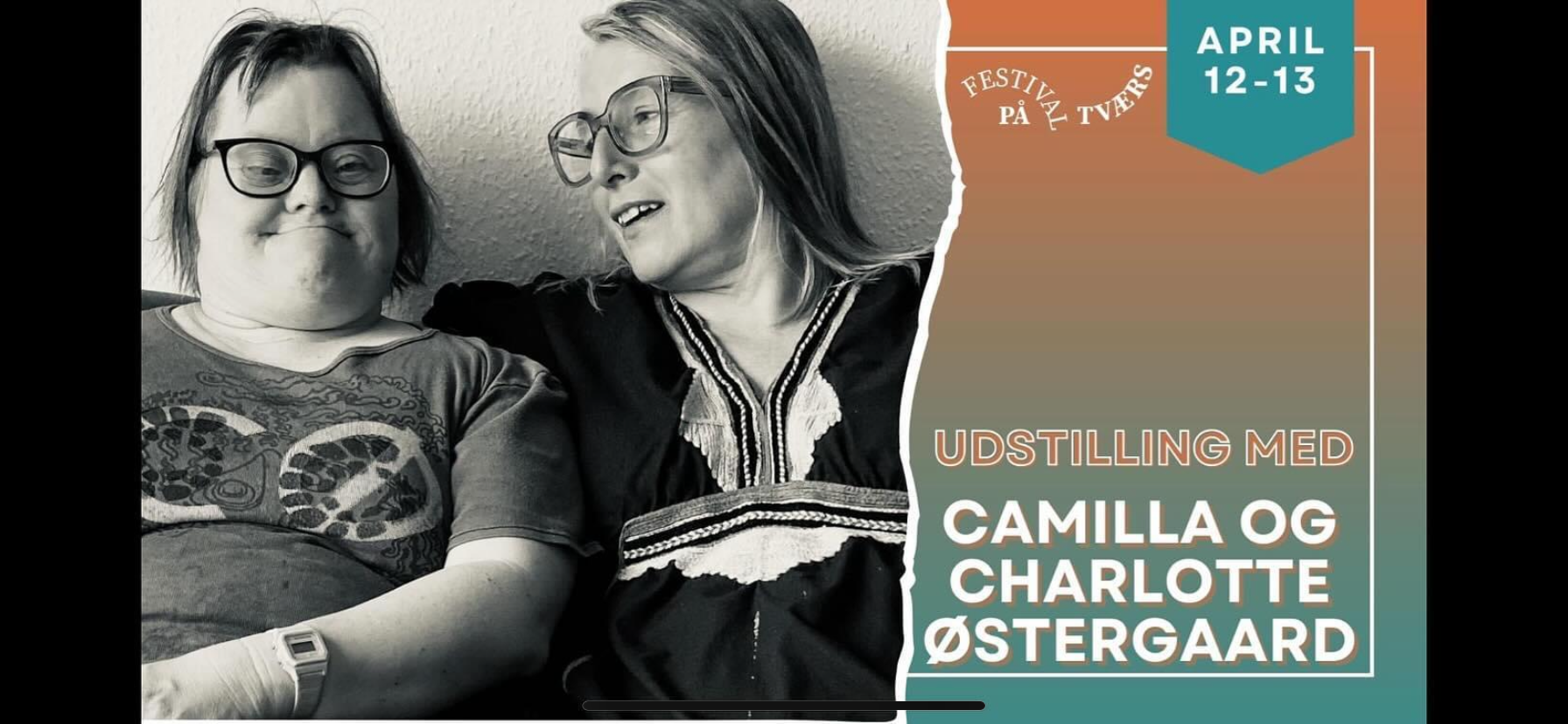
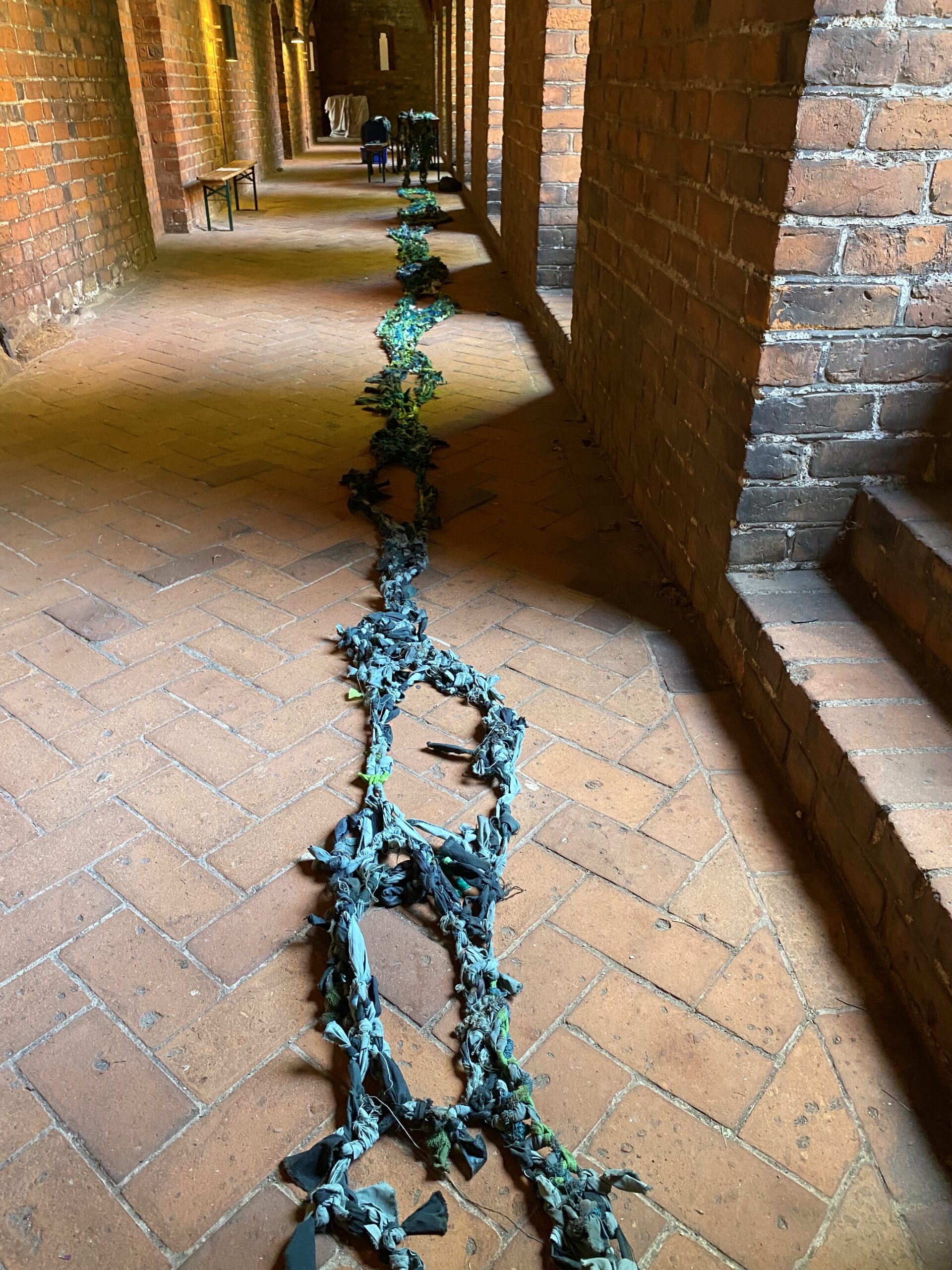
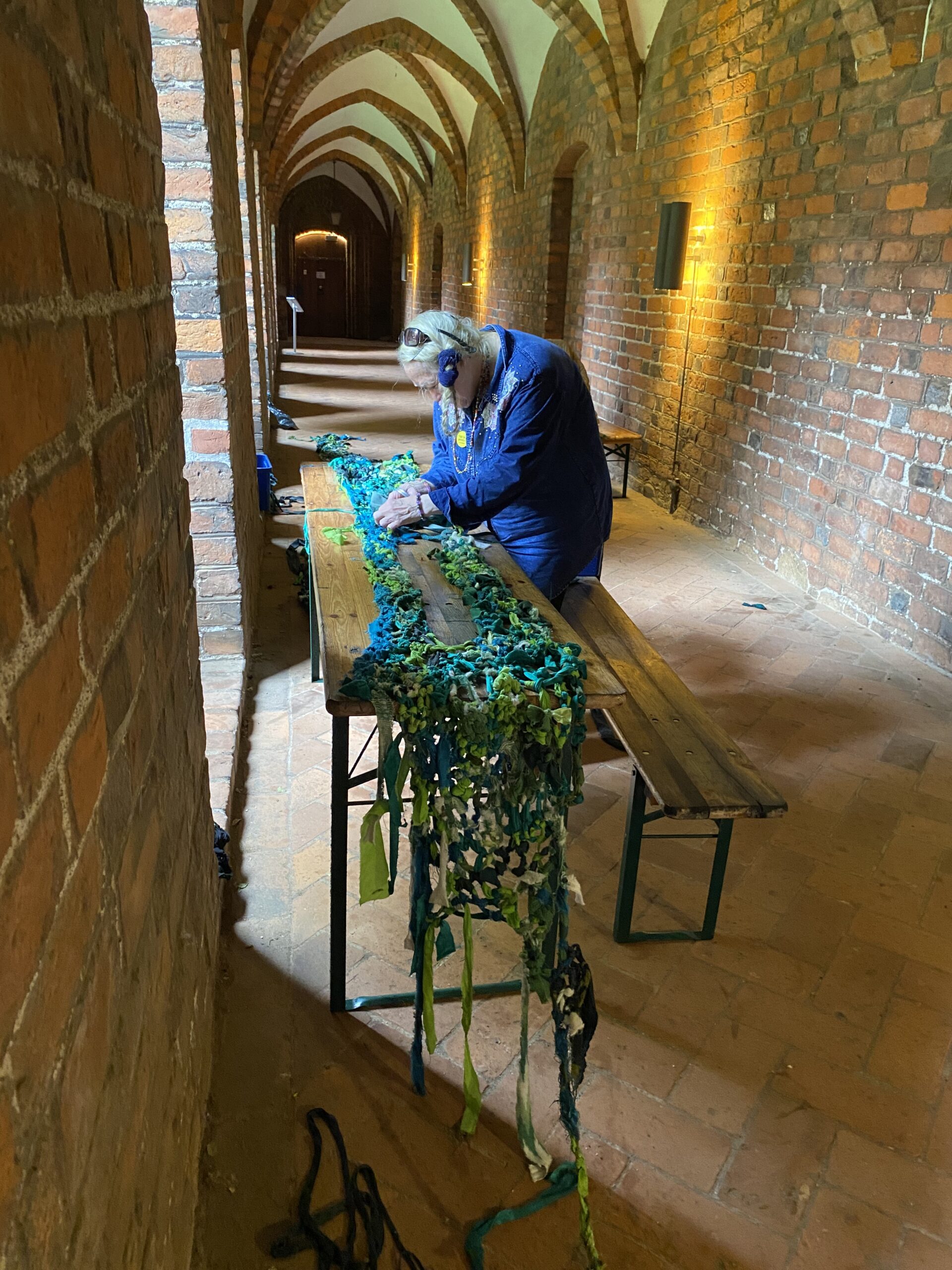
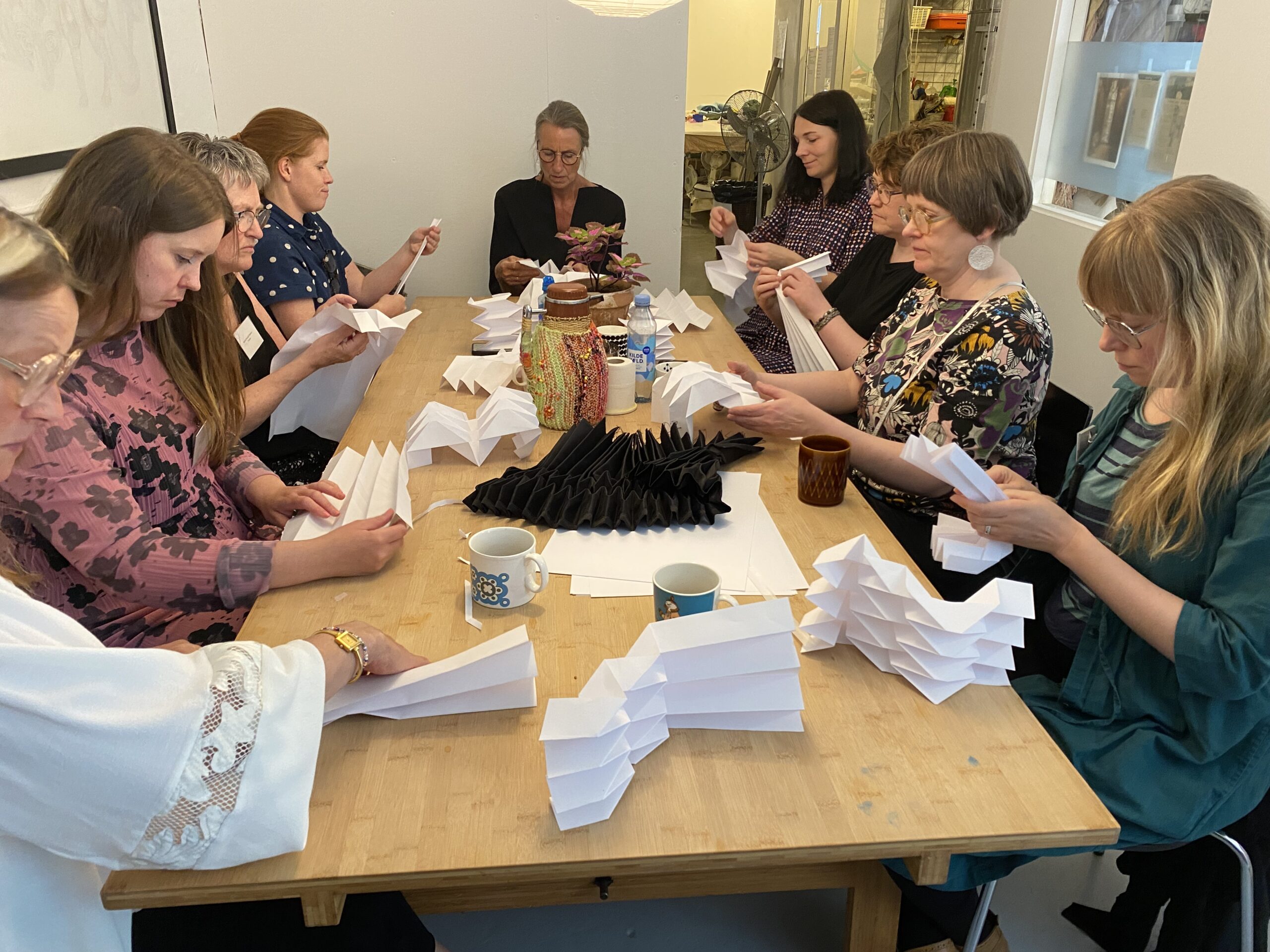
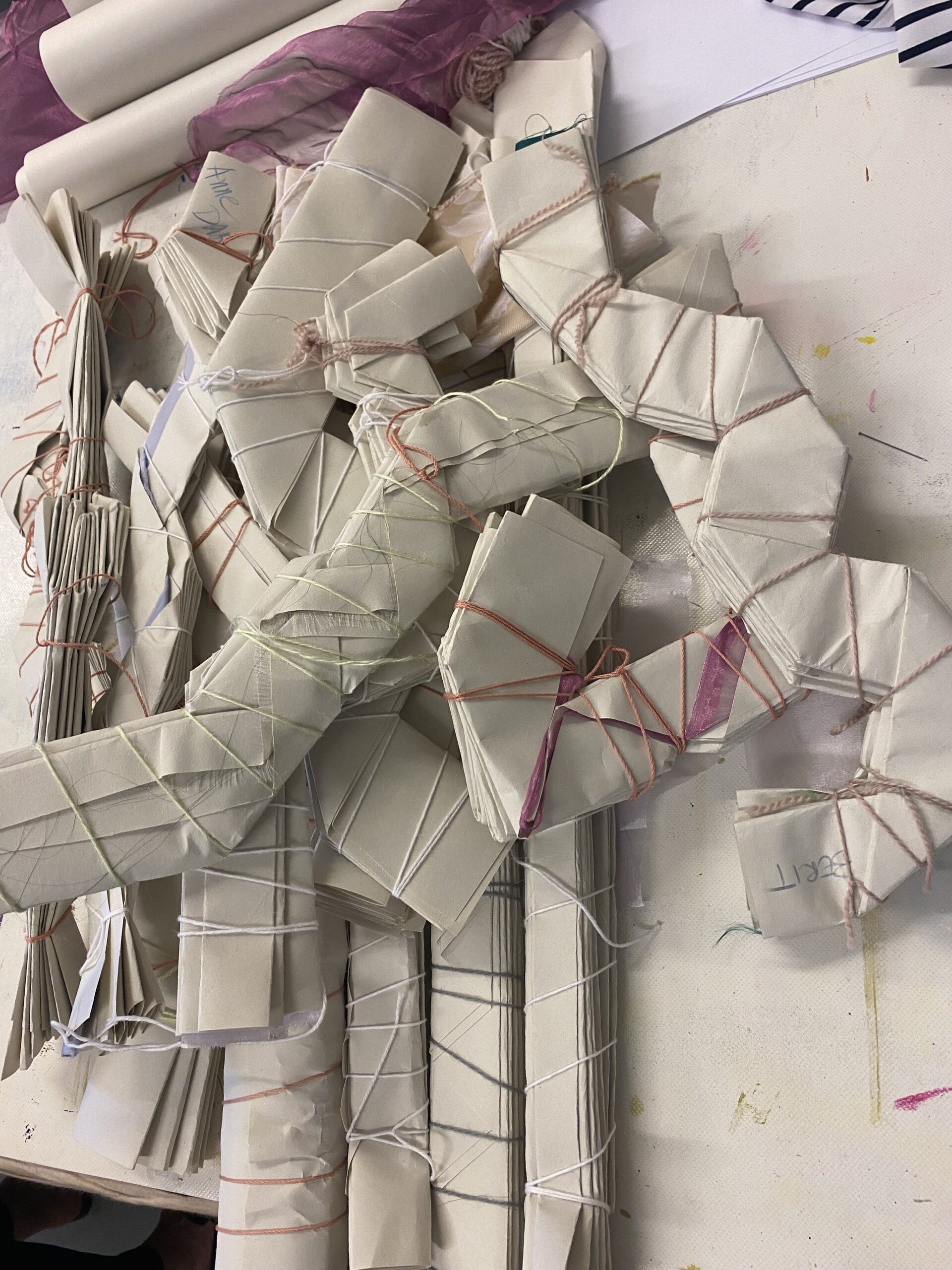
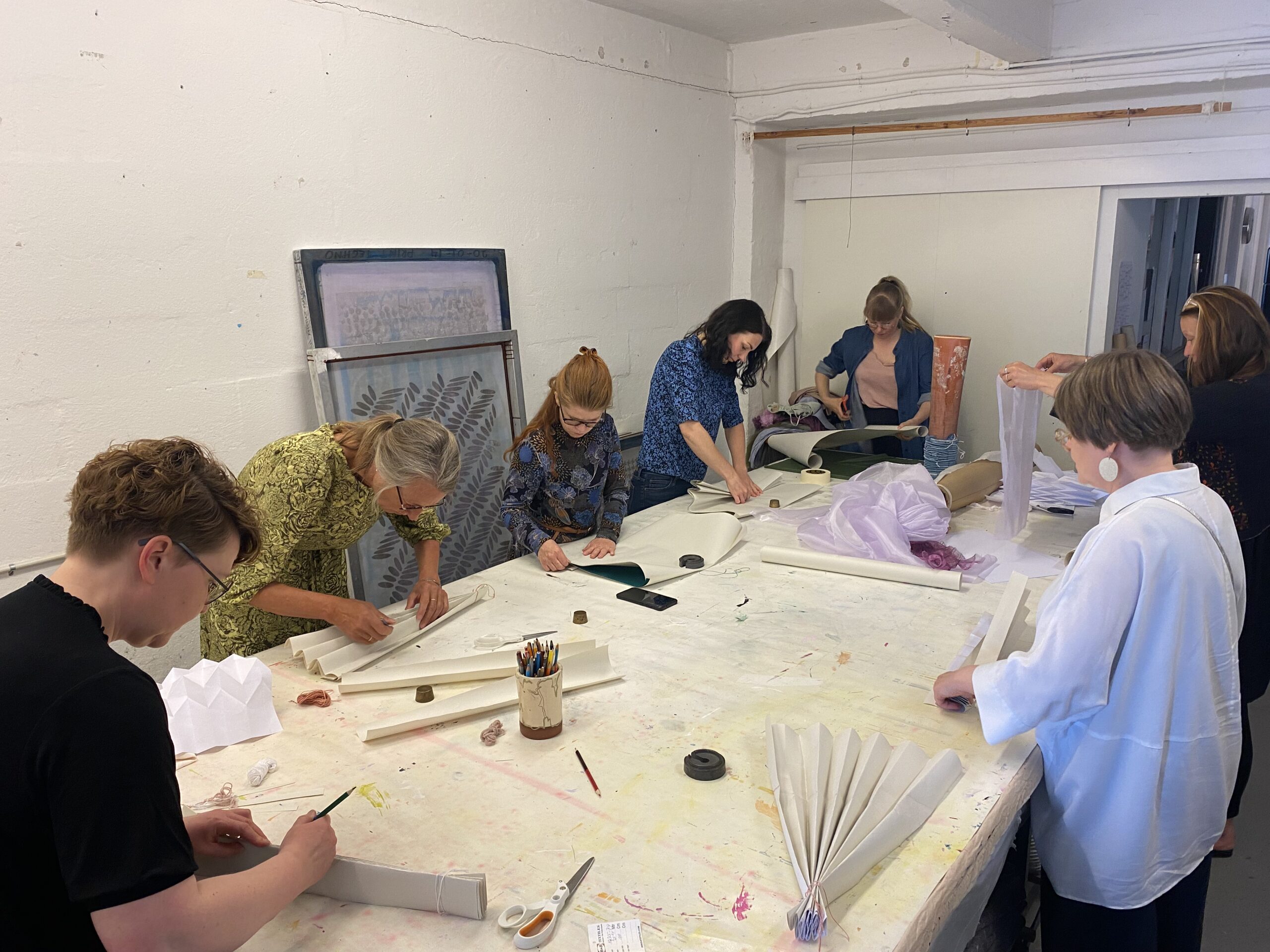
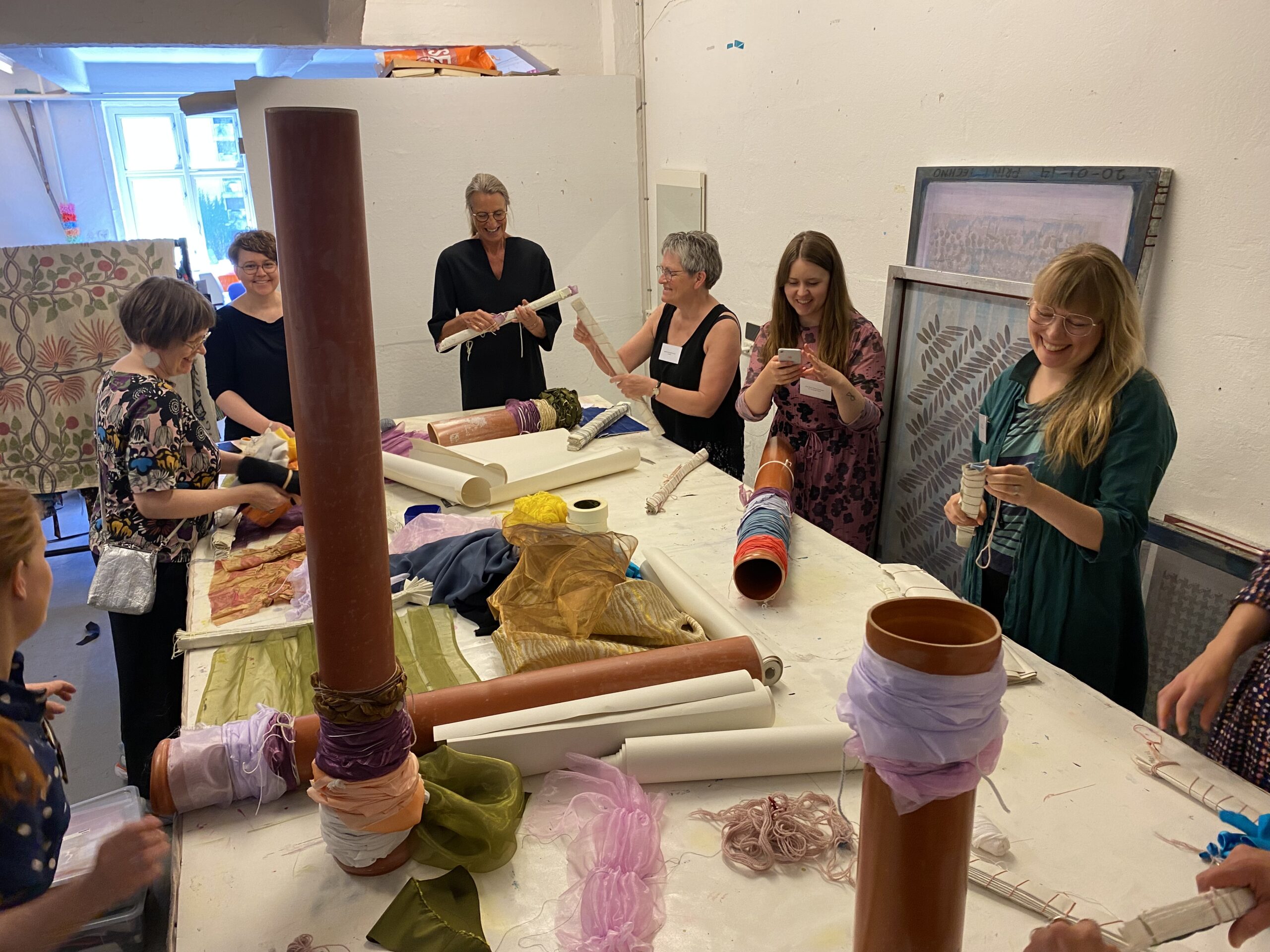
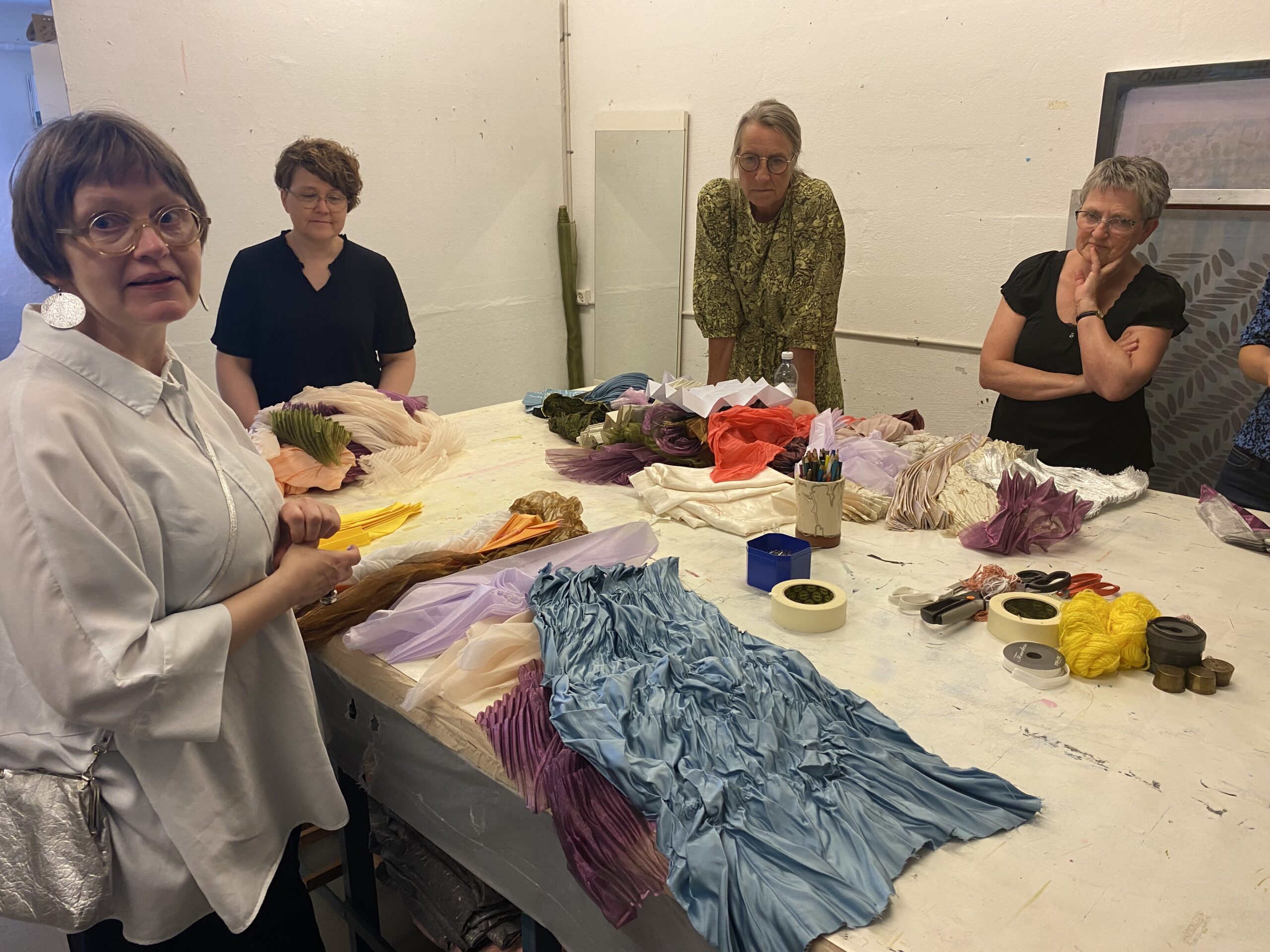
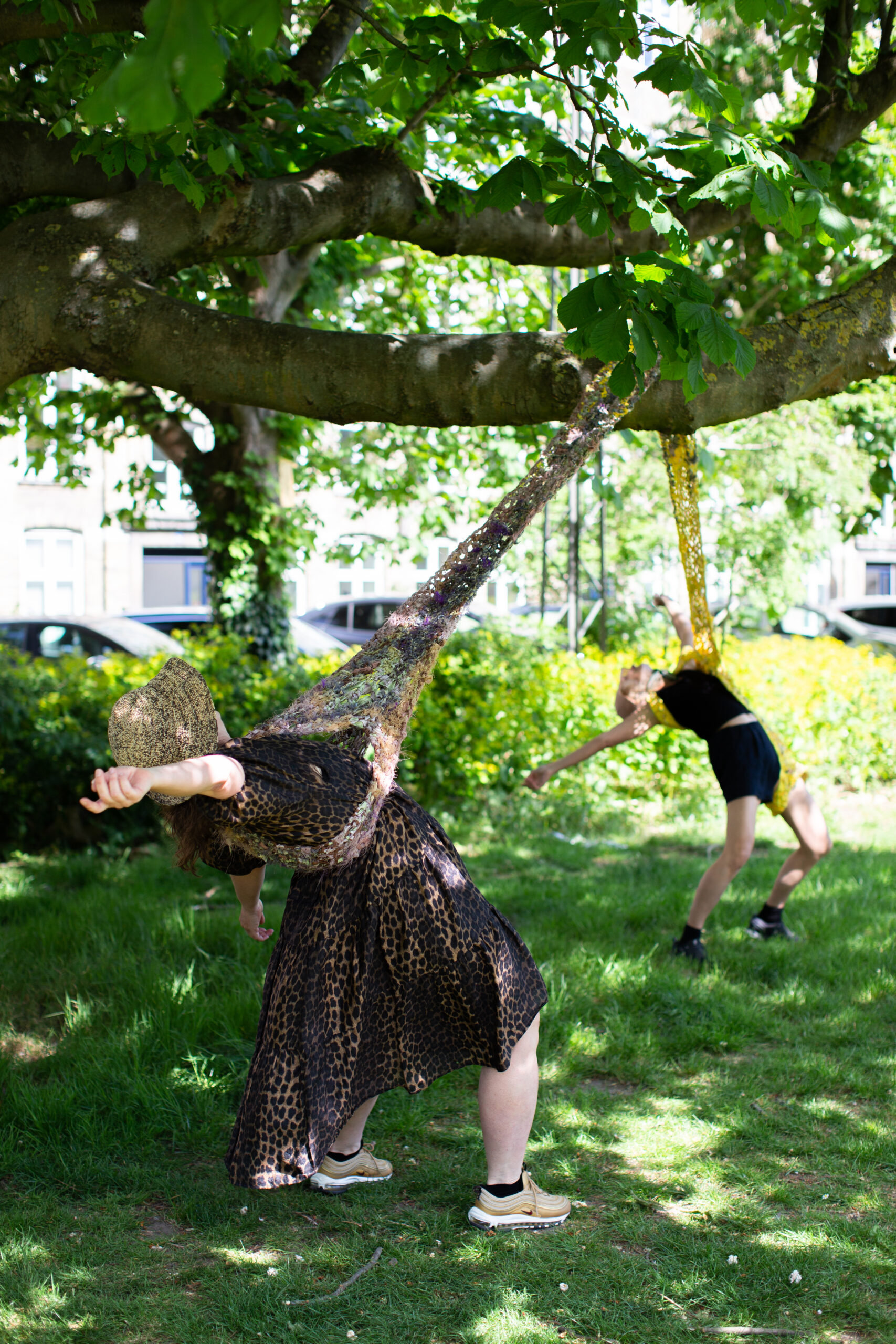
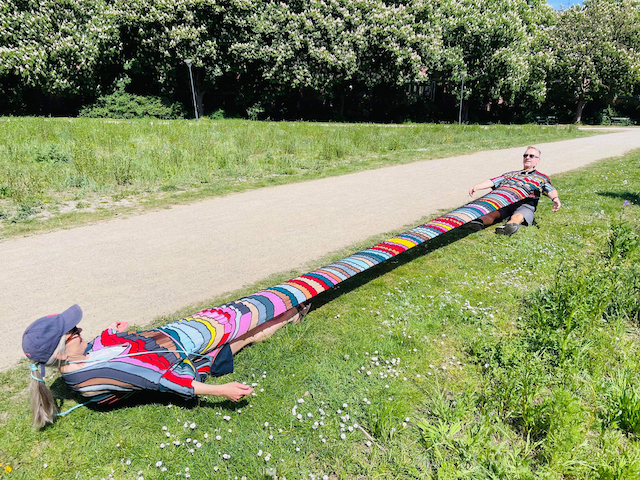
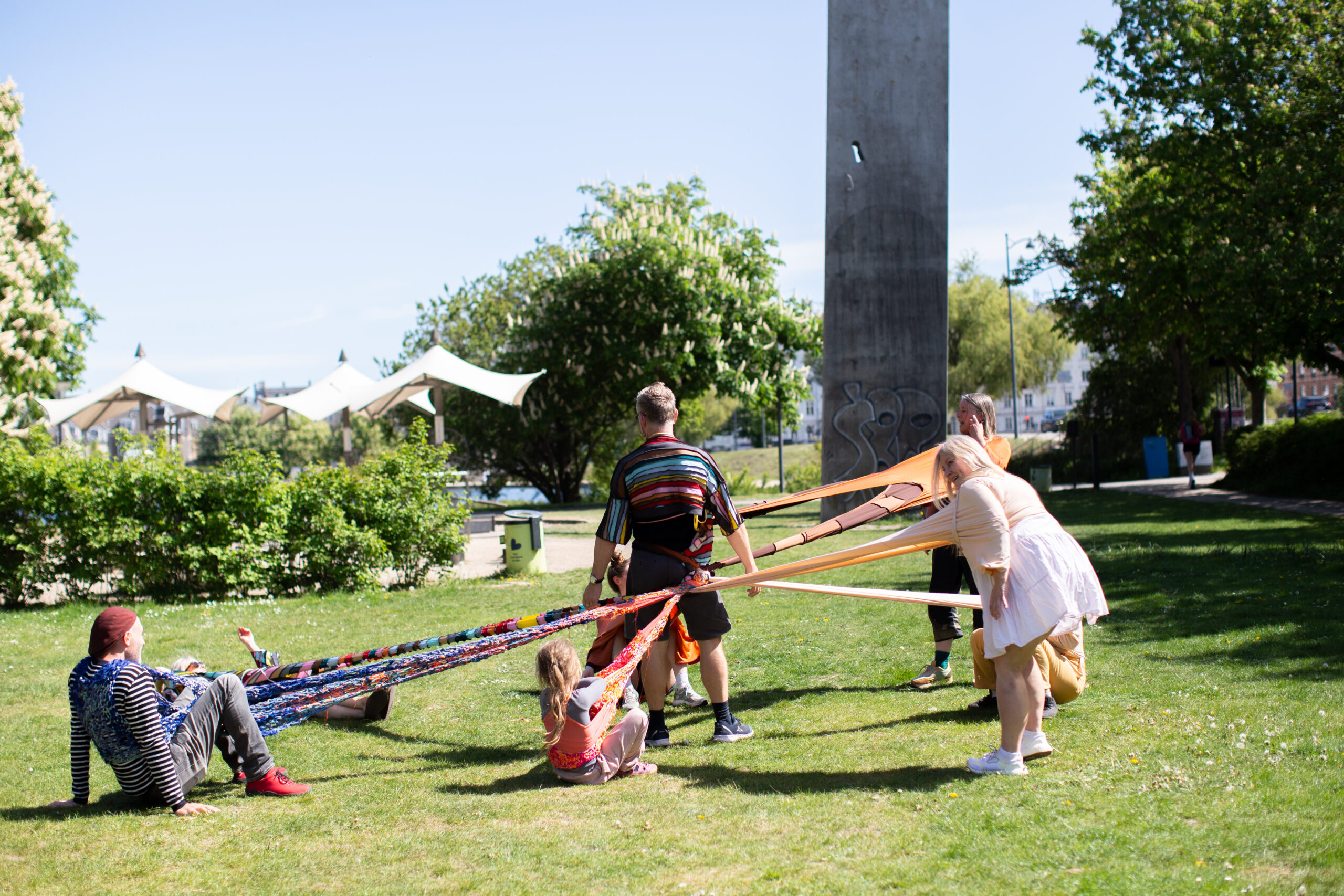
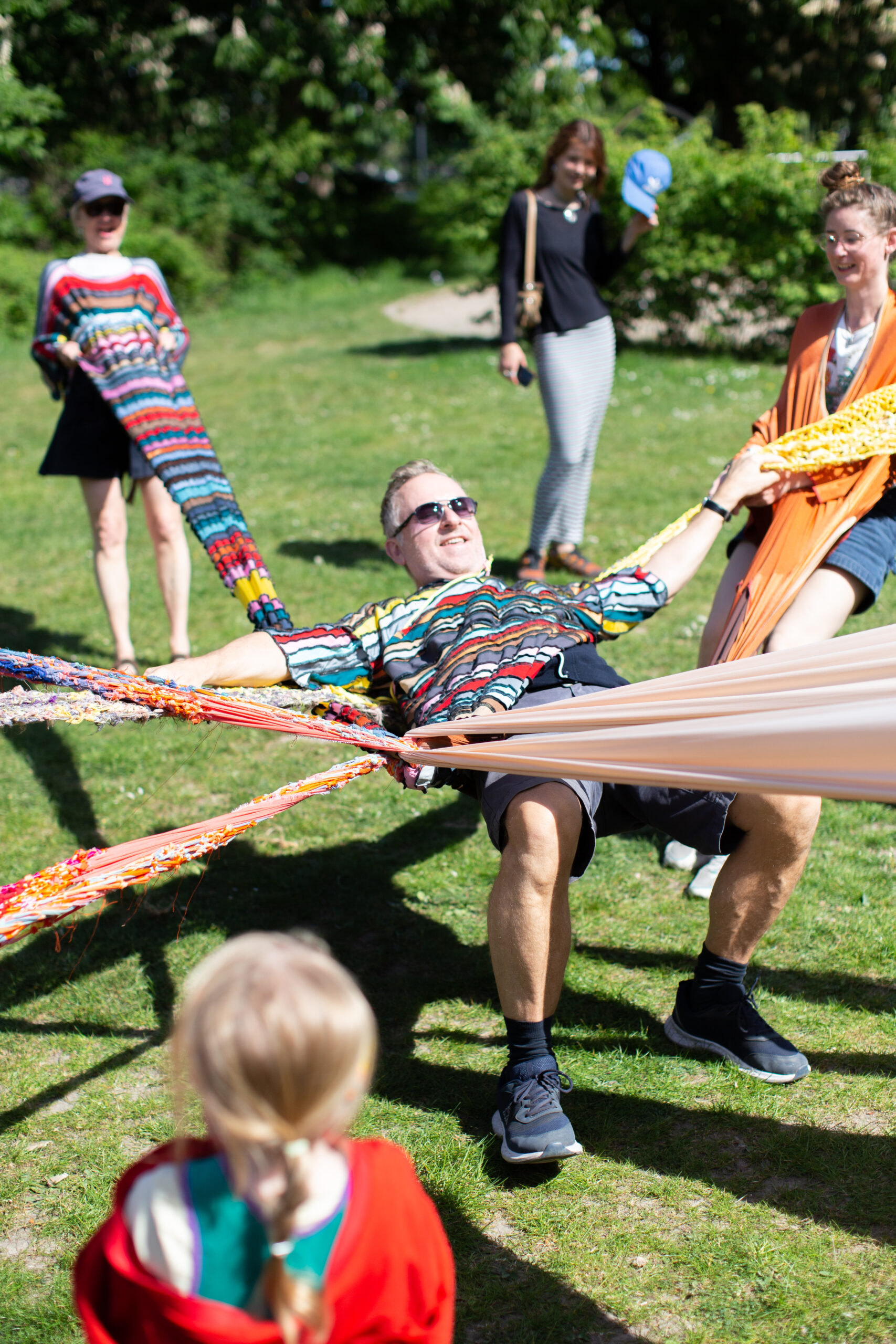
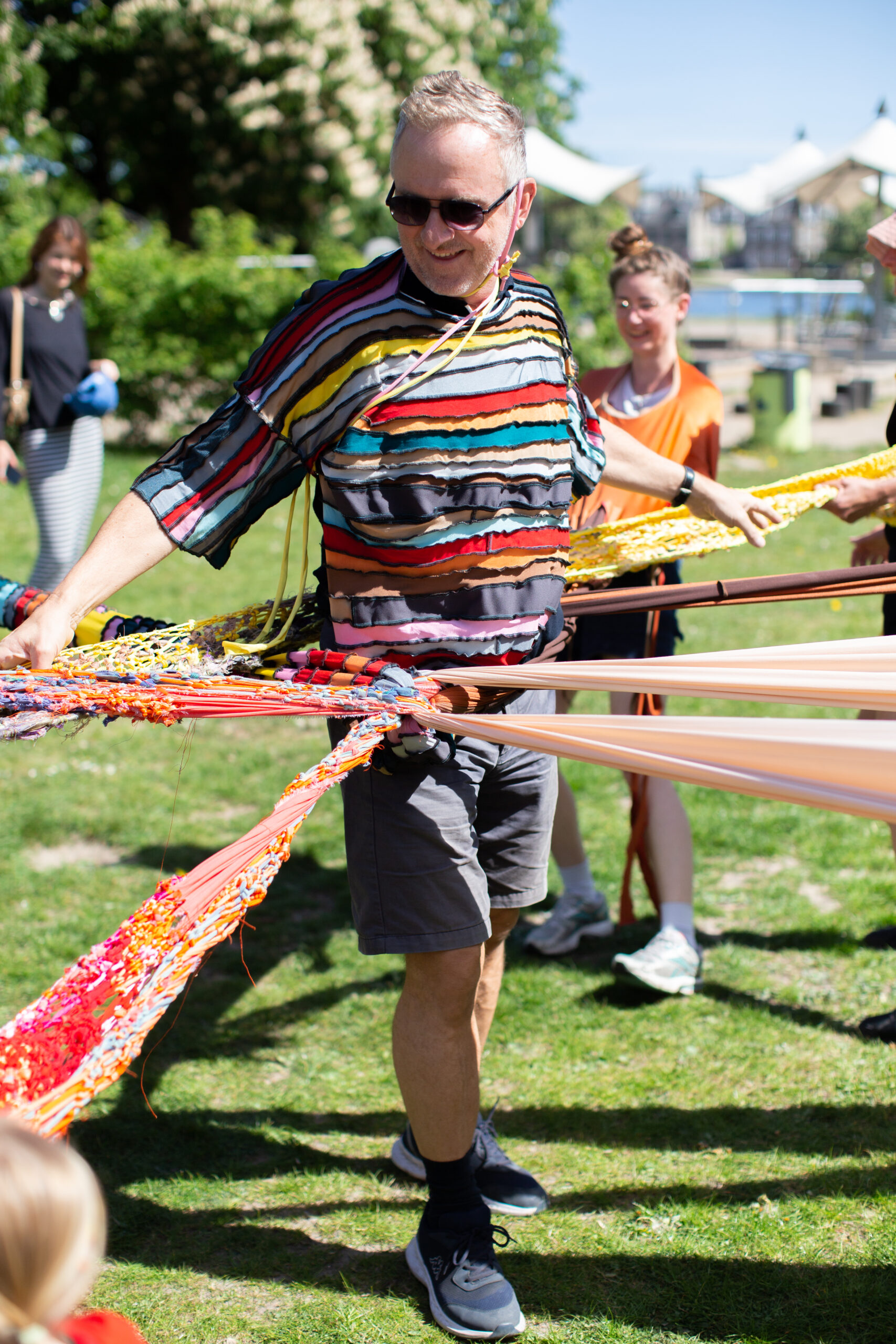
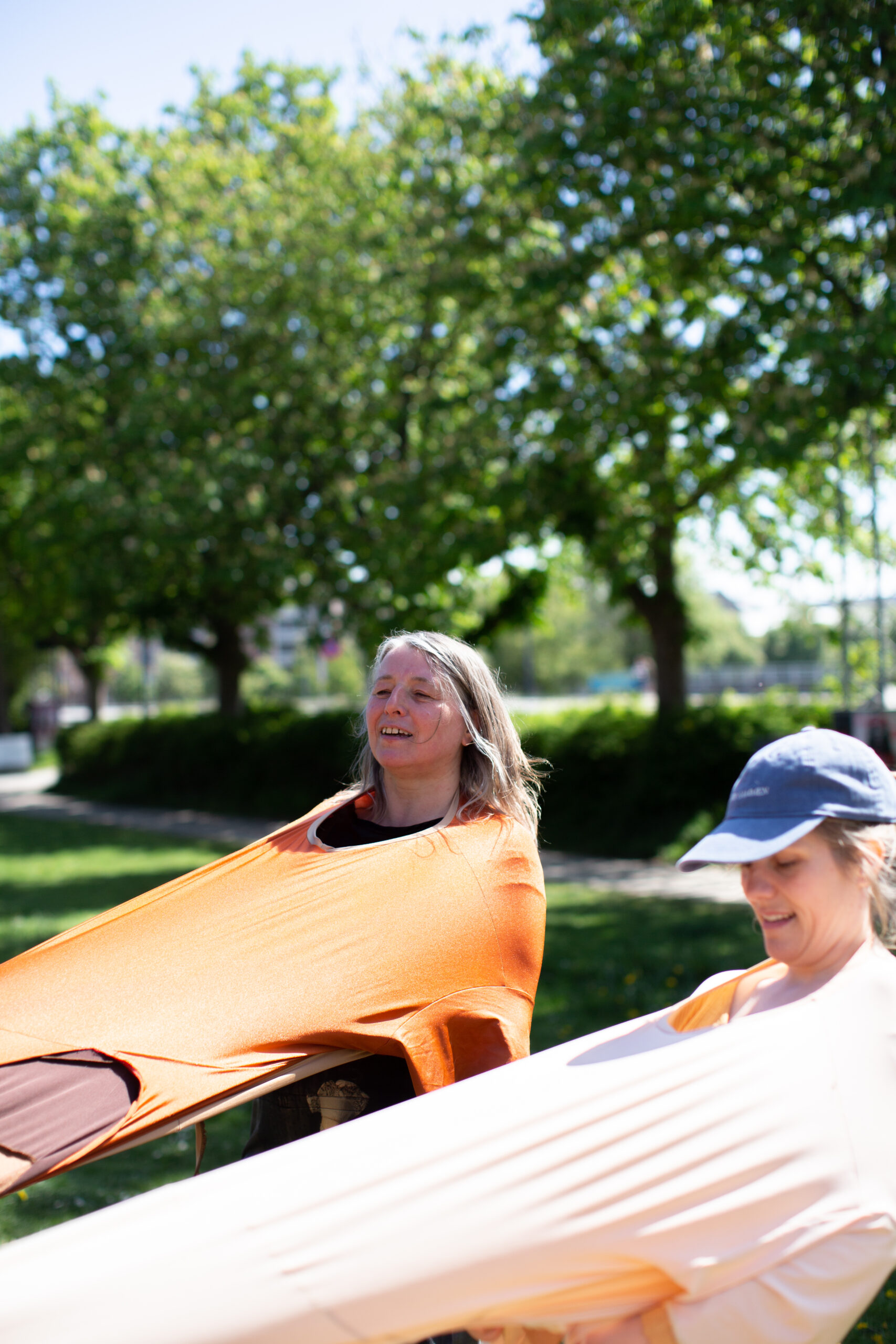
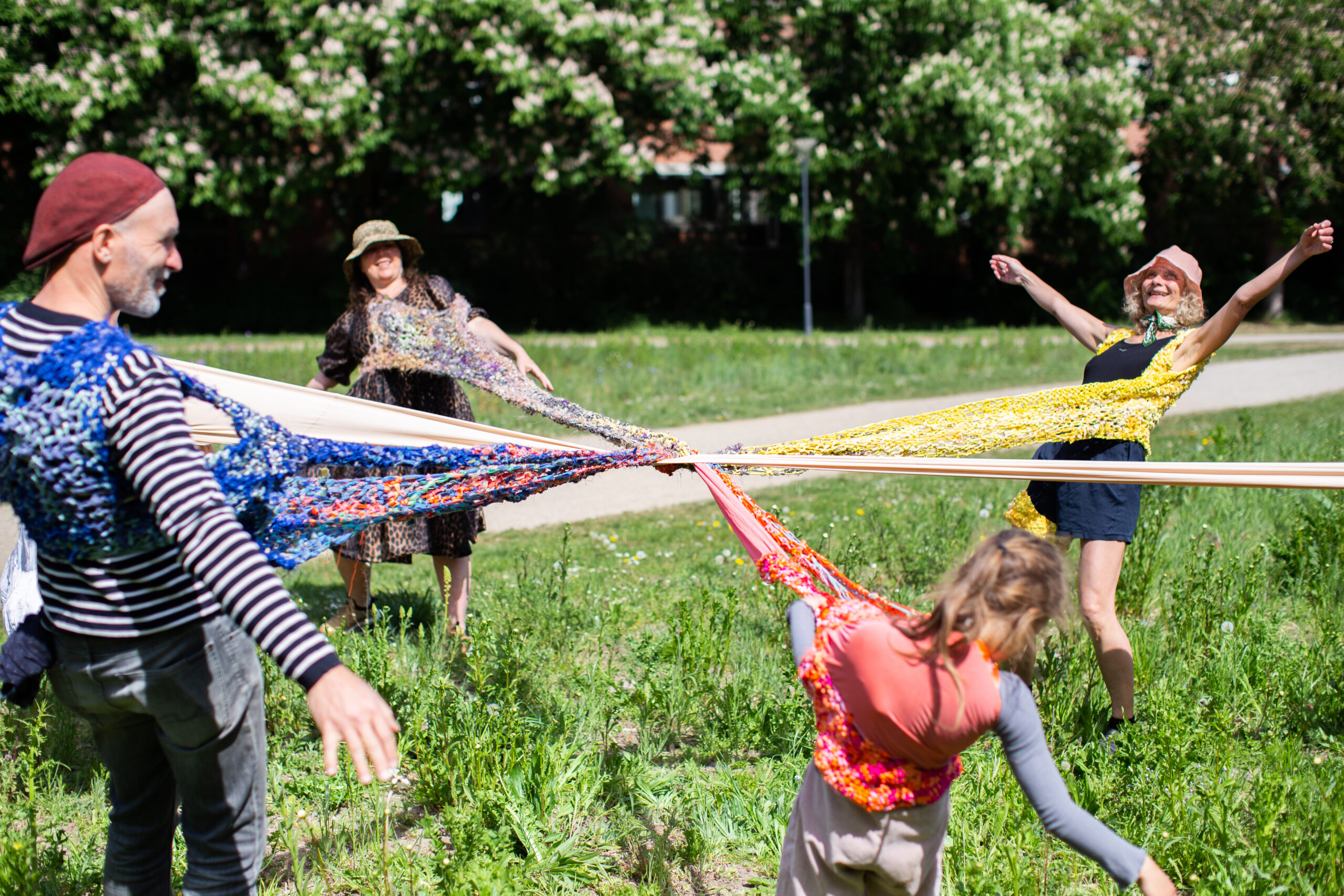
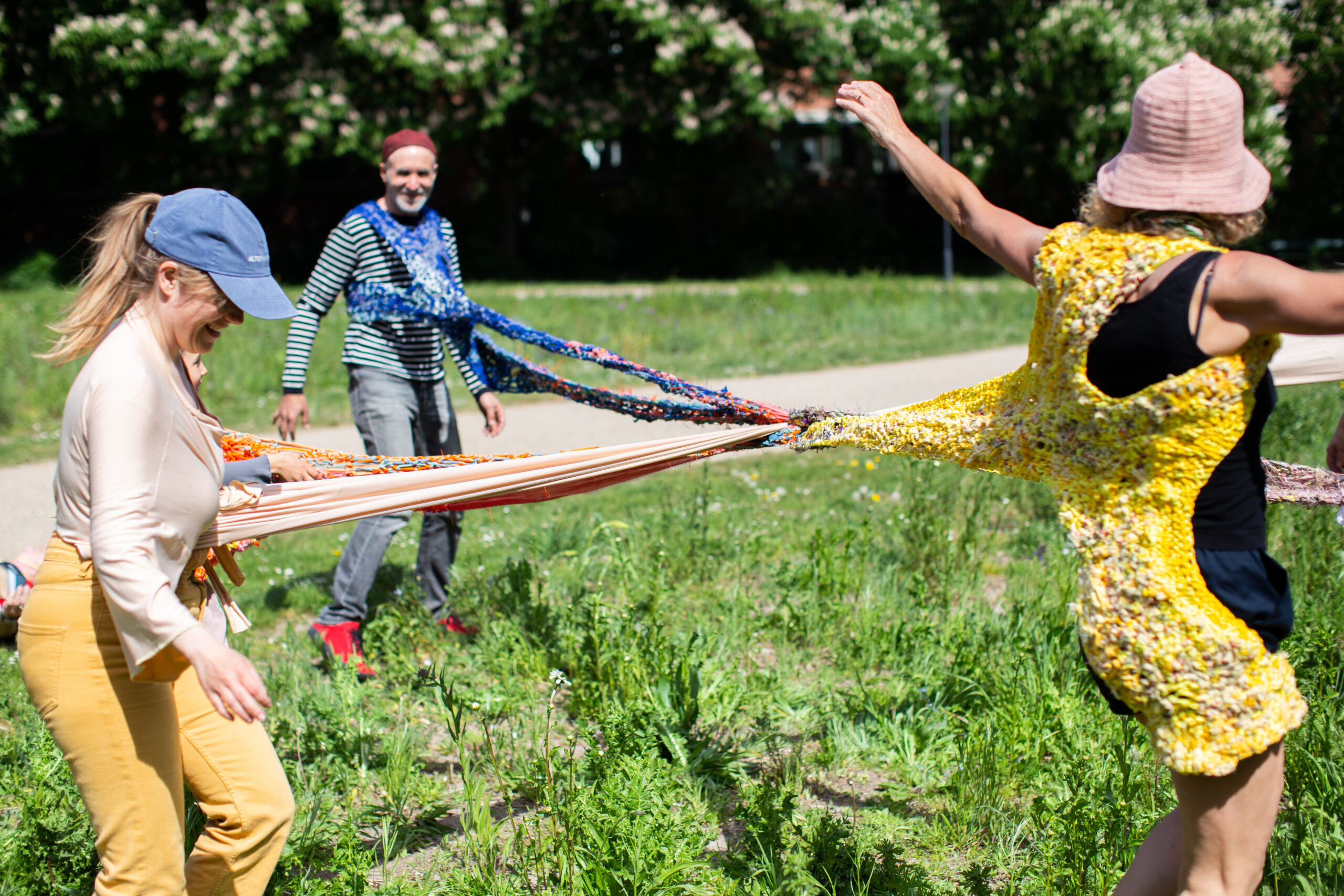
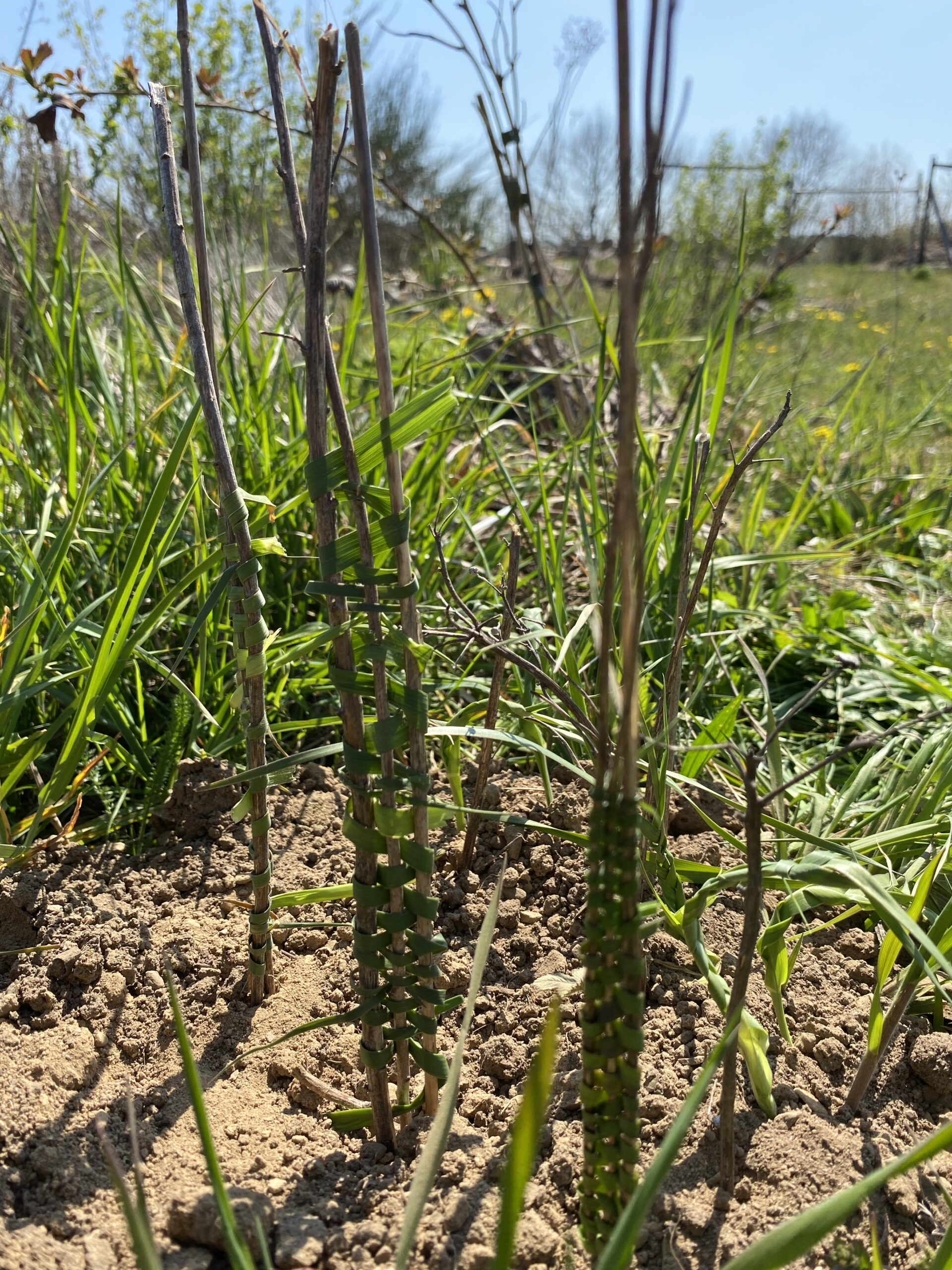
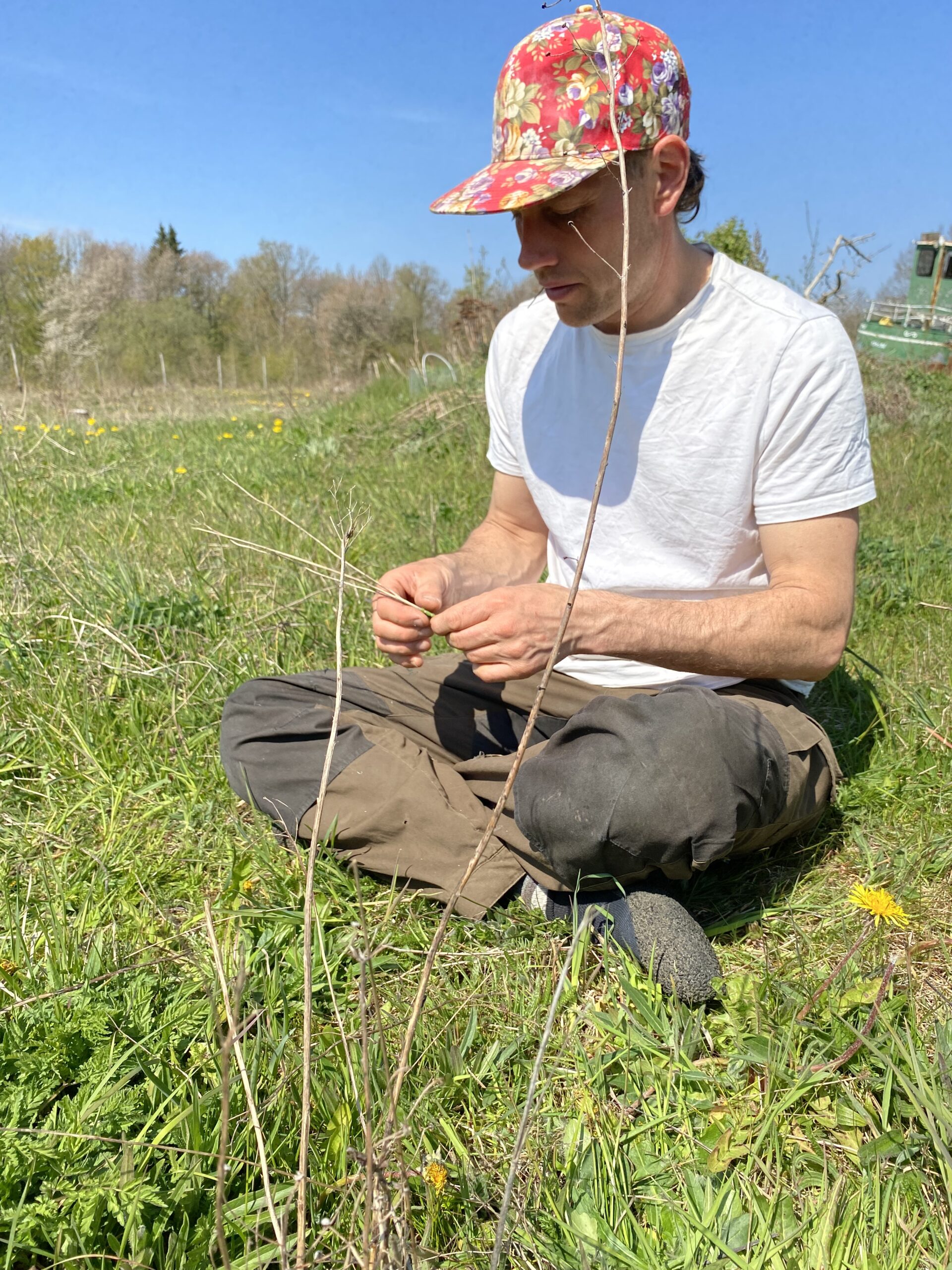
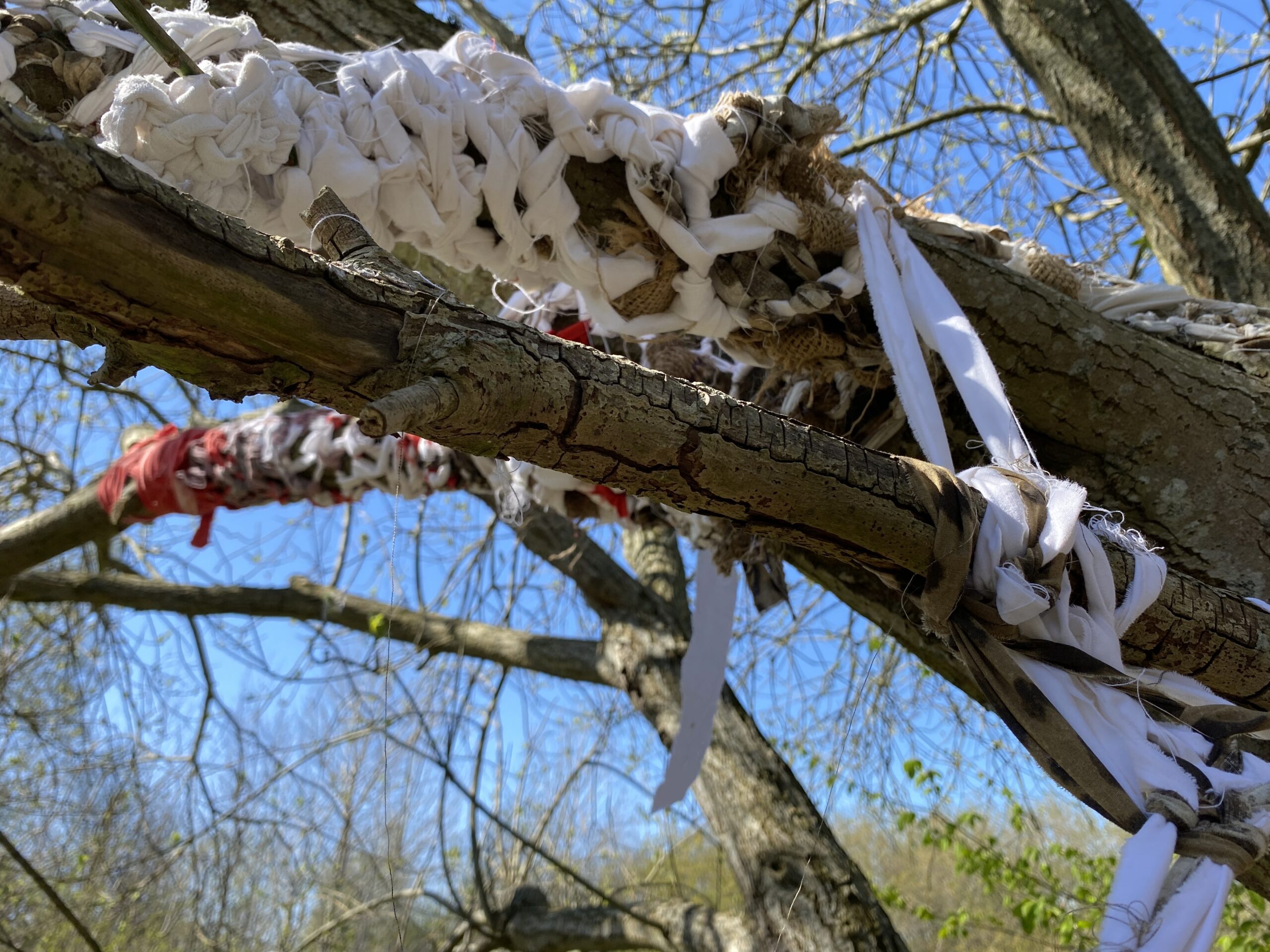
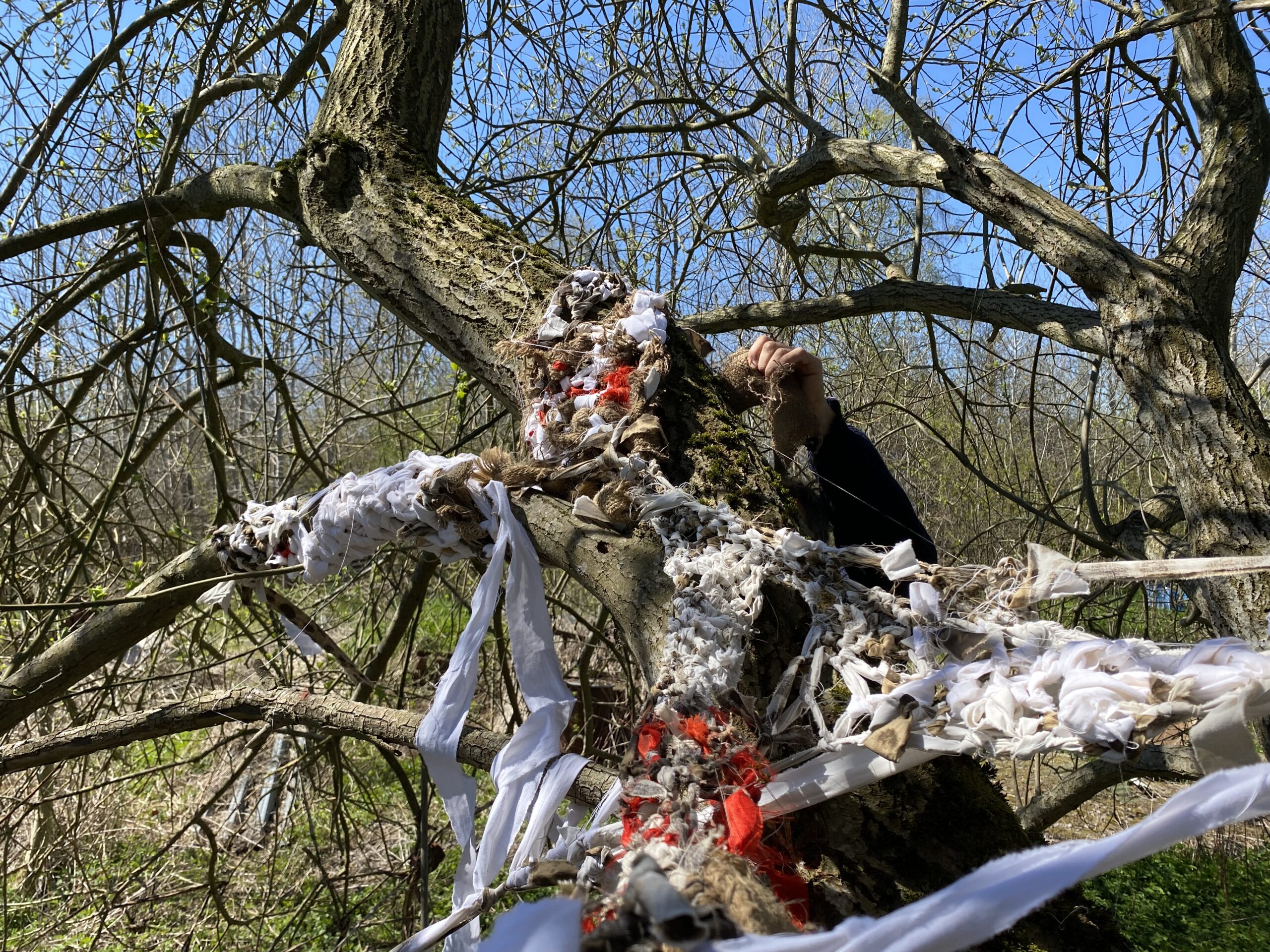
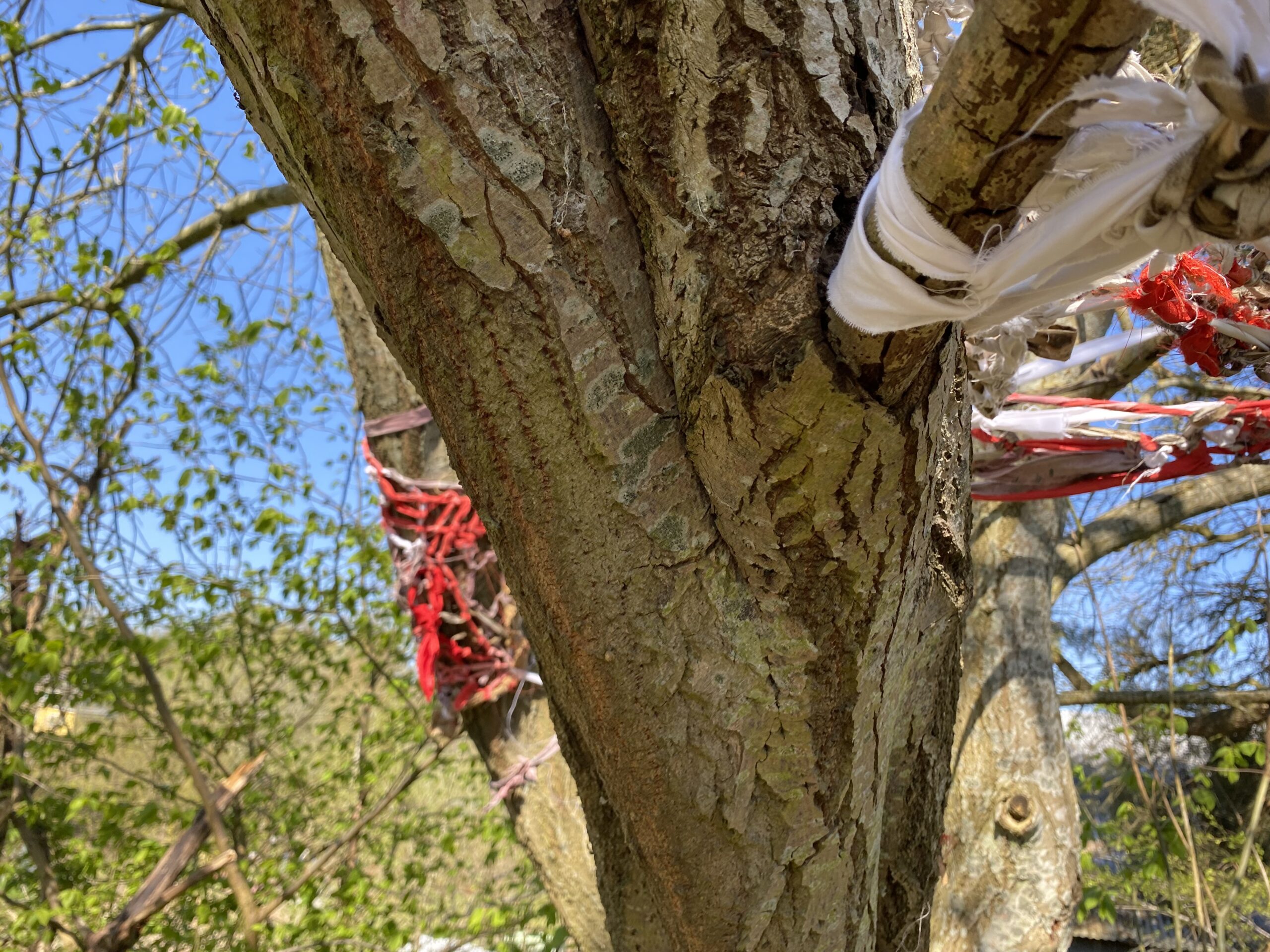
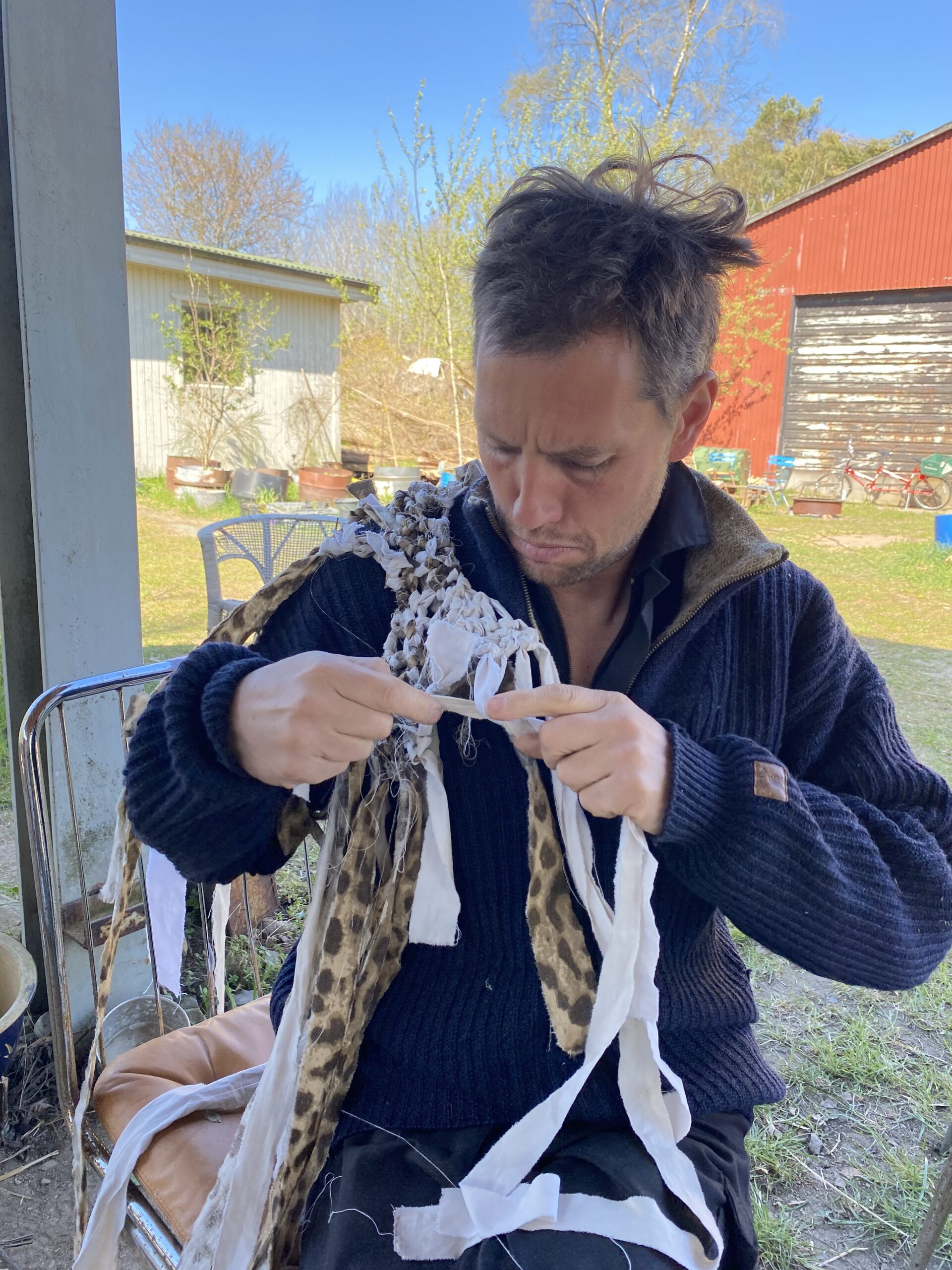
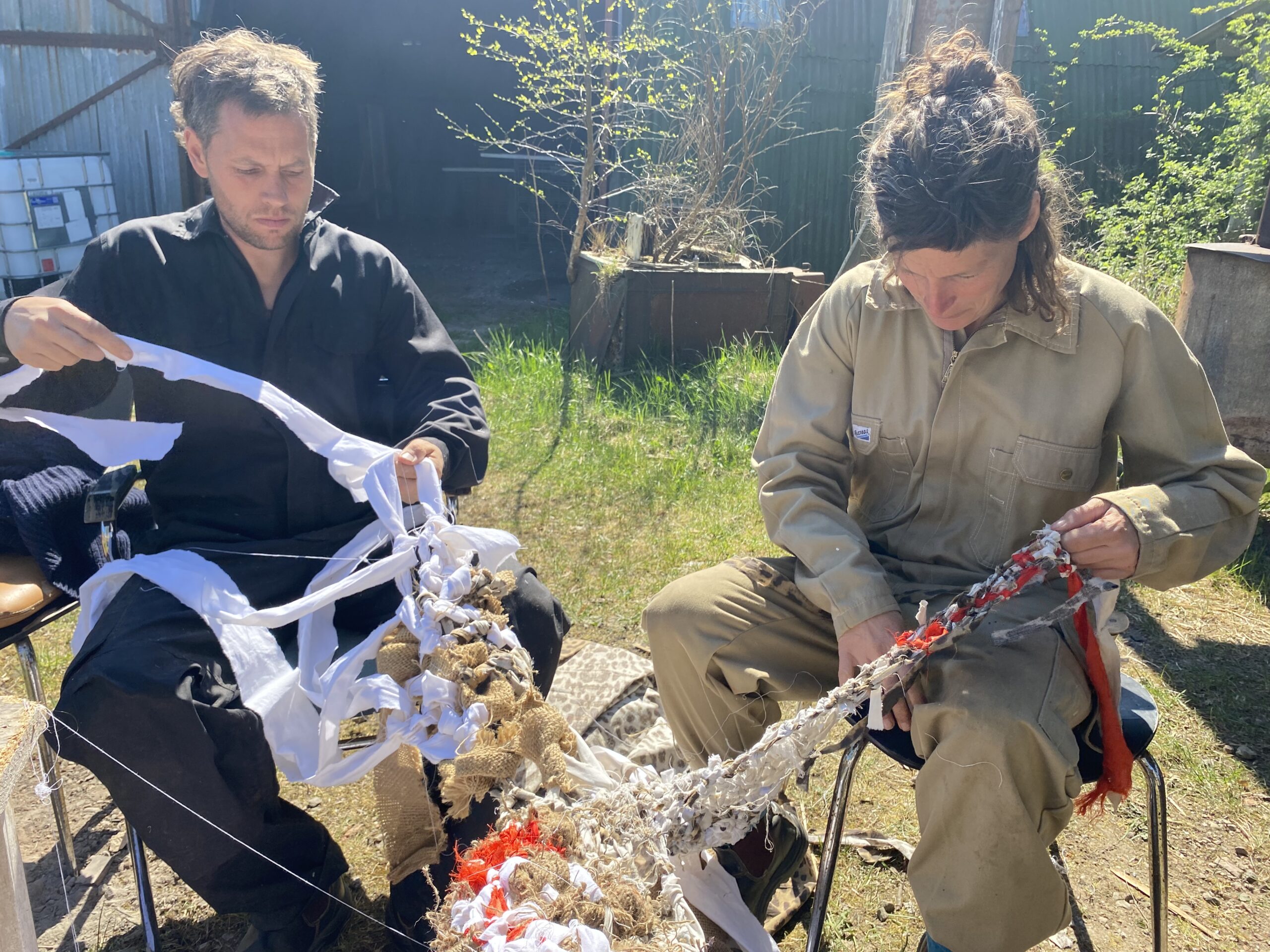
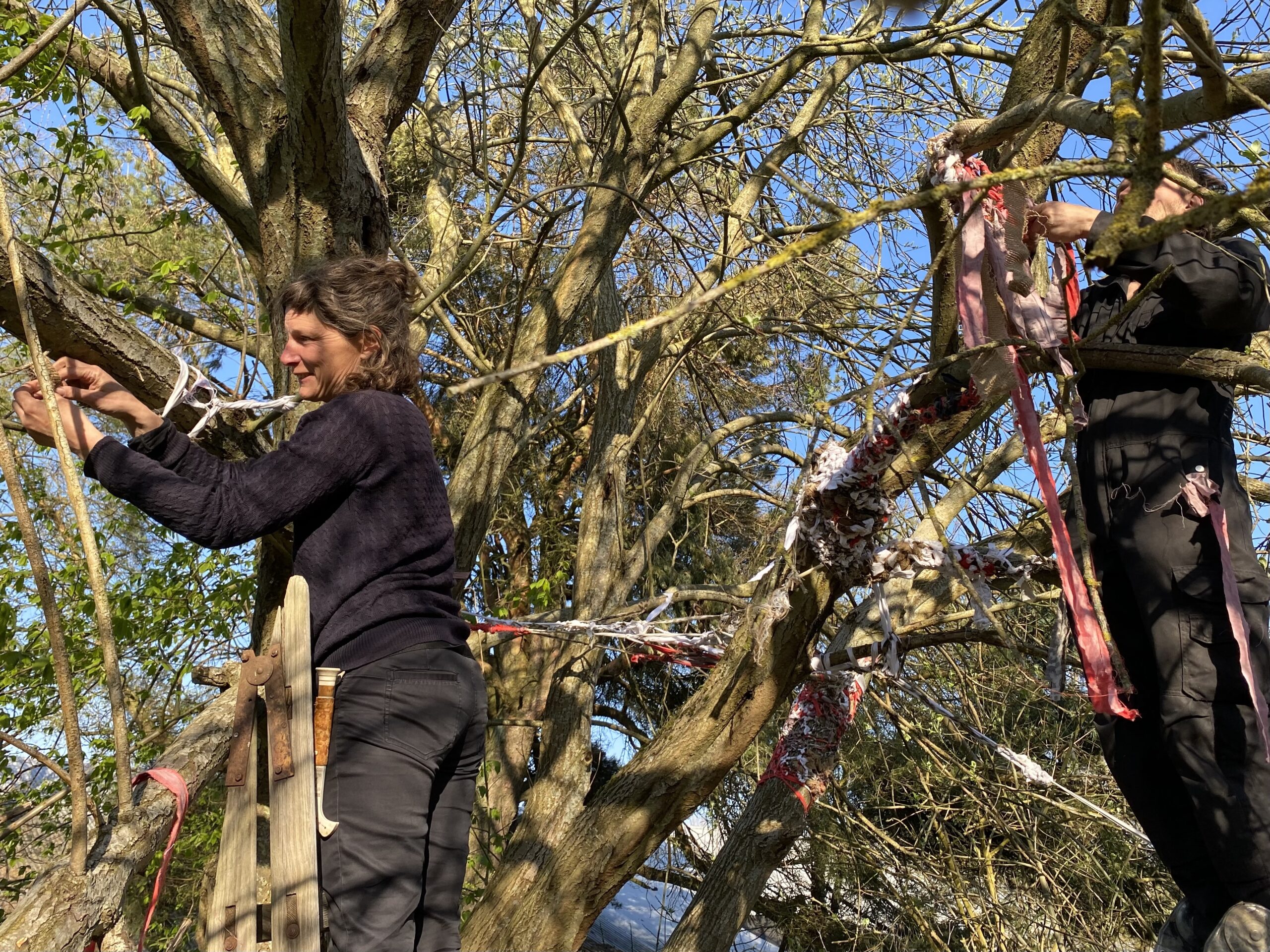
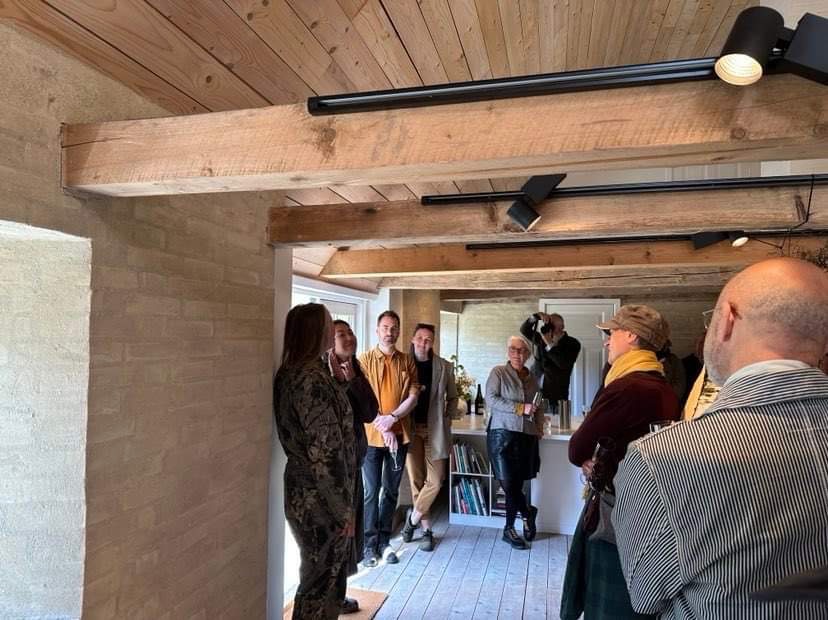
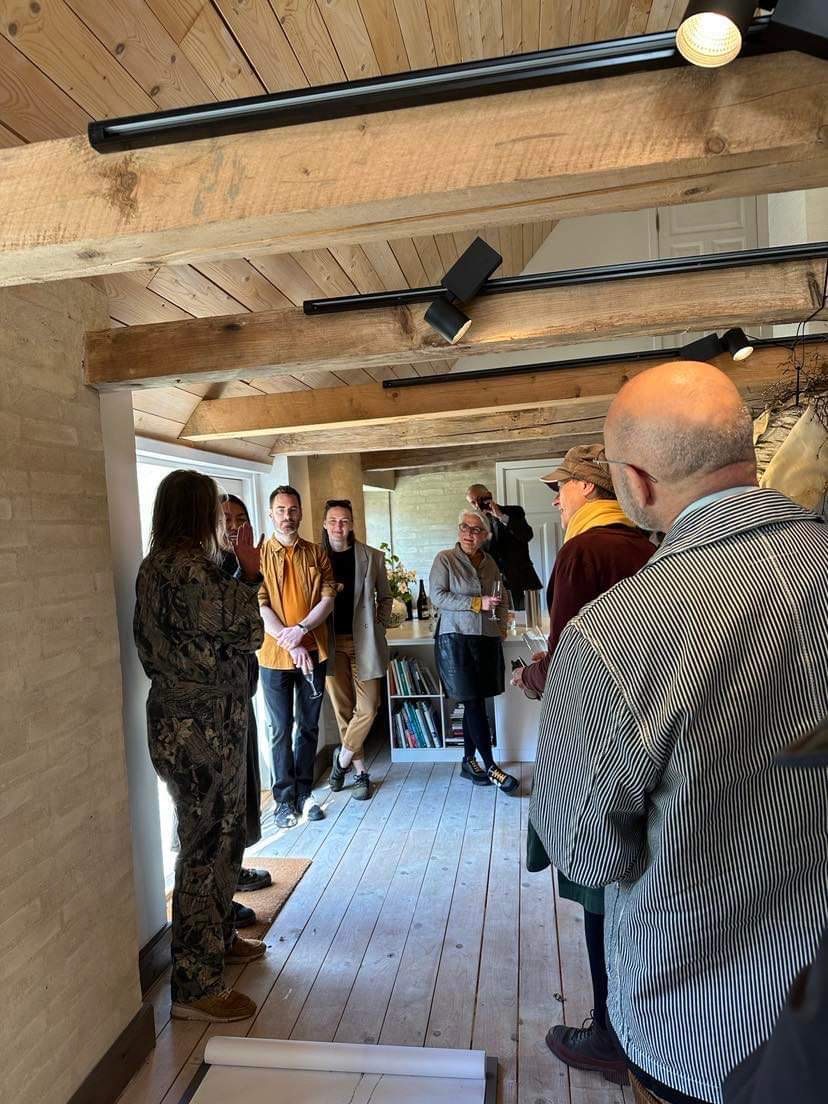
Fokus i udstilling er forandringen af Camillas tekstile værker. For 10 års siden fik Camila (født med downs syndrom) konstateret alzheimers, hvilket har forandret hendes tekstile sprog. F.eks. begyndte Camilla at sample tekstile teknikker på uventede måder og hendes udtryk blev overraskende vildere. Forandringerne i og af Camillas værker har rørt og inspireret mit virke. Derfor er de få værker, som jeg udstiller, inspireret af og i dialog med Camillas værker og tekstil teknikker.
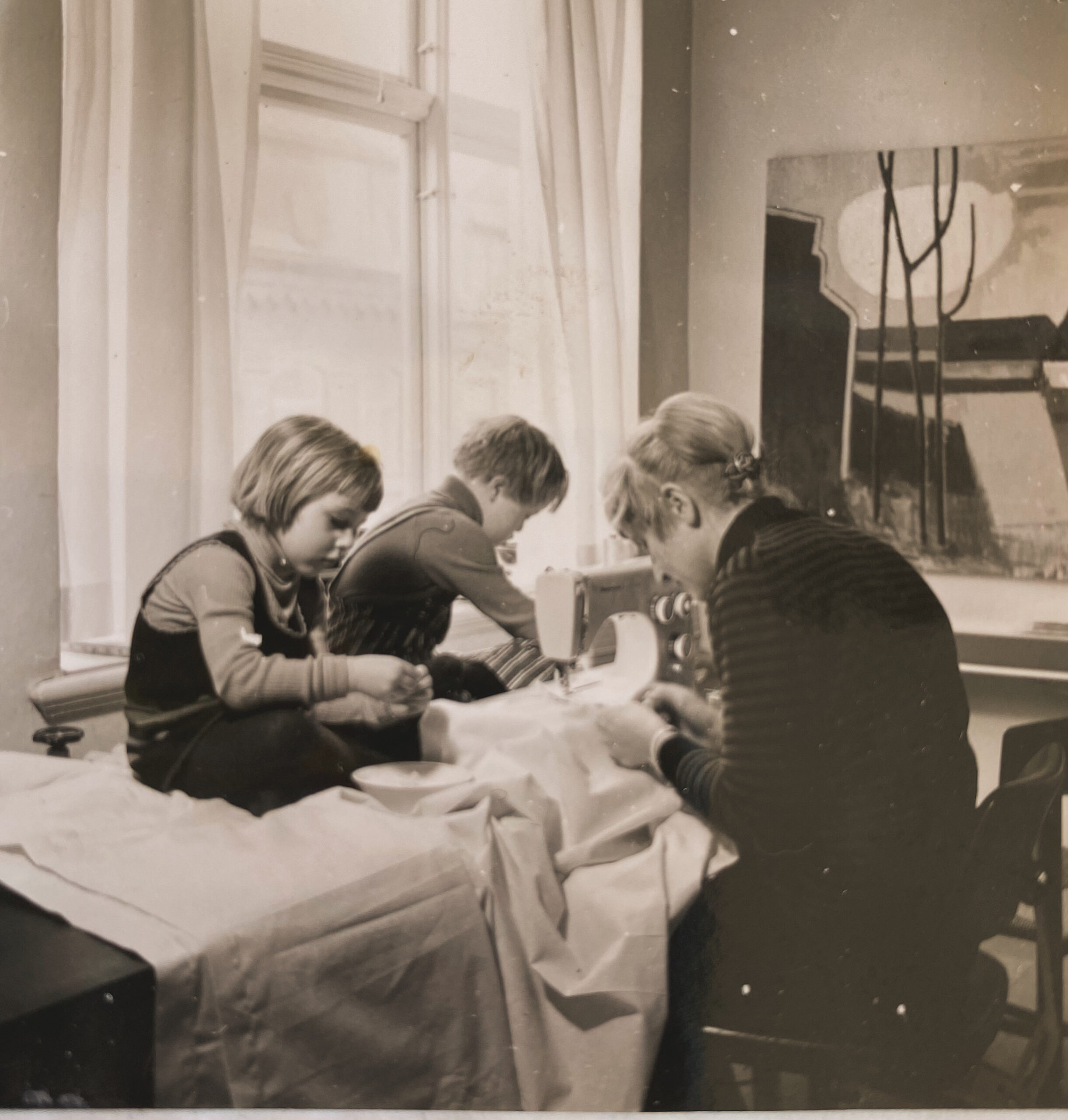
Om os, Camilla og Charlotte: Som børn lærte søstrene Camila og Charlotte Østergaard at trykke, væve, sy, strikke mm af deres mor Ehs Østergaard; tekstile designer/kunster. Gennem deres barndom og nu i voksenlivet er tekstilet et fællesskabende element mellem dem. På trods af deres forskellige tilgange til livet og deres forskellige måder at være i verden på er tekstilet deres fælles sprog. Hvor Camill (født med downs syndrom) hele livet helt intuitiv har udfoldet og udtryktsig igennem tekstilerne og er Charlotte blevet skolet – hun uddannede sig som designer og nu som kunstnerisk forsker. Hvor Camilla har broderet, hæklet, strikket og kniplet brugsting og billeder, har Charlotte designet/skabt beklædning, kostumer og udstillingsobjekter. På trods af søstrenes forskelligartede måder at skabe og udtrykke sig på gennem tekstiler, så har det tekstile sprog altid skabt et stærkt fællesskab og nærvær mellem dem. De deler passionen for tekstilets poetiske og kunstneriske udtryksmuligheder.
Surrounded by water, isolated from mainland, as birds we travel over the waters, we pause and we rest with the island. We wander and wonder, we wonder and wander with the treasures, the secrets and the knowledge that are embedded in island.
Blessed to be invited. As foreign birds the island (its people, its beings, its stories, its places, its vegetation, its knowledge, its food) penetrates our visiting bodies.
And as our journey moves on, our wings are marked with traces of the island, we float and wonder what is archived in our wandering wings and bodies, what will the island traces (that are archived in our bodies) induce in the future.
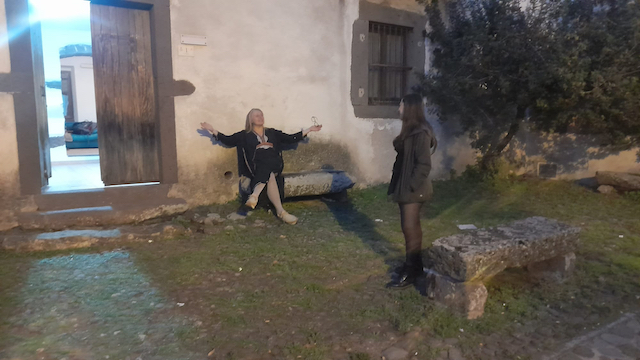
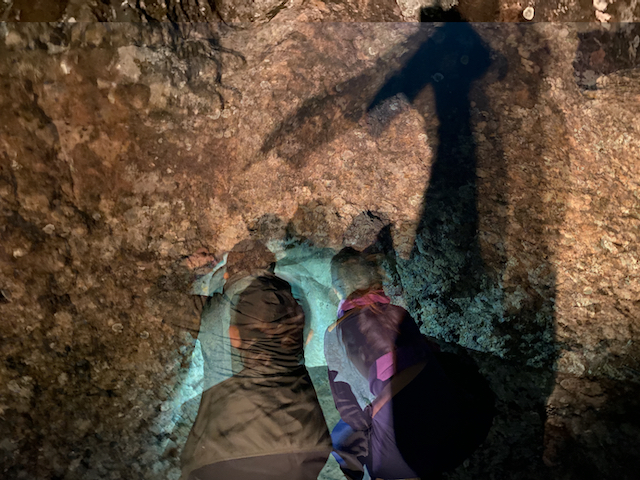
The theater in Paulilatino is a unique edifice that with its oddness begs for reorientation and rediscovery. It beckons us to delve into hidden spaces, uncover the concealed narratives residing in its nooks and crannies, and decipher the tales it yearns to share with its visitors, be they performers, audience members, or others. As we venture into the vast expanse of theater space, we transform, becoming less of who we were when we entered and more akin to those subterranean beings of Bornholm. We shun the light, embracing the shadows, and defy the norms that seek to constrain the space.
These narratives extend beyond the conventional, embracing non-patriarchal thought patterns and innovative performance styles. Our brief videos serve as an open invitation to fellow explorers, urging them to continue the quest of unveiling the thrilling secrets nestled within this venue in Paulilatino. There, one can unearth myriad untold stories, fresh perspectives, and diverse performance methods, ultimately inspiring the reinvention of the theater space in countless exciting ways.
A tribute to the two Island Connect journeys: Embarking on a journey to explore the islands of Bornholm and Sardinia, we view the worlds through the perspectives and kind invitations of our hosts. Our adventure uncovers enchanting landscapes that hold the rich tapestry of past stories, healing wisdom, and the intricate relationships between humans and the non-human worlds. These experiences transform us into an interconnected collective, blurring the lines of where our creative inspiration originates – for in this entanglement, the source becomes secondary.
What remains unmistakable is the common thread uniting us – the island themselves. Within this entangled web of relationships, we find expansion. Our hosts serve as guides, generously sharing their knowledge of places, landscapes, and stories, and we, in turn, share the profound experience of exploration. As our collective awareness broadens, our conversations intertwine with the very essence of the lands, the flora, the sounds, the people and other beings, the skies, the play of light and darkness, and so much more that often escapes our immediate notice.
In this intertwined existence, we coexist with the myths and the mystical energies inherent to the islands, their landscapes, and the beings that inhabit them, including the mythological creatures like the fairies and the underground denizens “de underjordiske.”
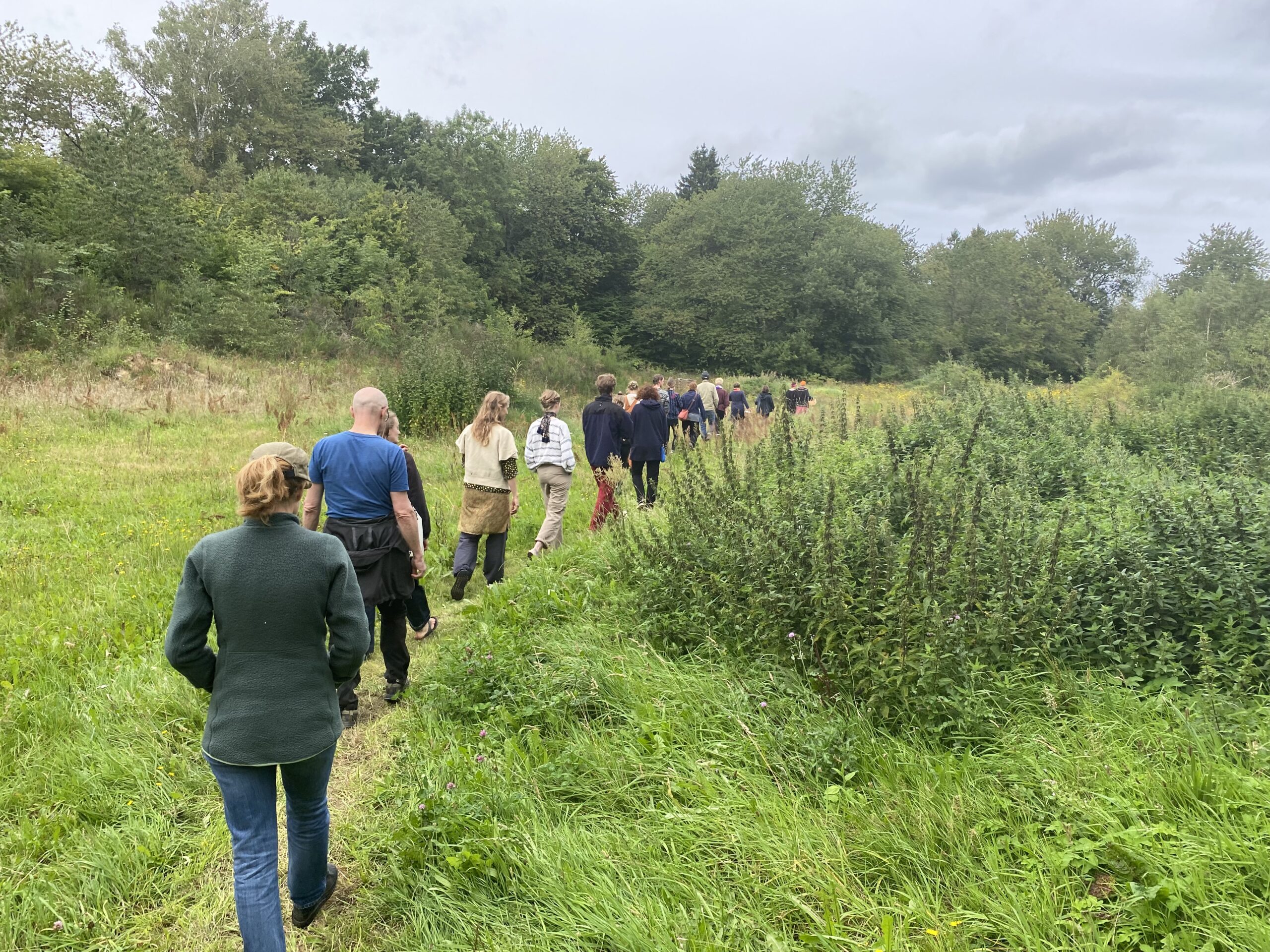
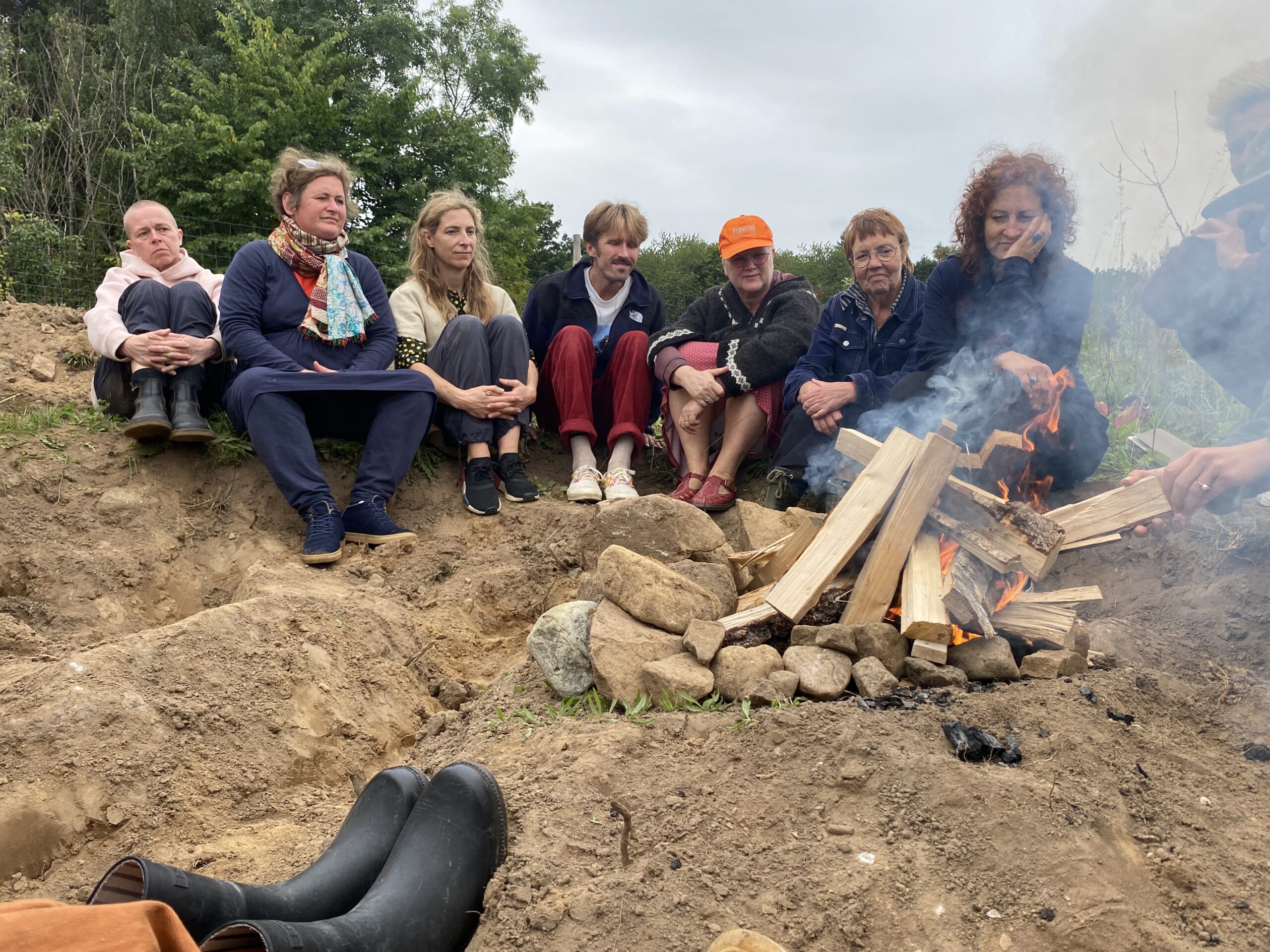
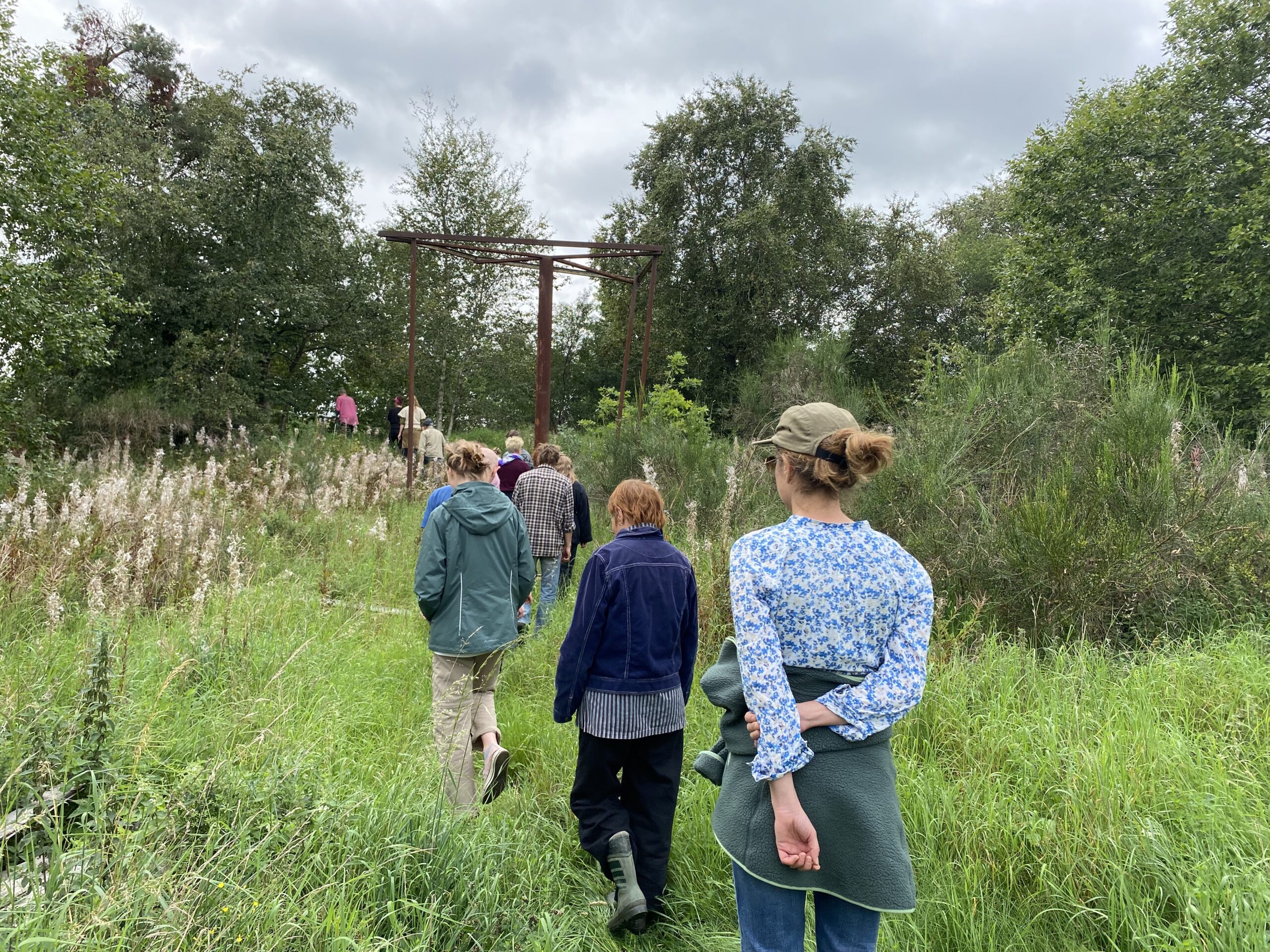
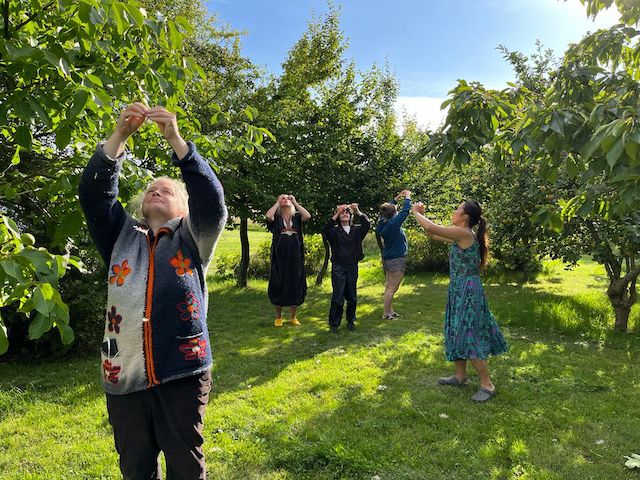
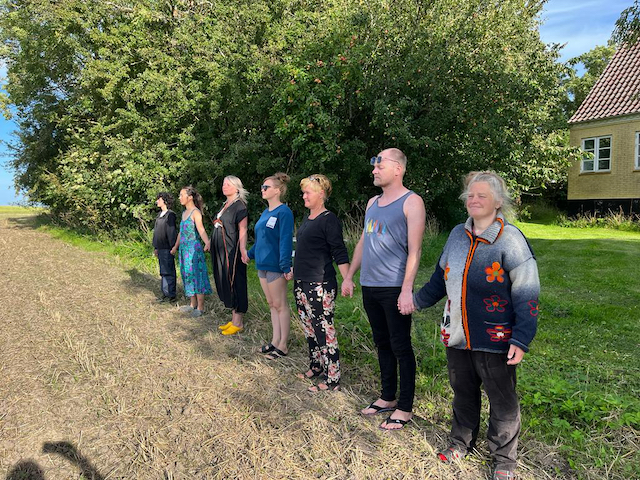
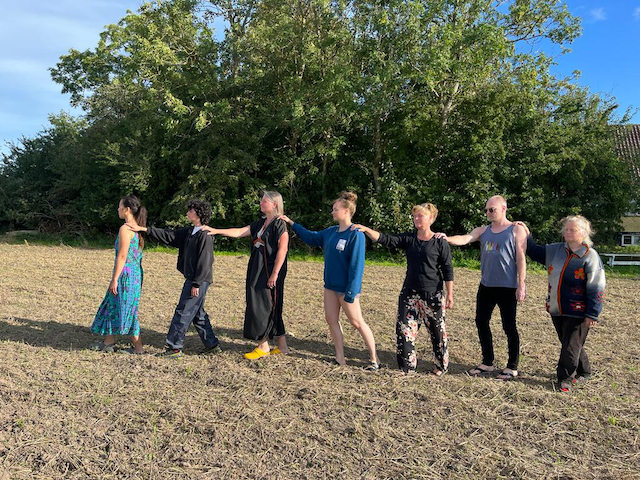
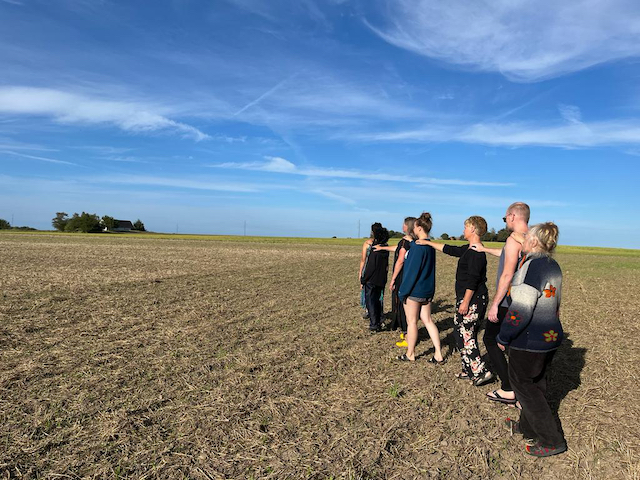
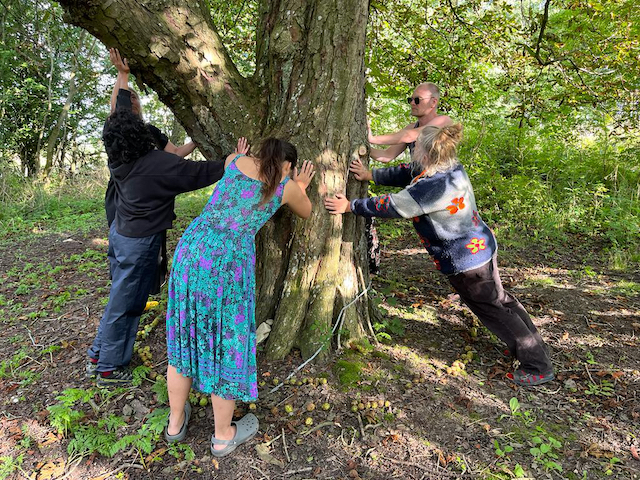
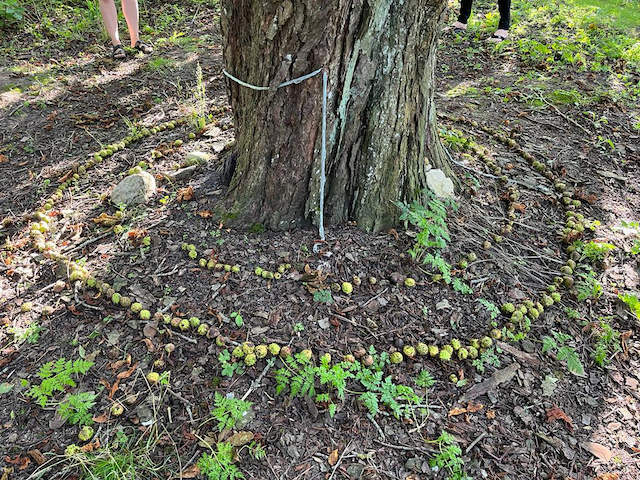
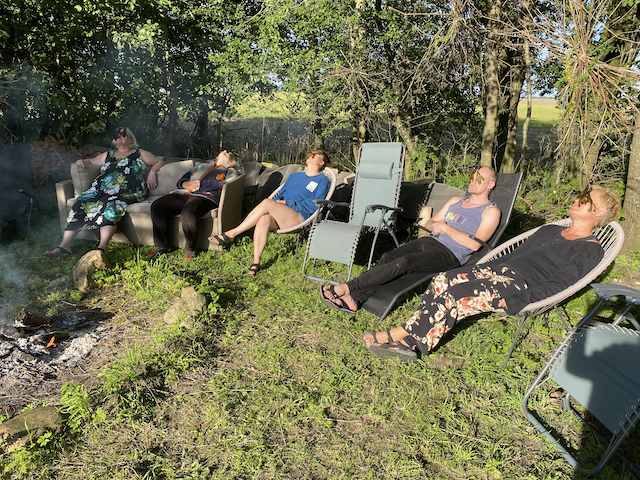
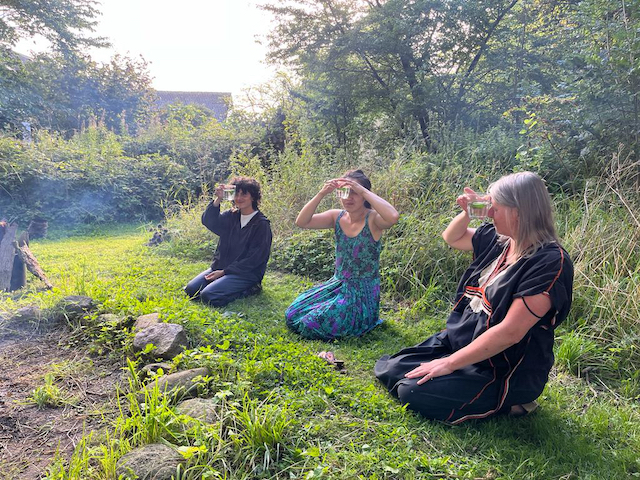
The first weekend of september we were group of people from different places that gathered at the beautiful lands of Gylleboverket (Sweden) to attend “all my relations” – a transdisciplinary workshop explored the ecological potential of performance, performativity, and eco-pedagogy.
At the workshop we worked in smaller groups and shared our practice with each other. It was a weekend that felt like a treat for the soul to enter for example different mediative, drawing and listening practices.
In 2022 I attended the first version of “all my relation” and it was at that time I lost my heart to the place – as guest you you are generously welcomed by Etta and Jona (the host and the caretakers of the land).
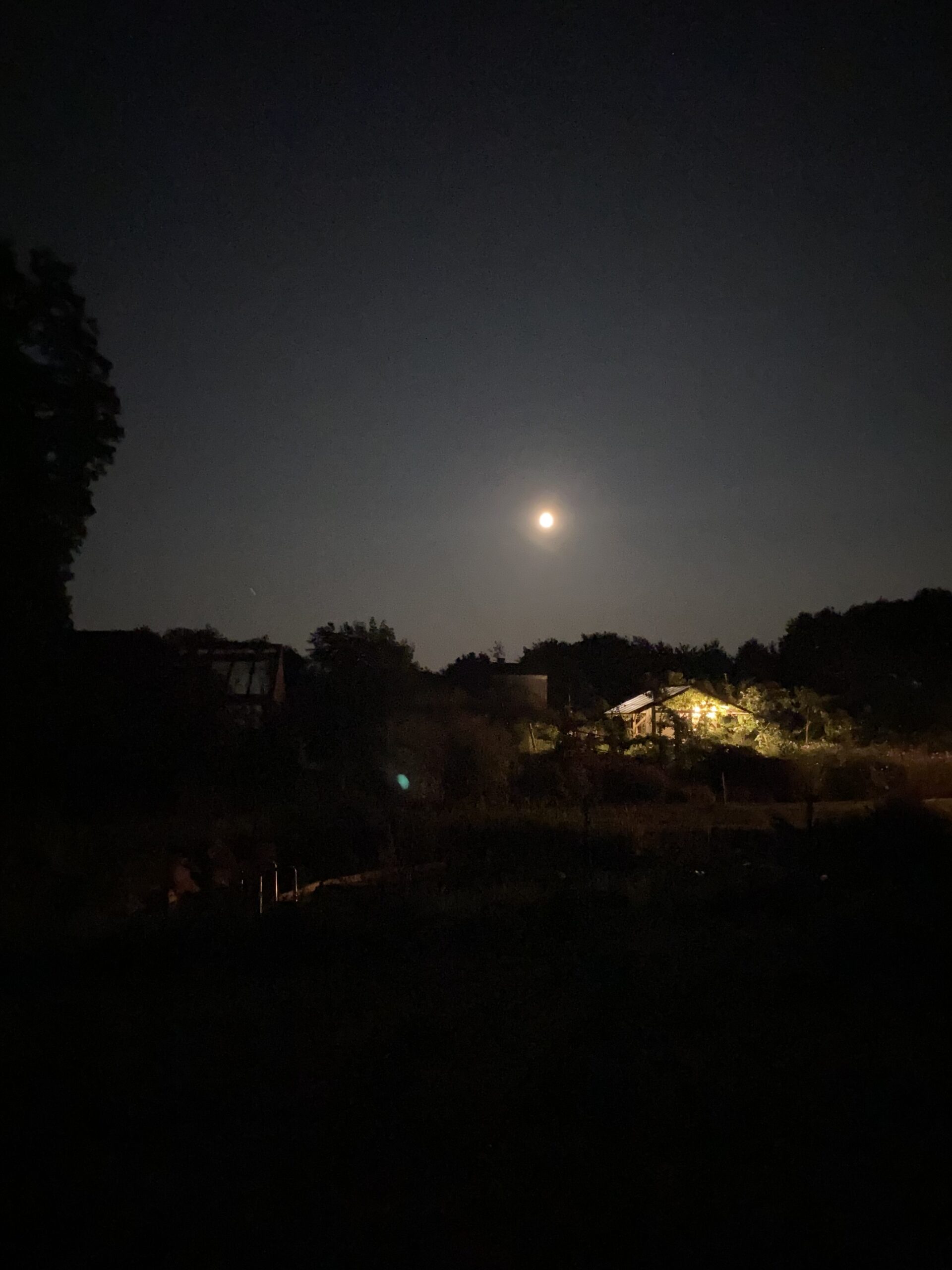
I was deeply touched by the weekend and generosity of the people and the land – and I made this little video in gratitude to everyone (human and non-human participants). The sound is recorded early Saturday morning where almost non of the humans attending were awake – it was just the birds that accompanied me.
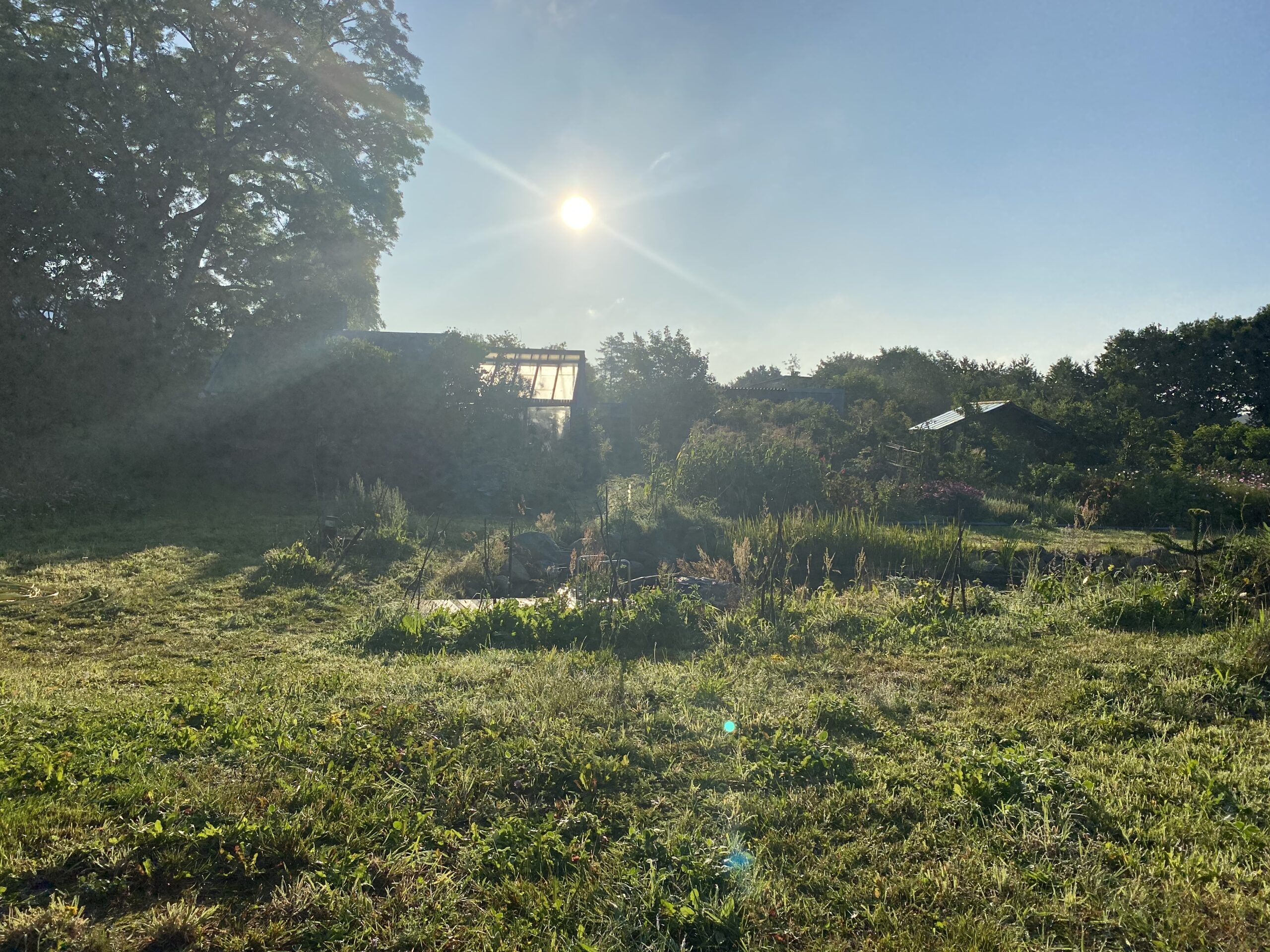
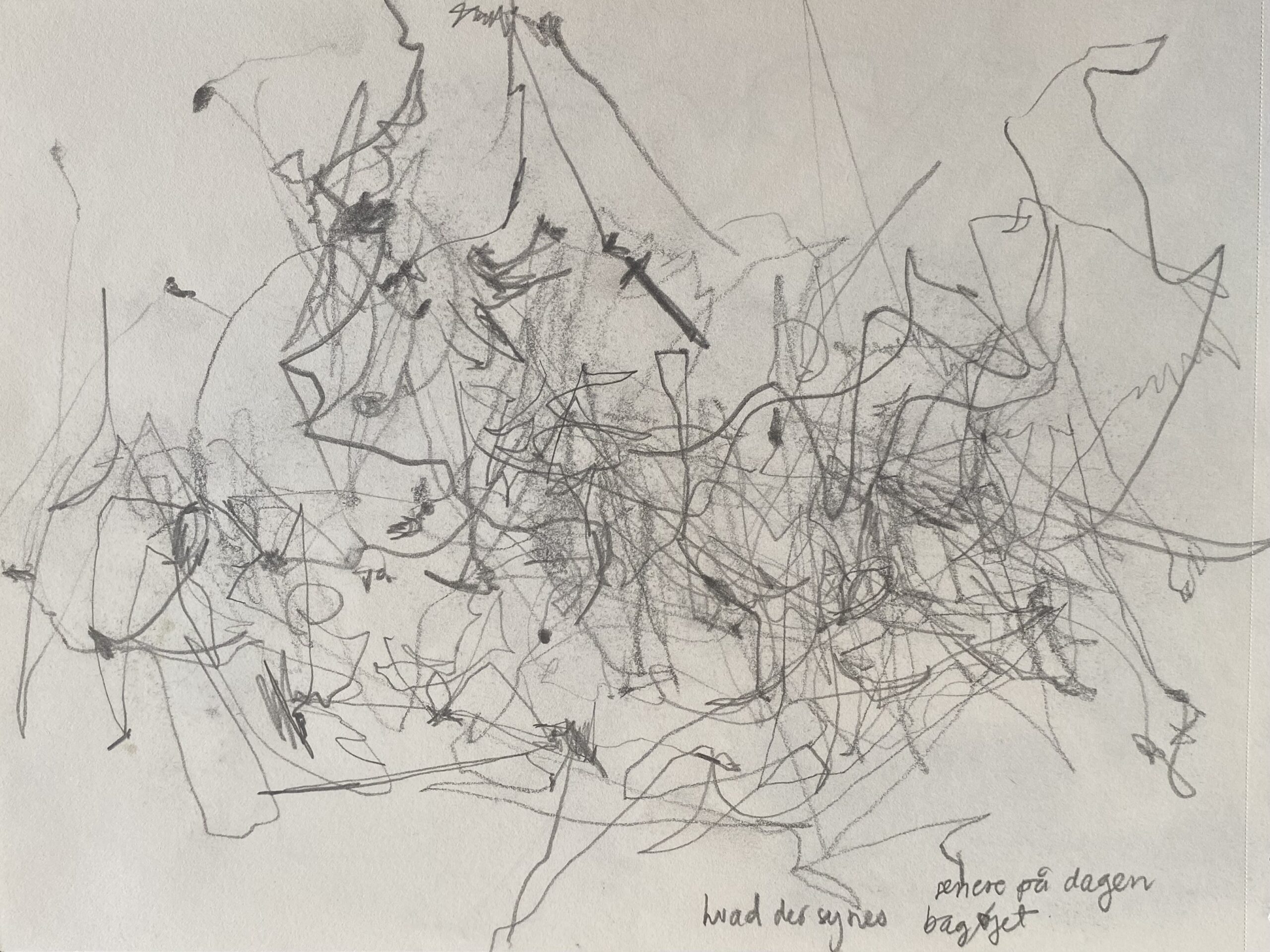
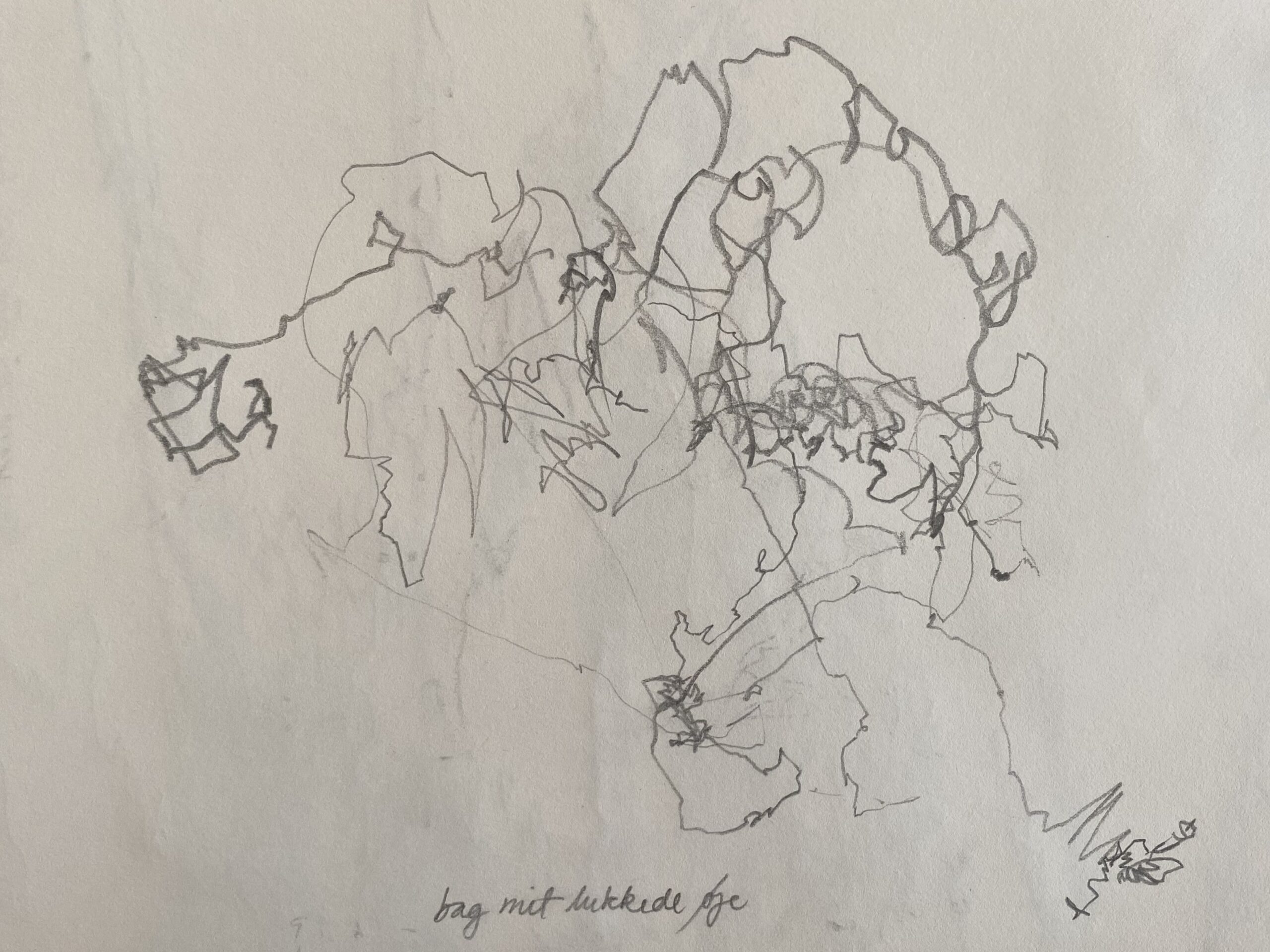
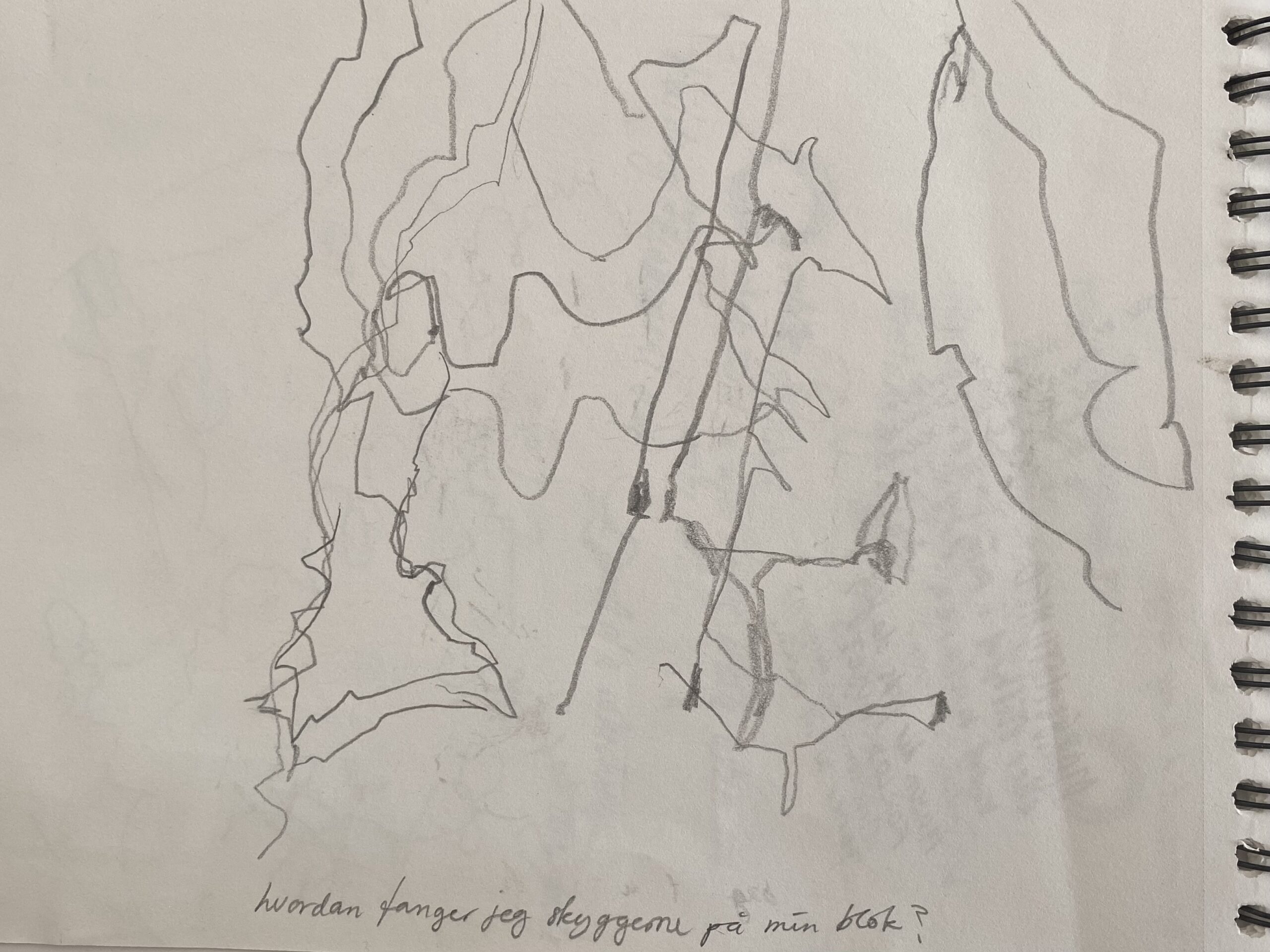
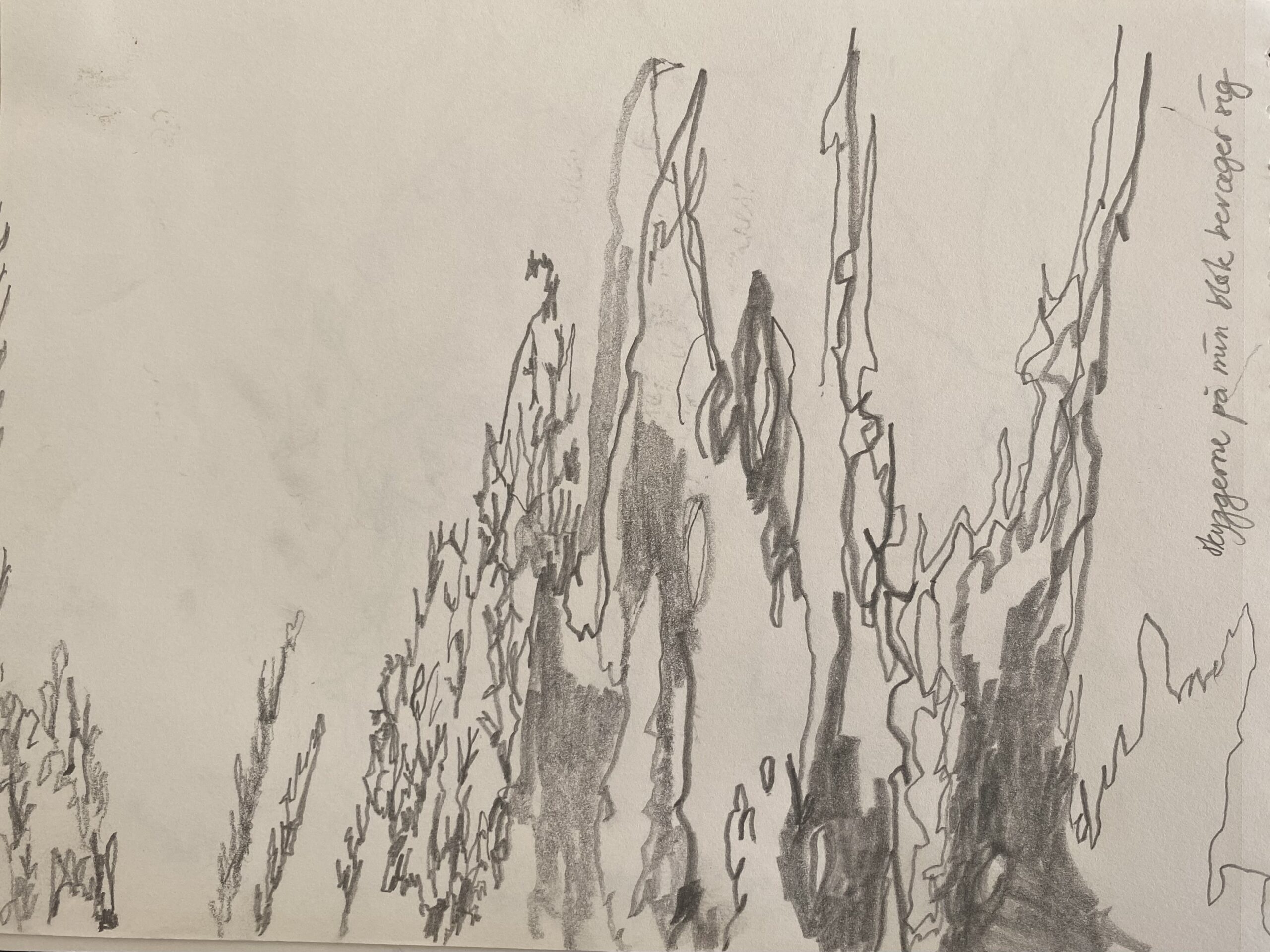
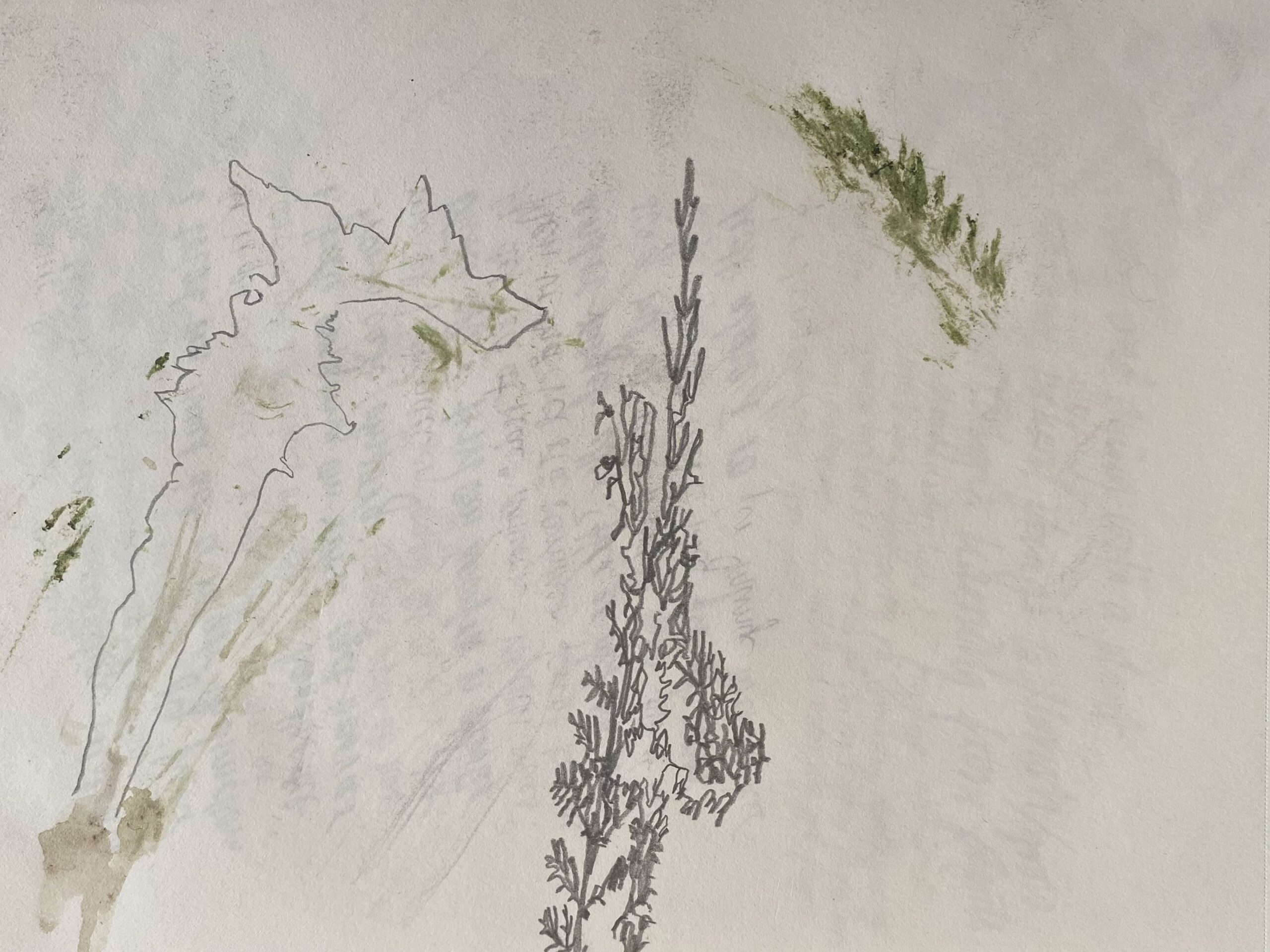
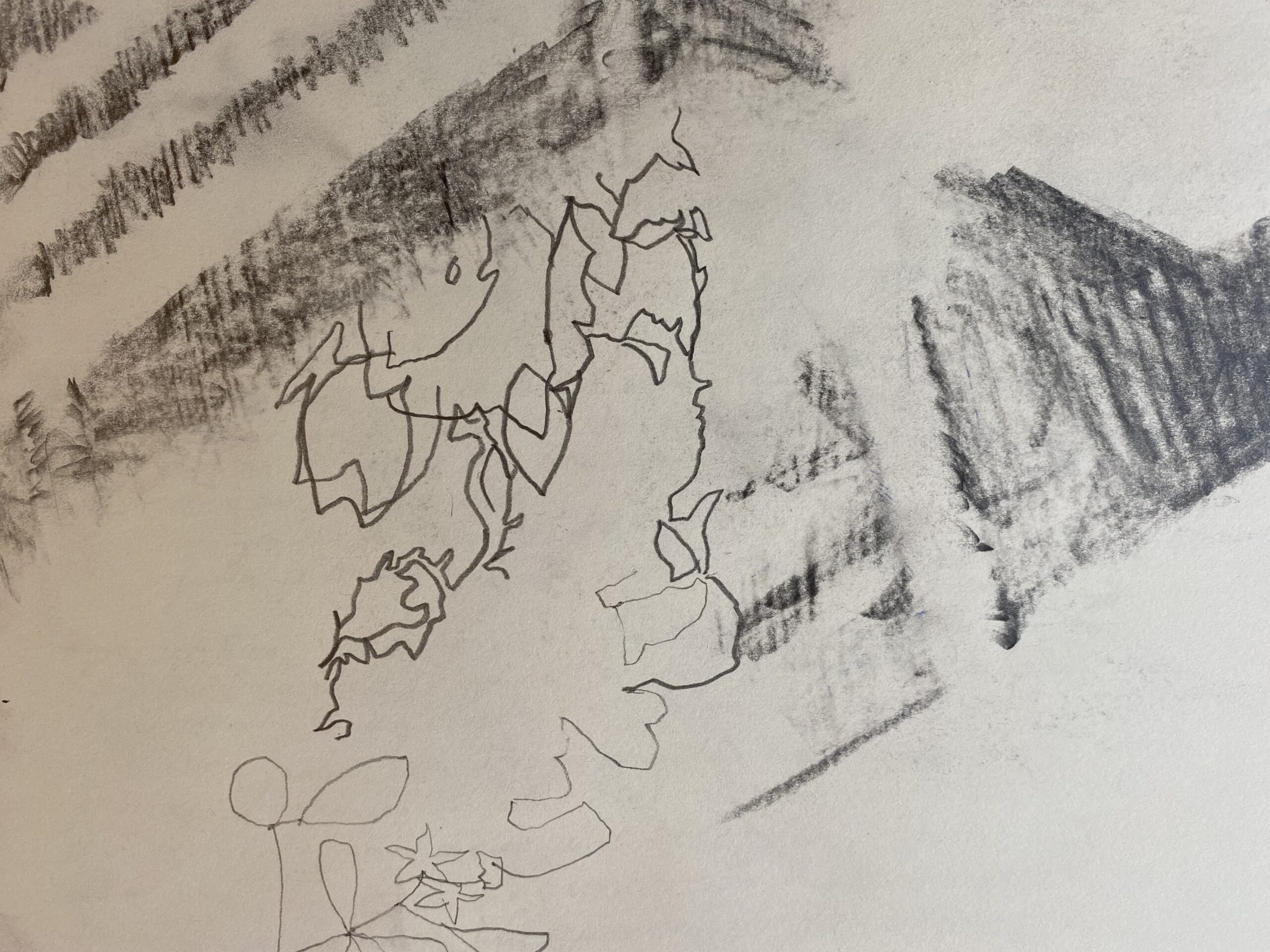
That Saturday morning I while I was sitting there on a small bench listening to the birds I tried to capture the shadows on my paper as well as what I saw behind my closed eyes.
ISLAND CONNECT is a collaboration between Susanne Danig, BIRCA/Bækkelund International Residency Center for Artists placed on the island of Bornholm in Denmark and Sardegna Teatro (together with the local partner FuoriMargine) placed on Sardinia in Italy. The aim of ISLAND CONNECT is to addresses interconnectivity through the ecology of environment, of social justice, of spirit and intellectual dimensions. By embracing the natural surroundings of Bornholm and Sardinia the residency want to create a vision for an ecological future that allows intersection, communication, generosity and sharing.
Photo: Susanne Danig
Over the two weeks we explored the diverse nature of Bornholm with Susanne Danig as our generous host and guide. Susanne shared some of spectacular sites and the more secret places of Bornholm … the explorations set us off on a journey exploring the Bornholmian light.
During the residency we had days with sun and star and other with fog that blurred the vision. We walked in the night to explore the darkness but was surprised of who much light we (humans) produce. We had an immersive showing with a few local artist as our guests … and much more happened that are still thoughts and ideas in-process.
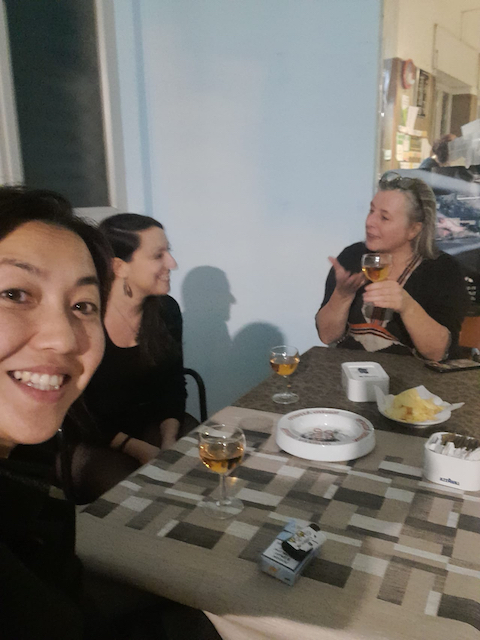
I made the following videos as a tribute to the amazing nature of Bornholm that generously accepted our presents and to my dear travle companions Linh, Alex and Susanne.
A tribute to shadow landscapes
A tribute to those that live in the shadow landscapes
A tribute to the elements that knows
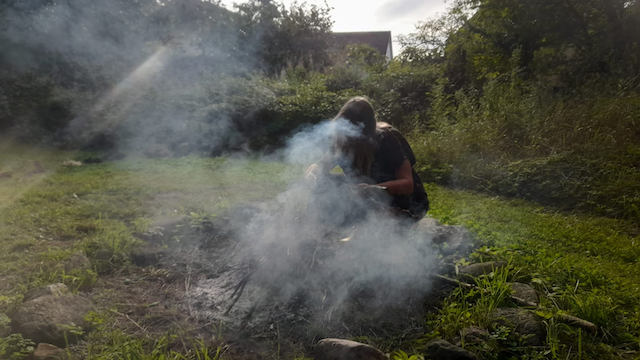
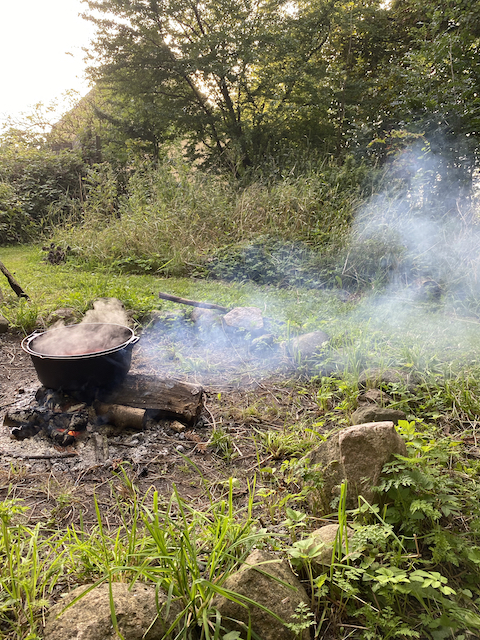
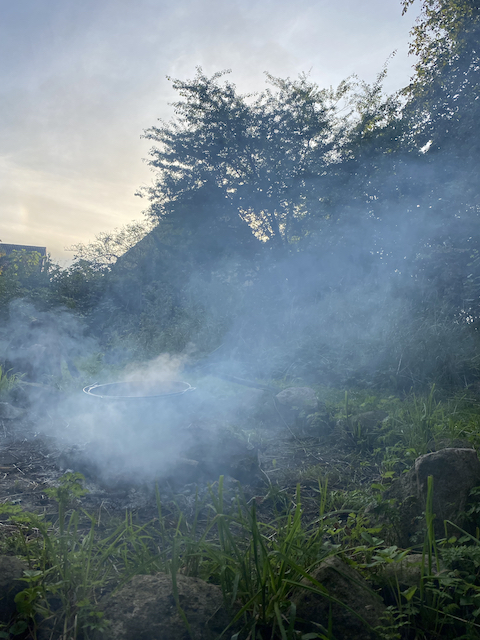
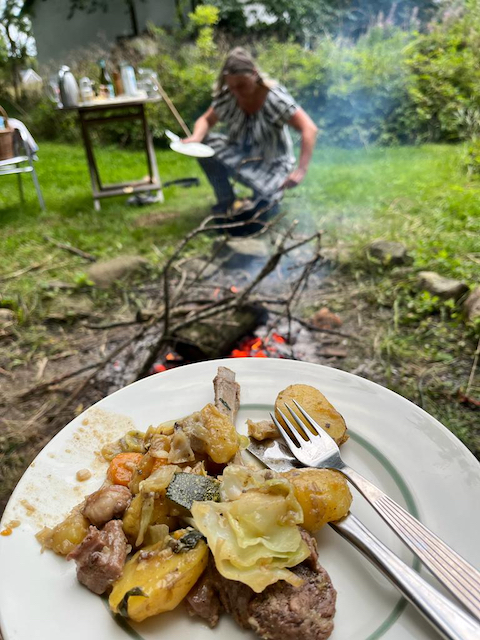
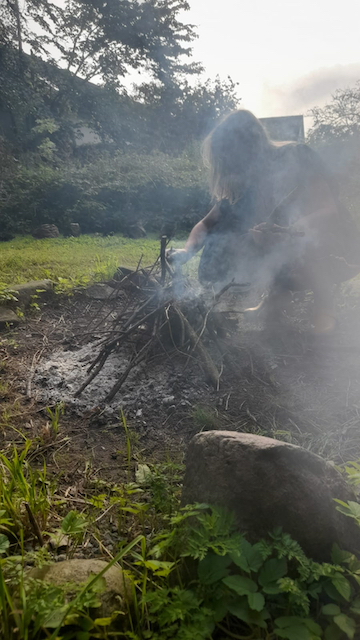
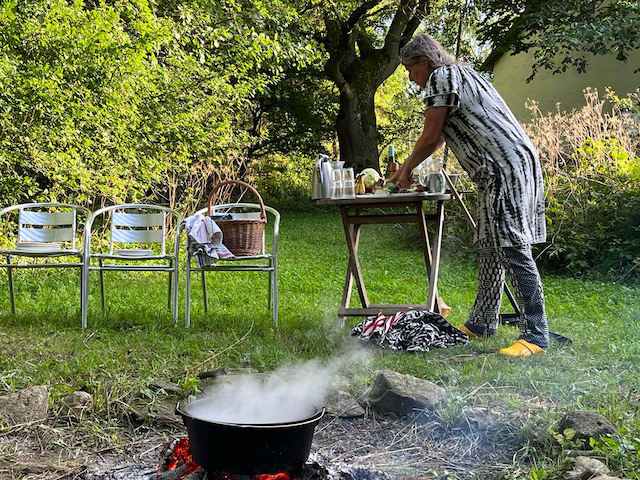
And on the personal note ….. I had a blast cooking dinner over a bonfire
…. and I found a new passion: trying to capture the shadows.
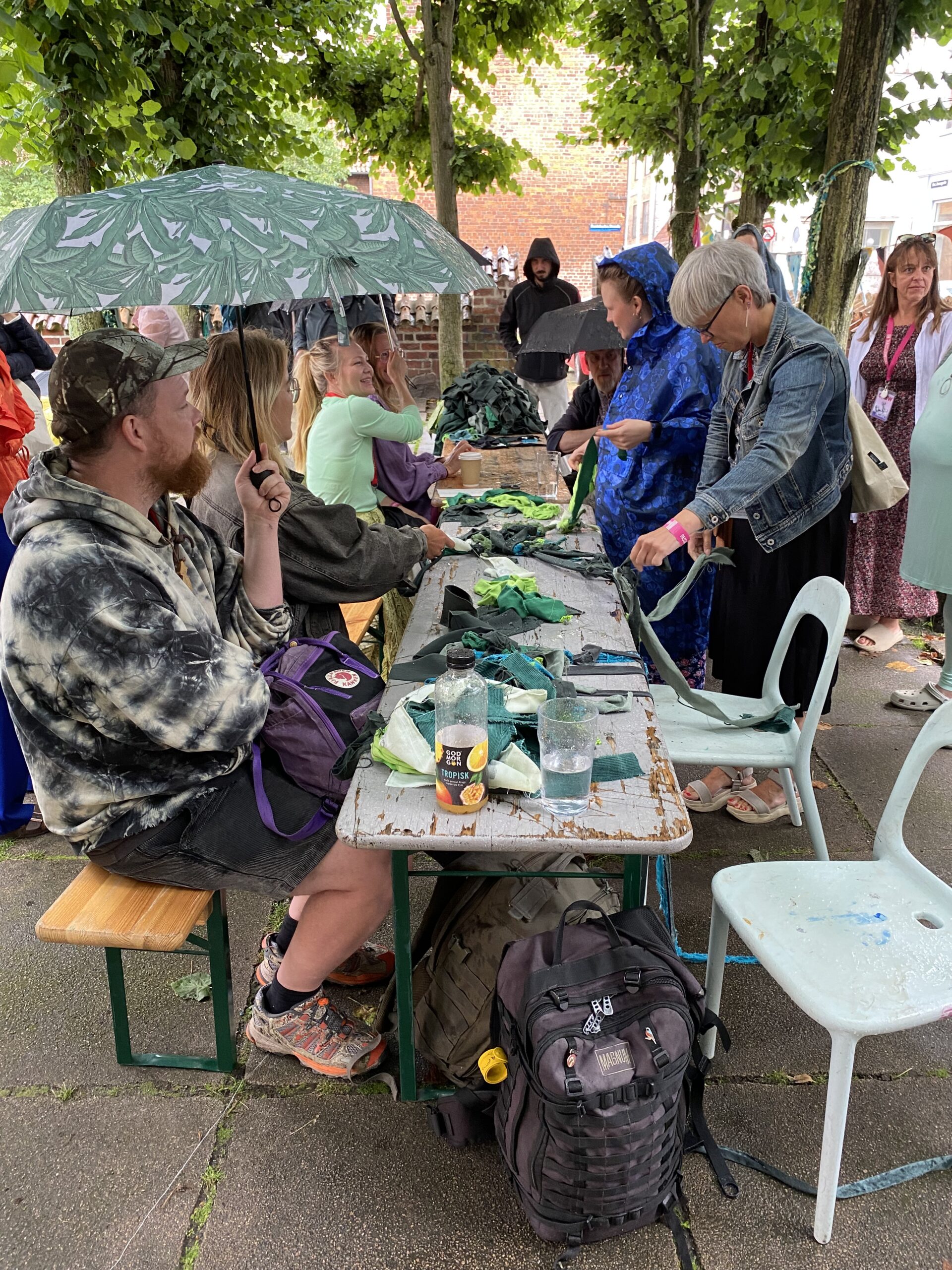
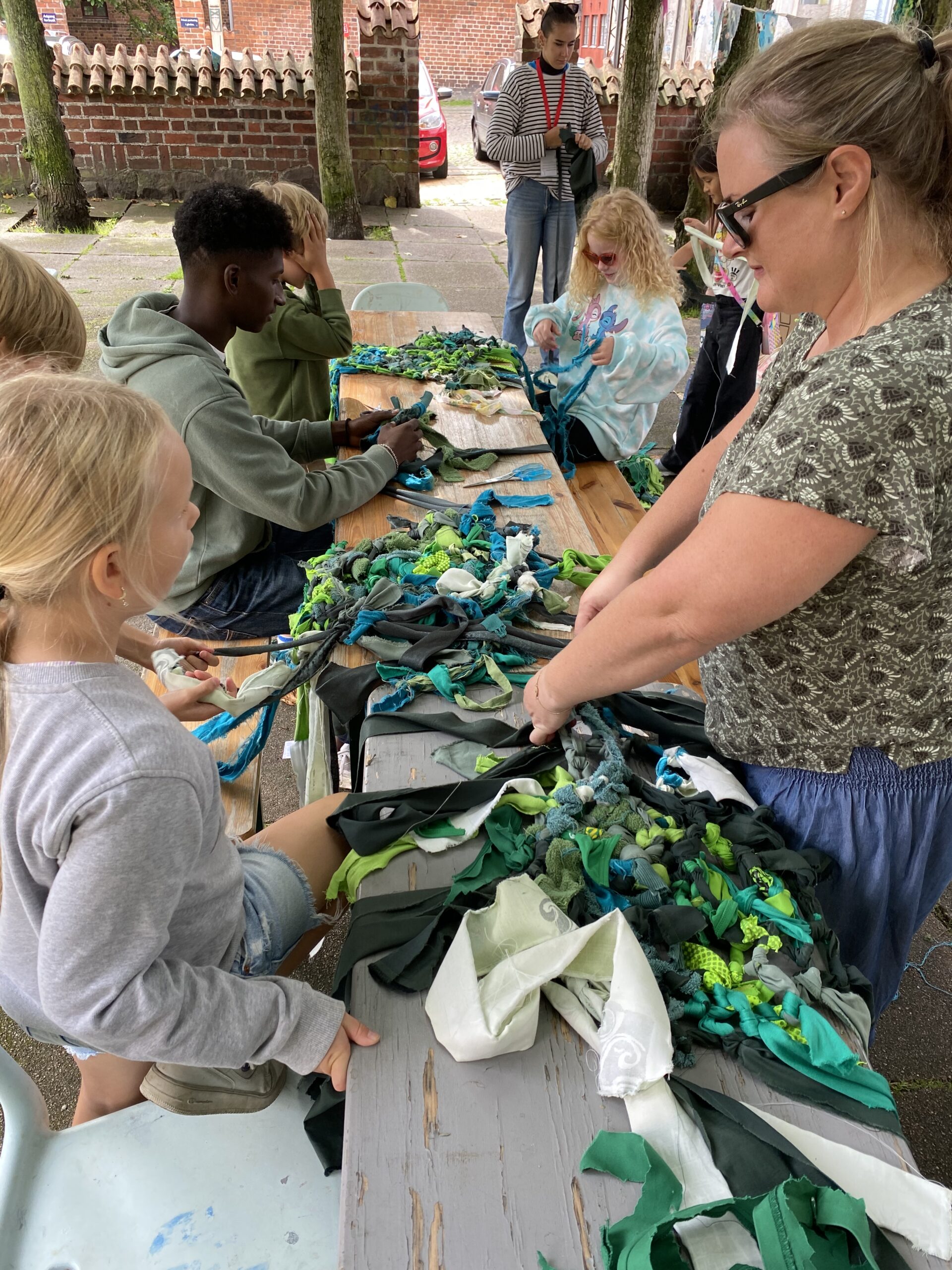
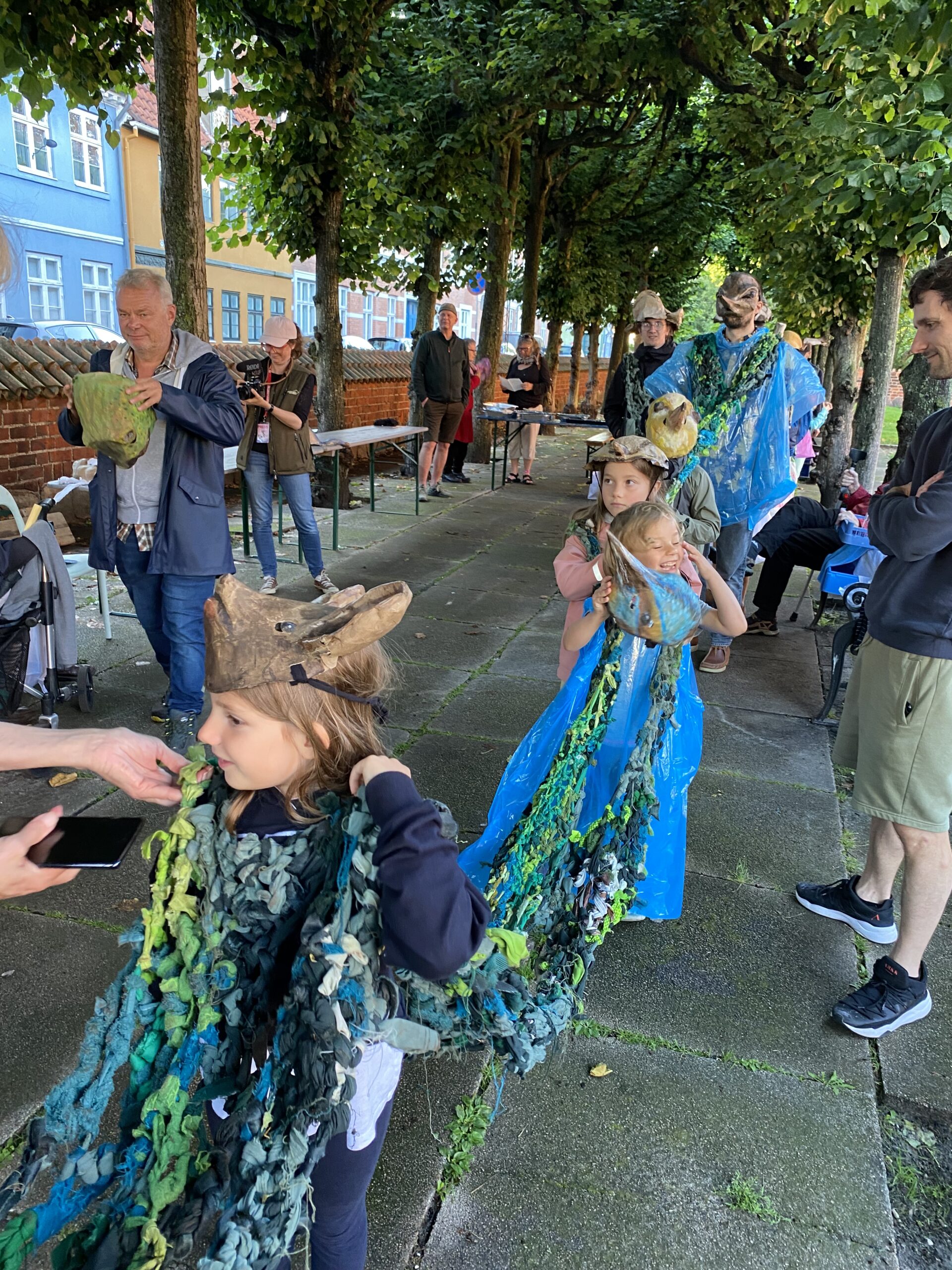
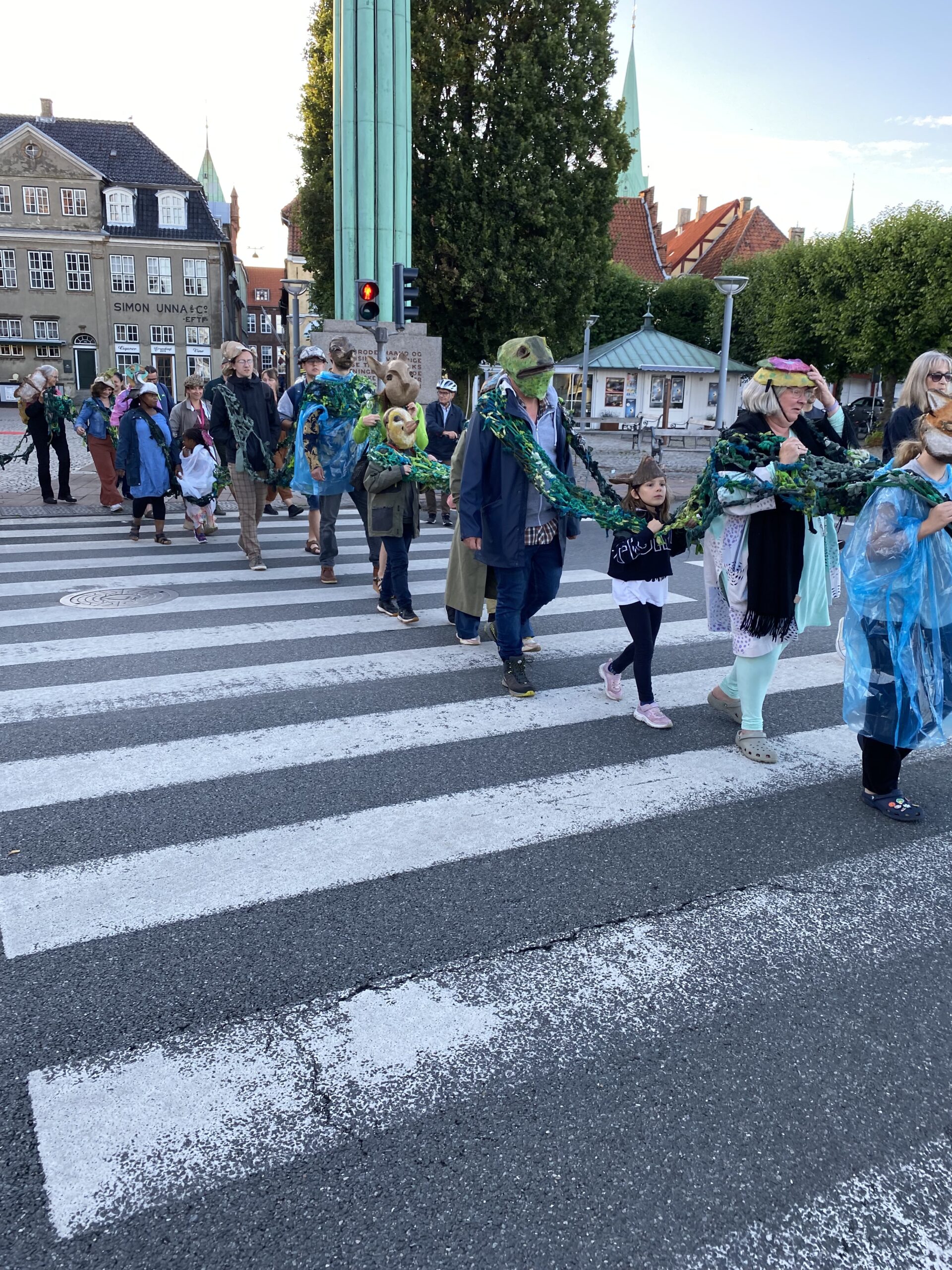
Første workshop fandt sted 1. august 2023 på Vapnagaard v. Kulturhus Syd i Helsingør.
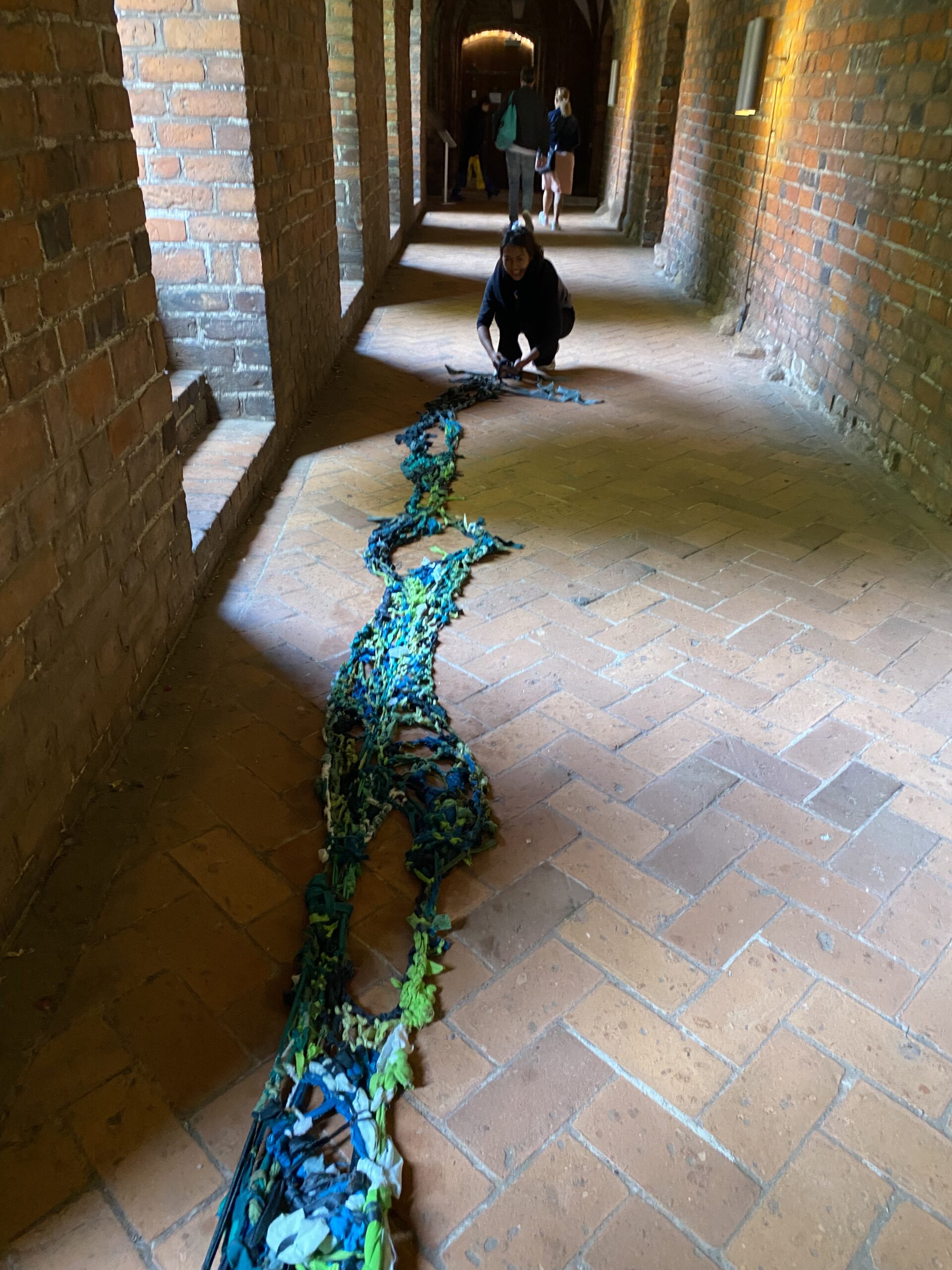
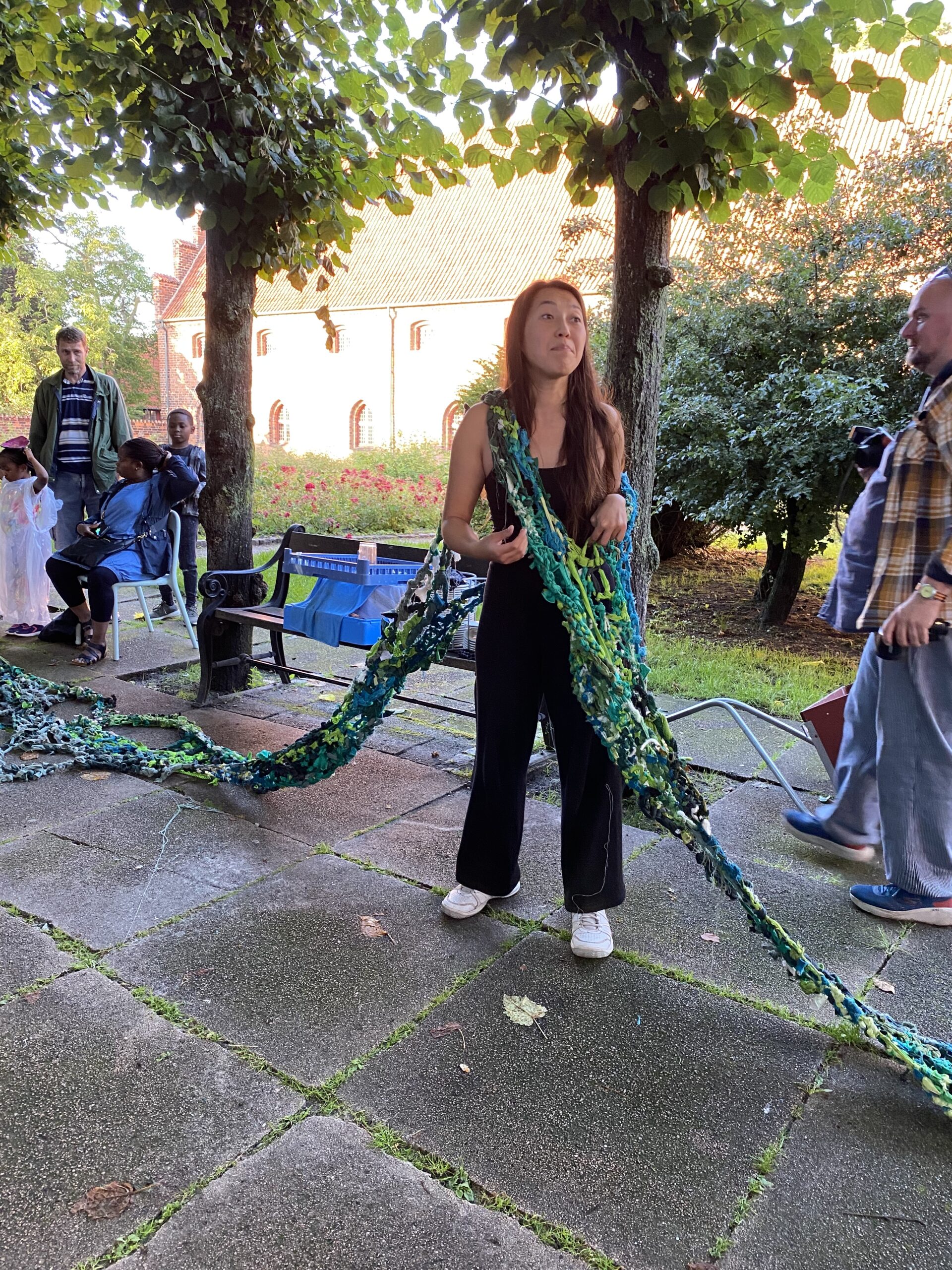
Anden workshop fandt sted 3. august 2023 i Rosenhaven ved Sct. Mariæ Kirke. Pga. regn flyttede workshoppen ind klostergårdens gange.
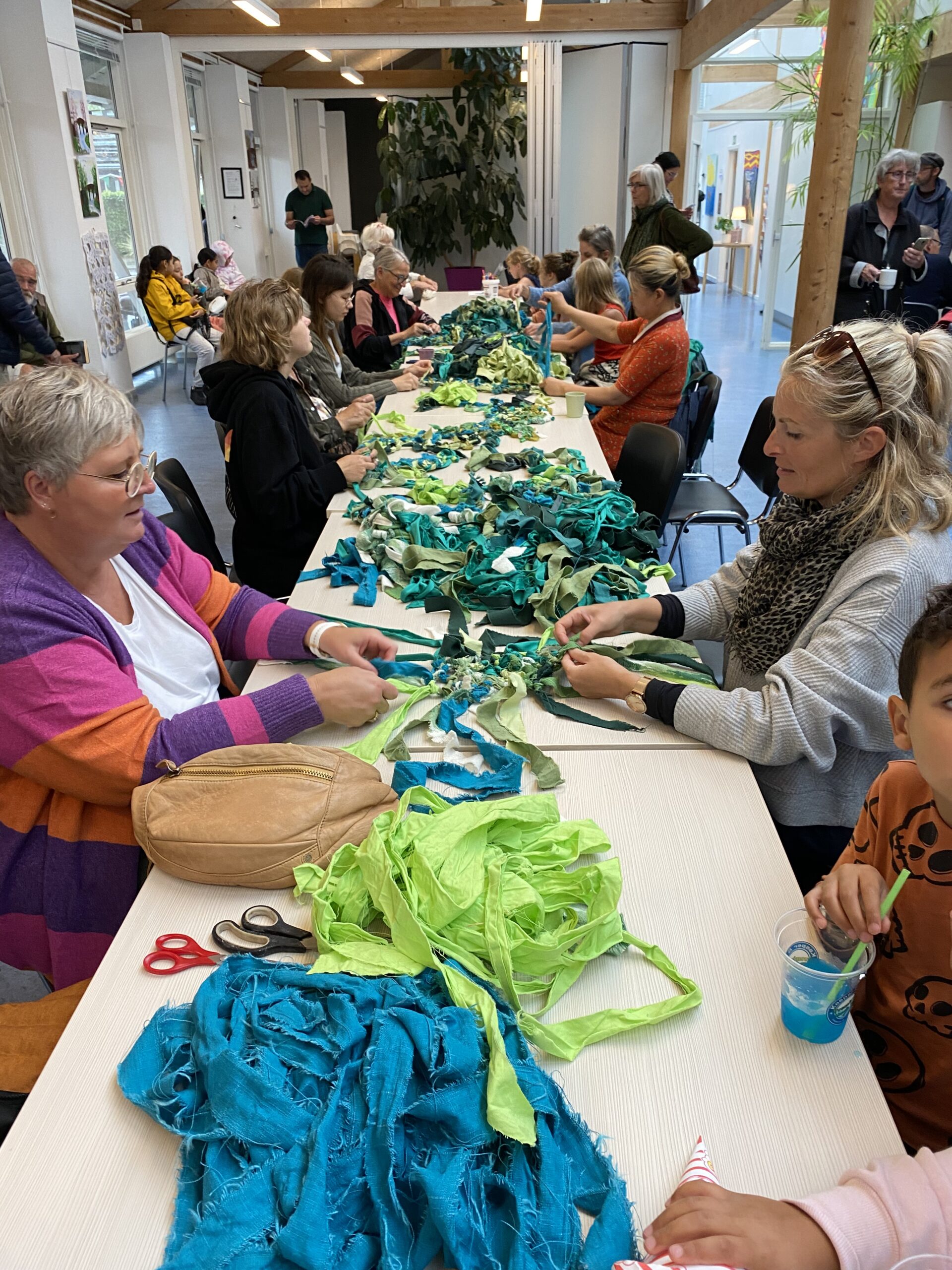
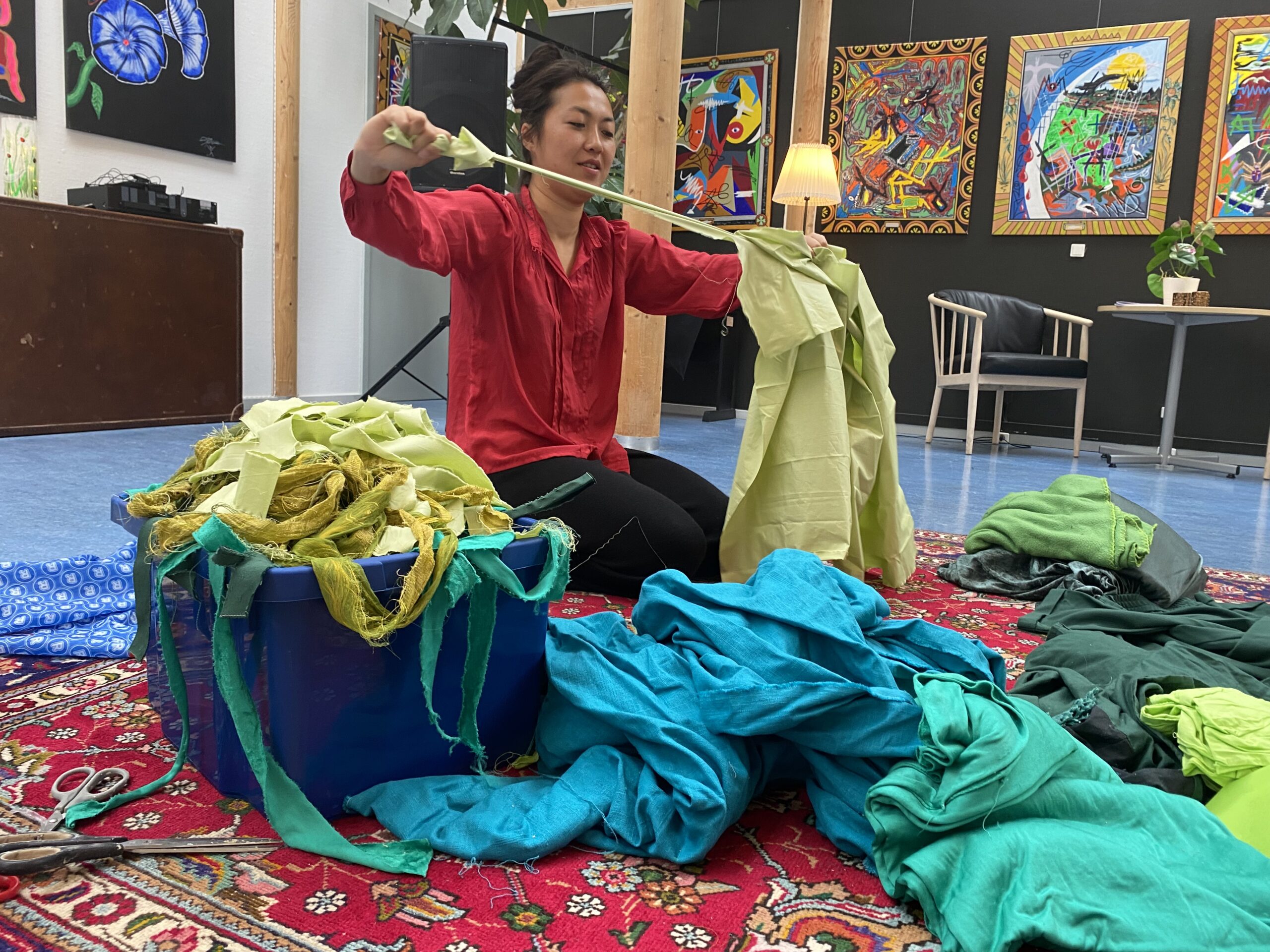
Alle materialer som vi bruge til at kostume fremstillingen i workshoppene var genbrug indsamlet at festivalen, Linh Le og donerede restmateriale fra bl.a. McVerdi og Our Shift.
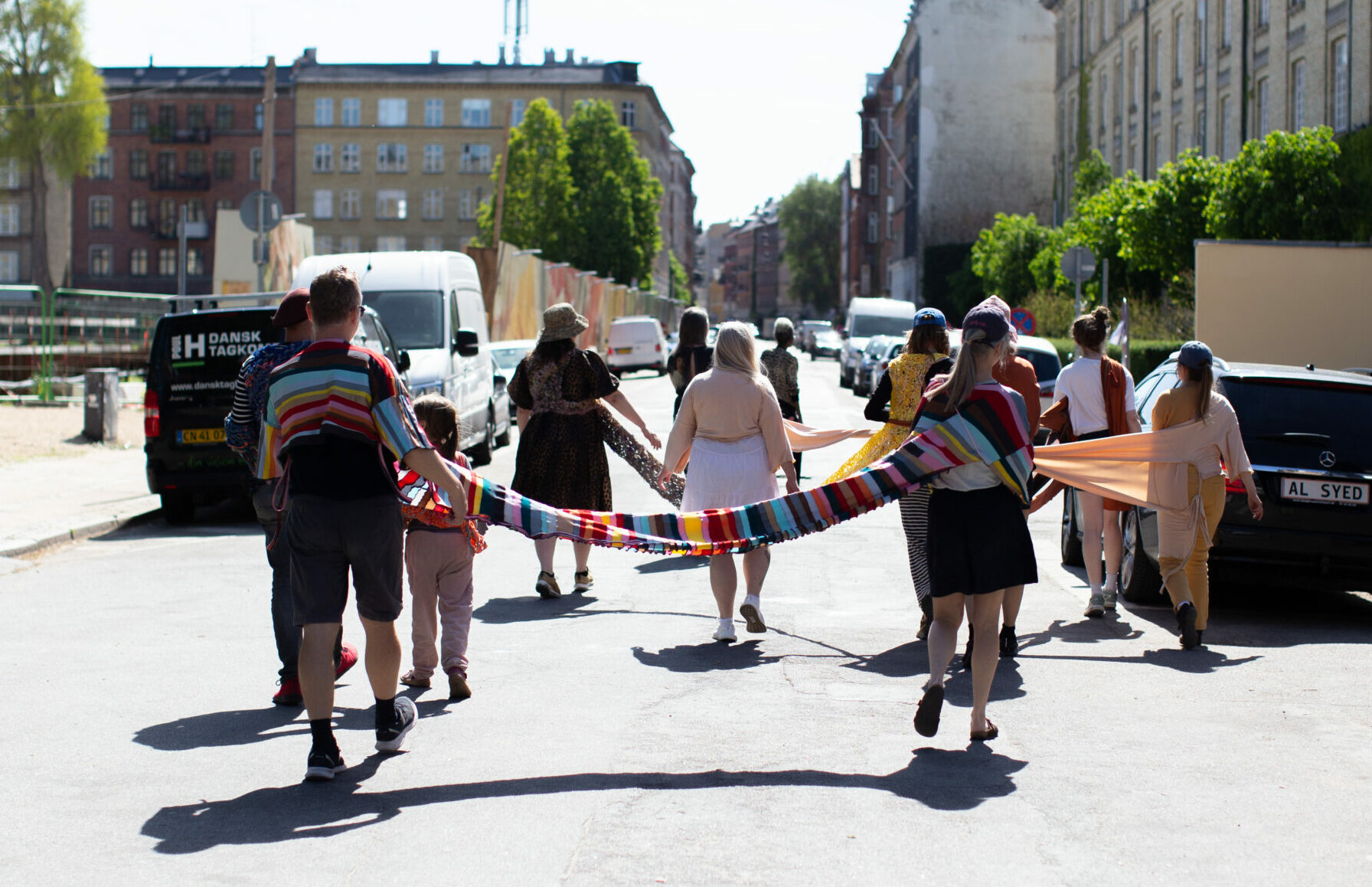
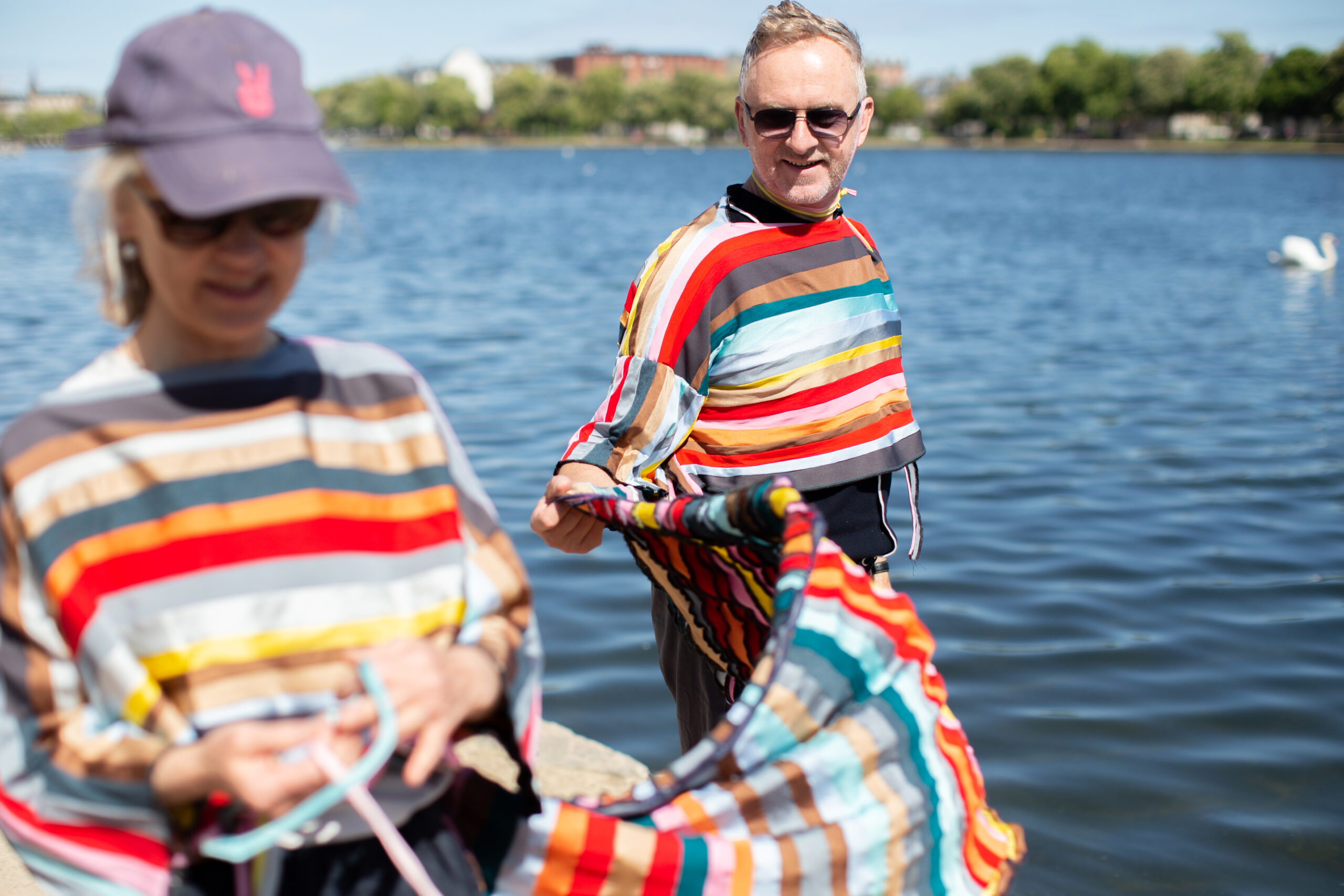
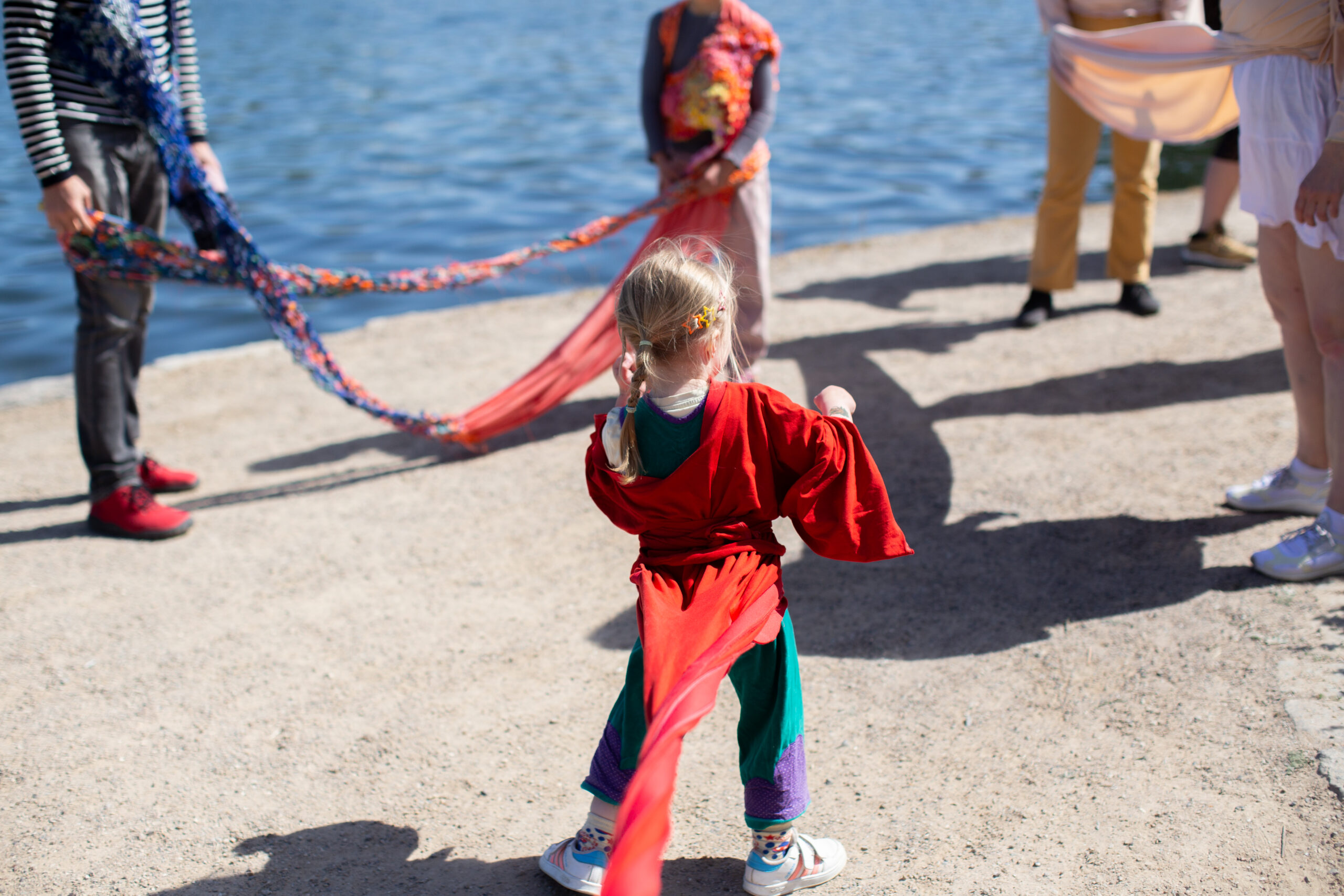
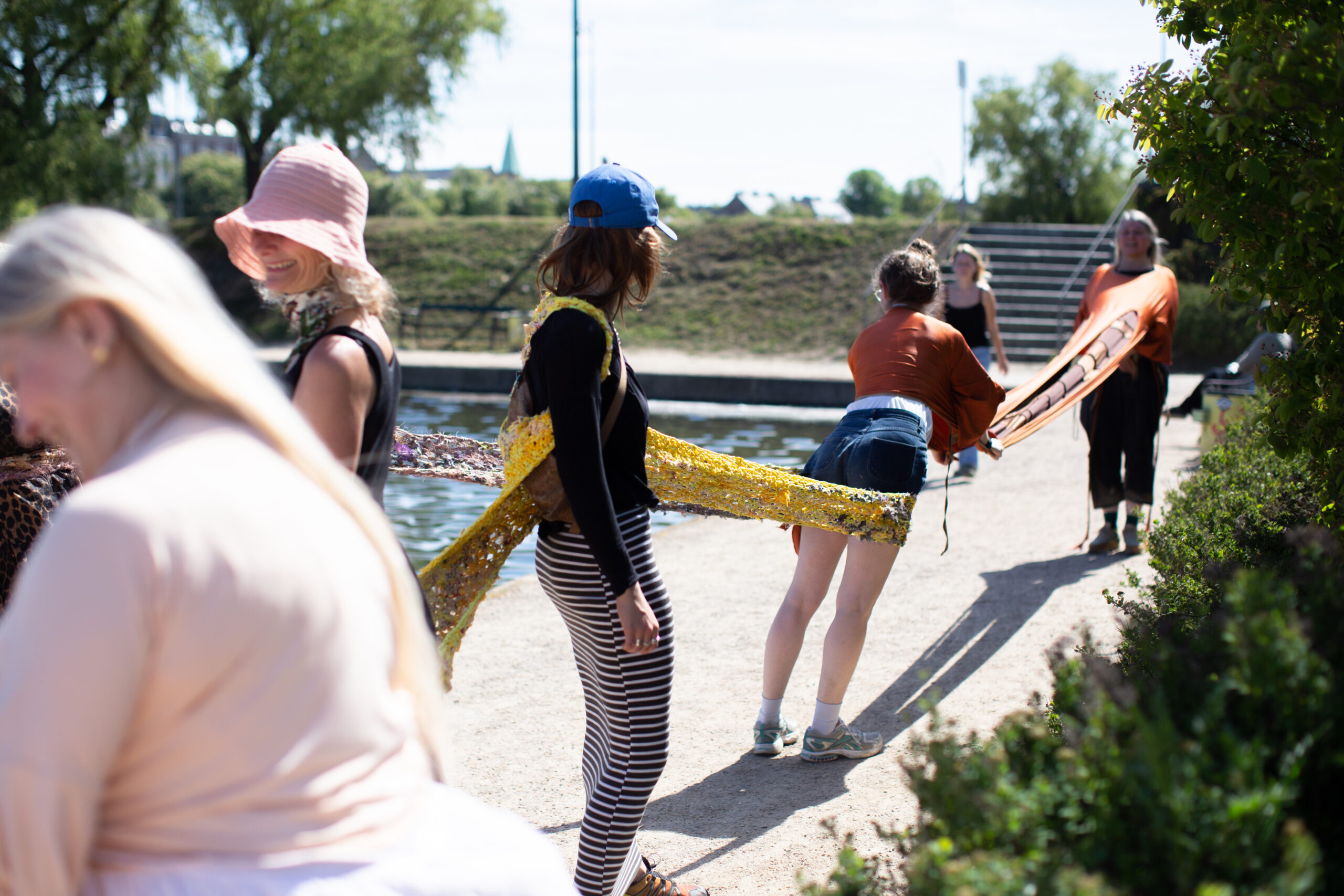
On a sunny day in May I went on a 2 hour walk in the Nørrebro area (Copenhagen, Denmark) with twelve playful people in the age from three to sixty. Below are some impressions from our walk captured by Agnes Saaby Thomsen.
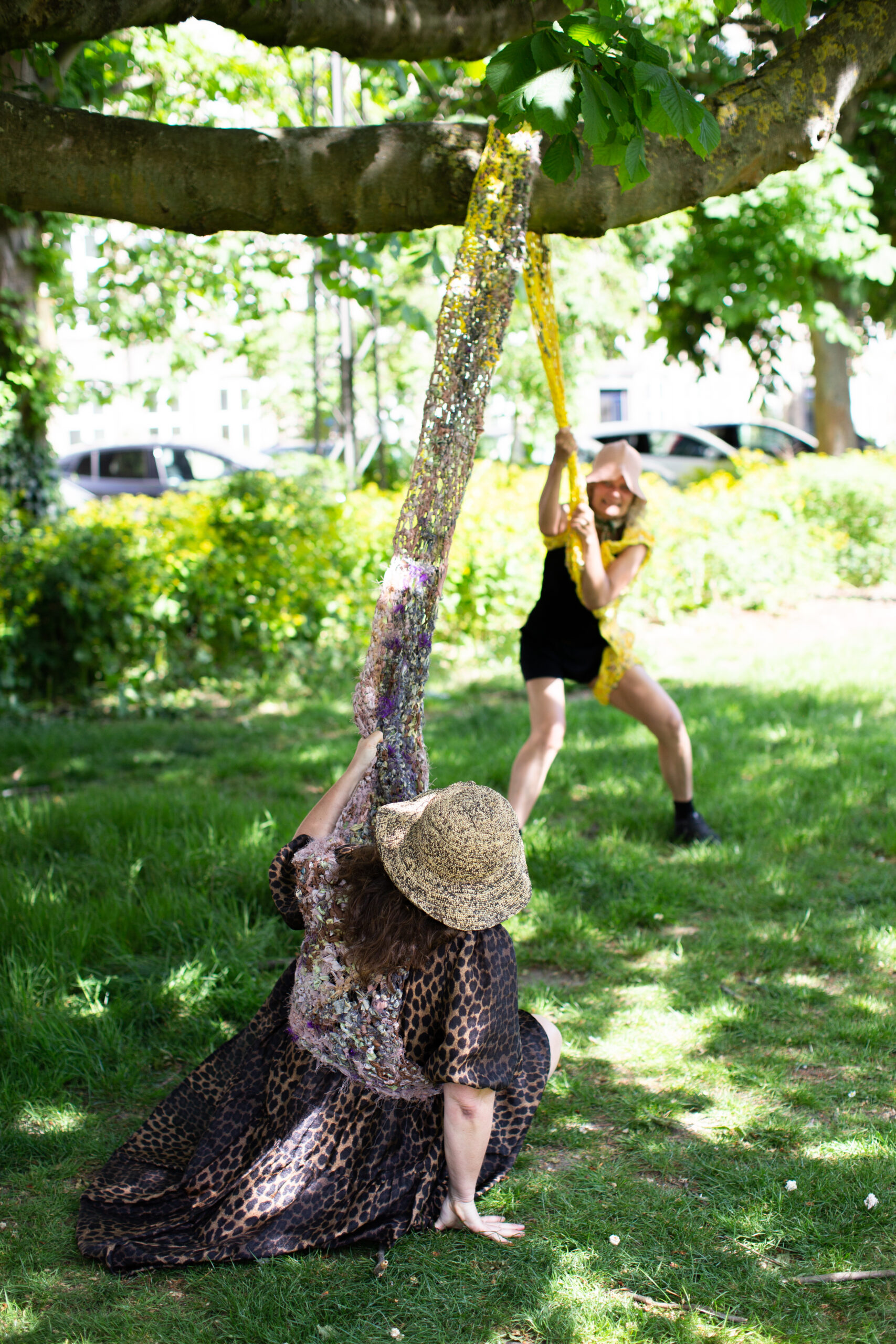
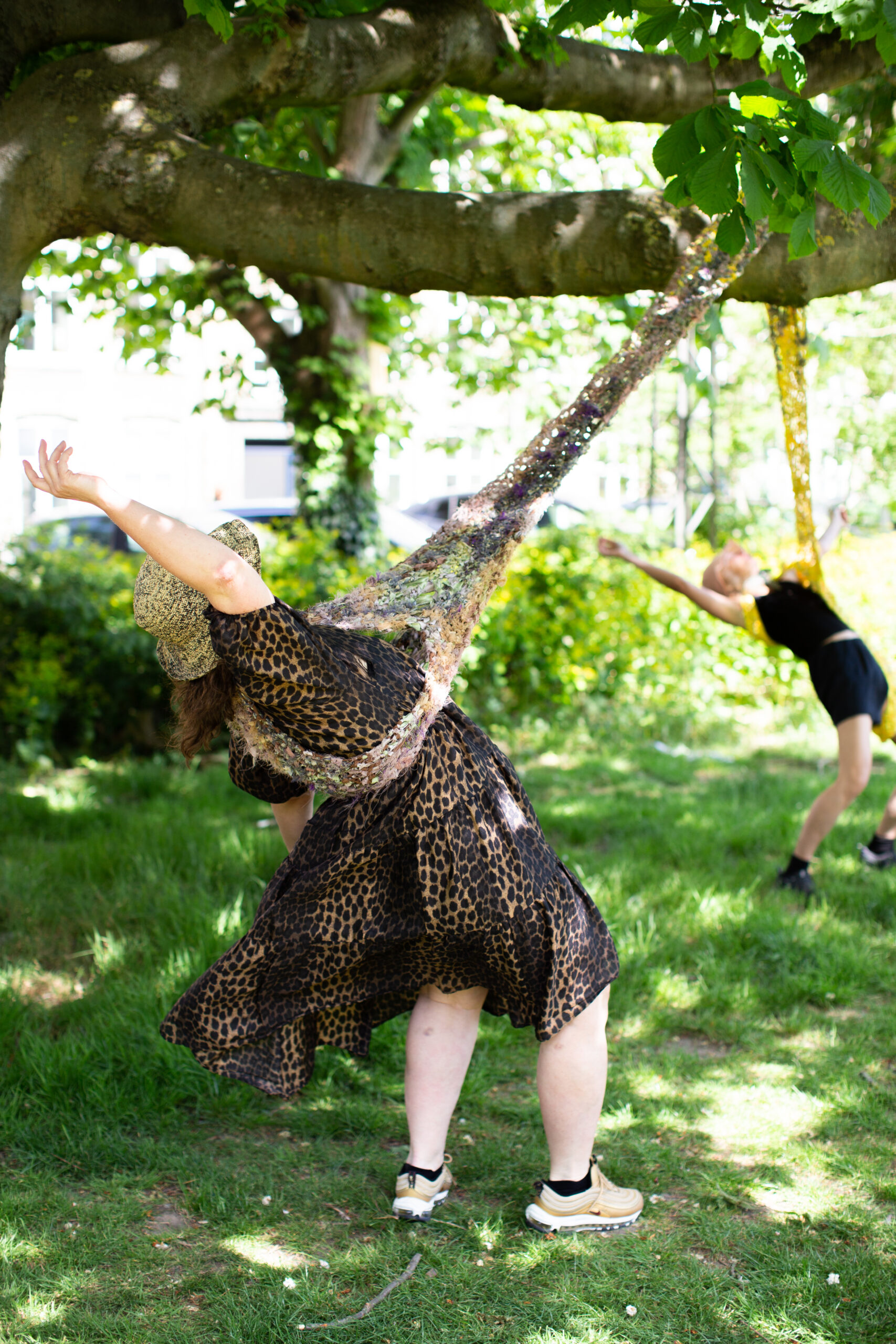
An intens and inspiring three day (May 2023) residency at Gylleboverket. Together with Gylleboverket and their artistic-duo Etta Säfve and Jona Elfdahl, we explored the relationships and (inter)connections between our practices, between us and nature and between different kind of materialities. Our explorations went in multiple directions and fostered multiple lingering embodied dialogues between us.
Below a variation of images from our explorations.
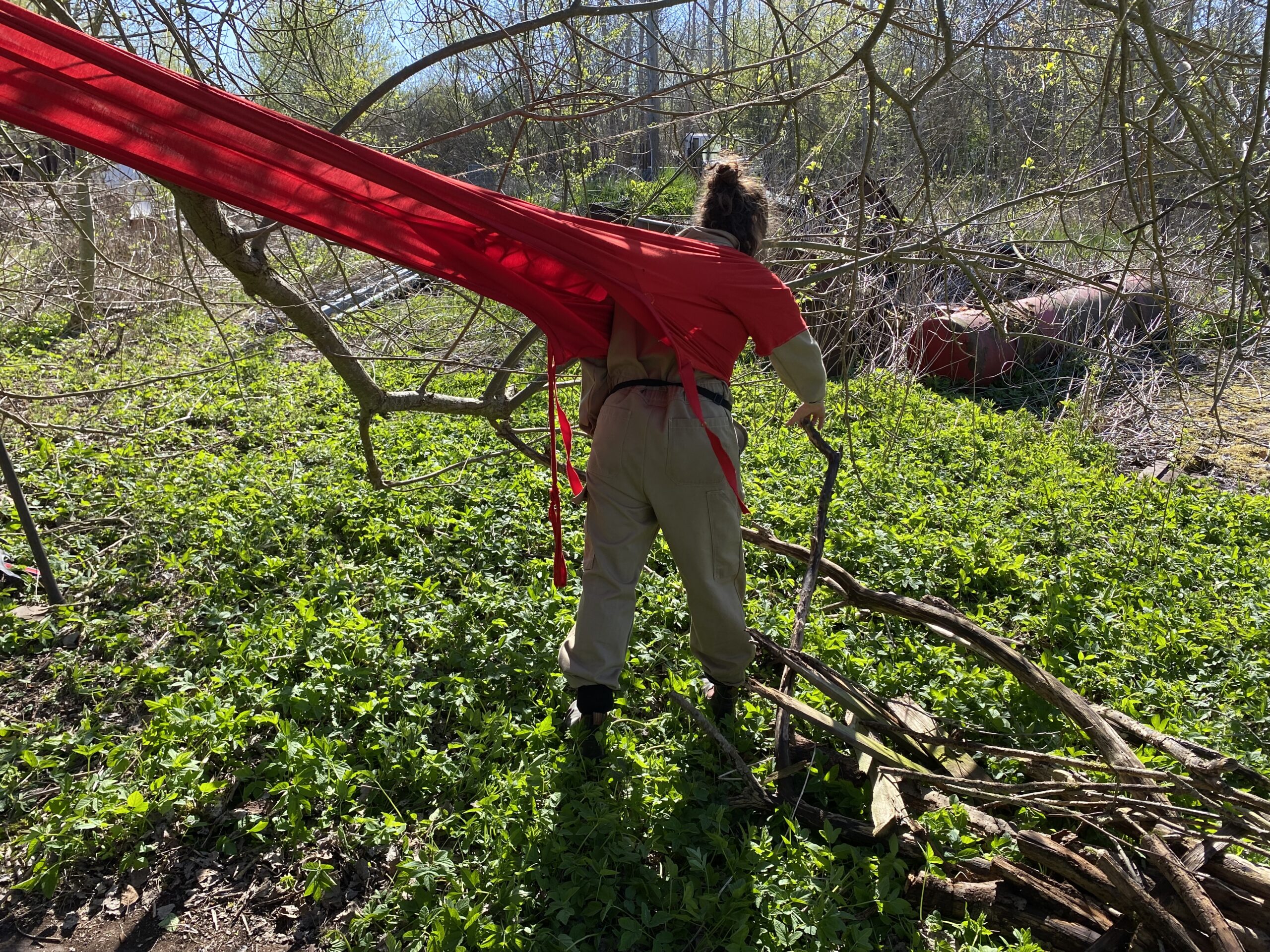
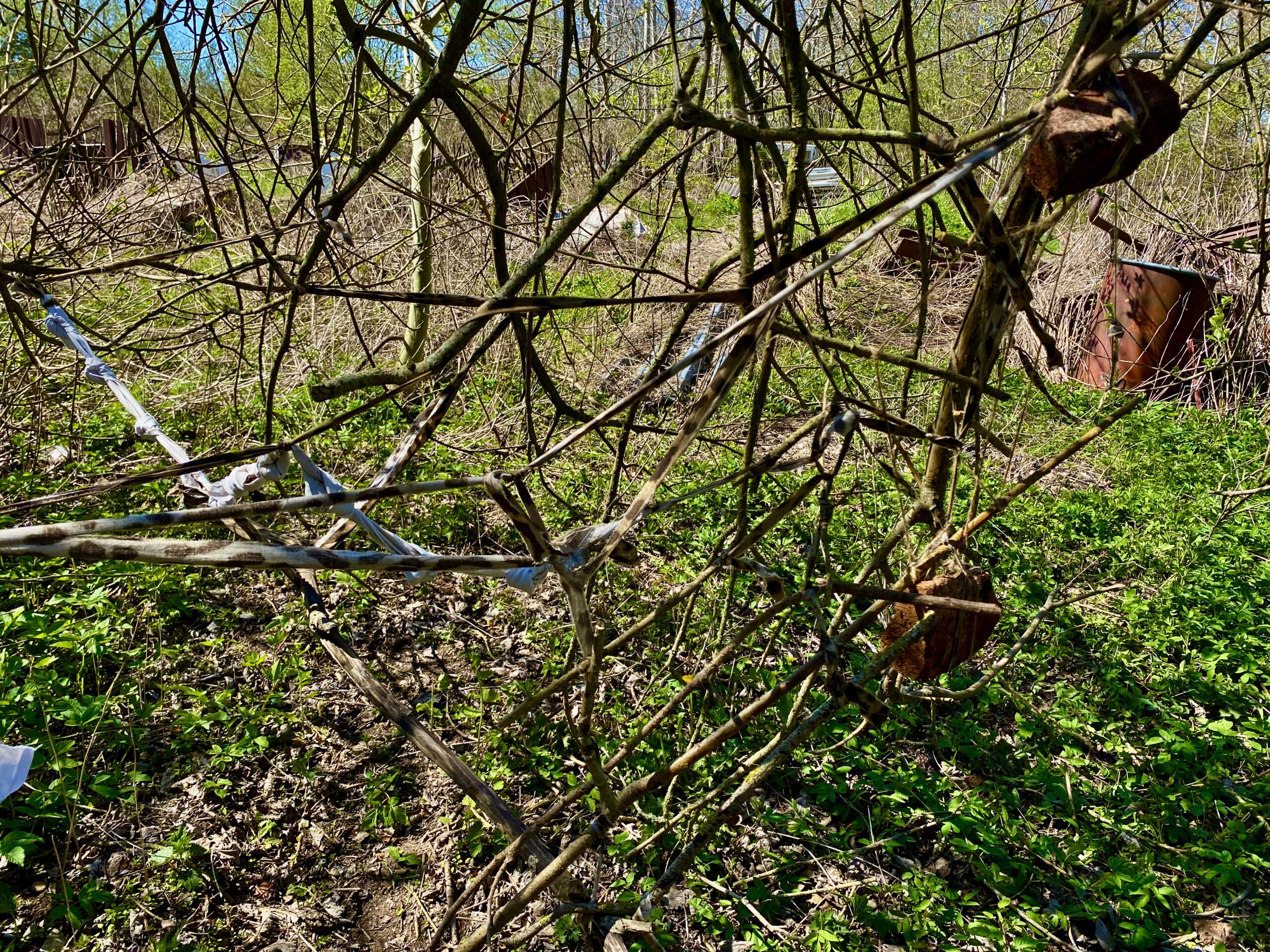
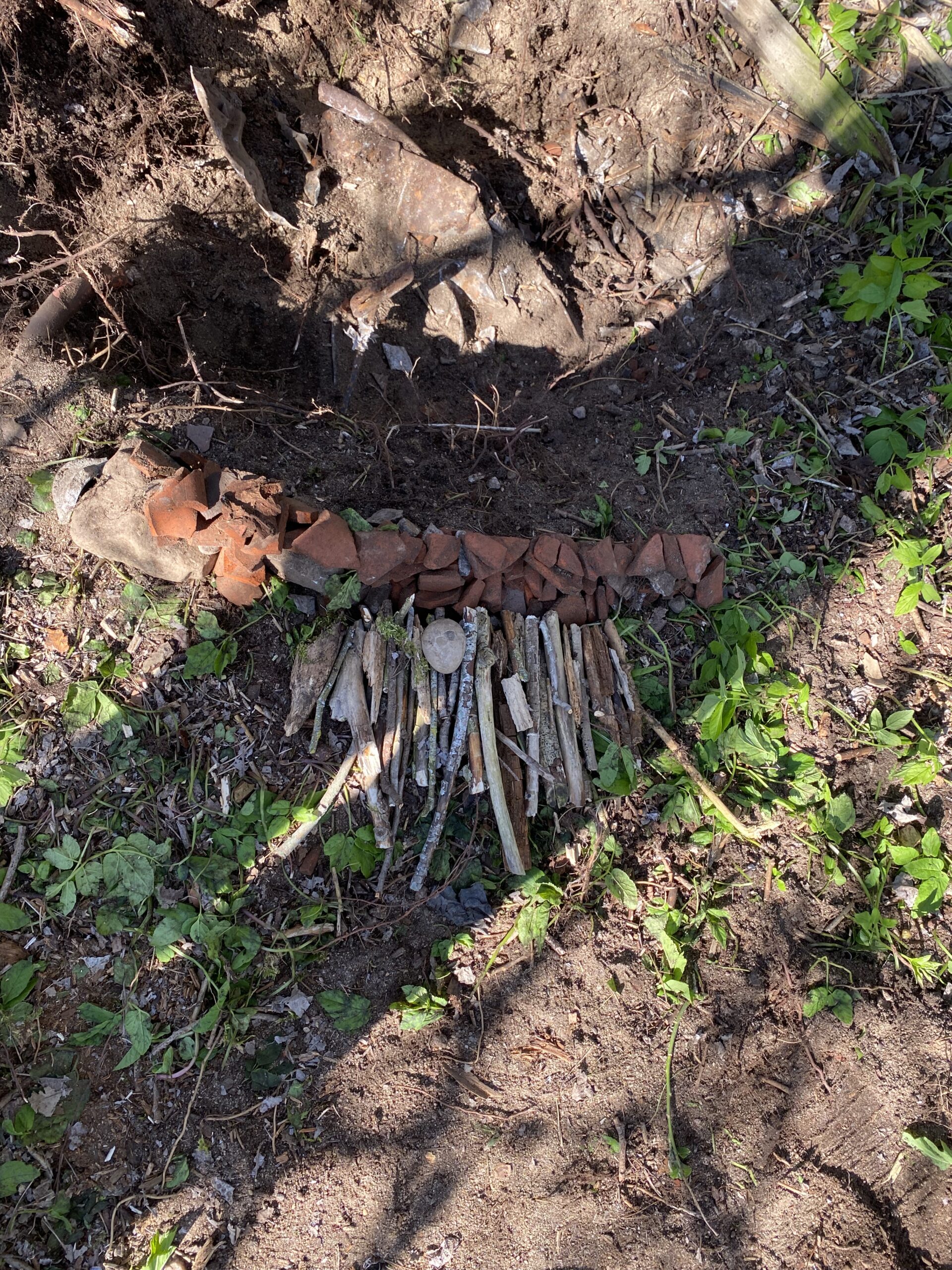
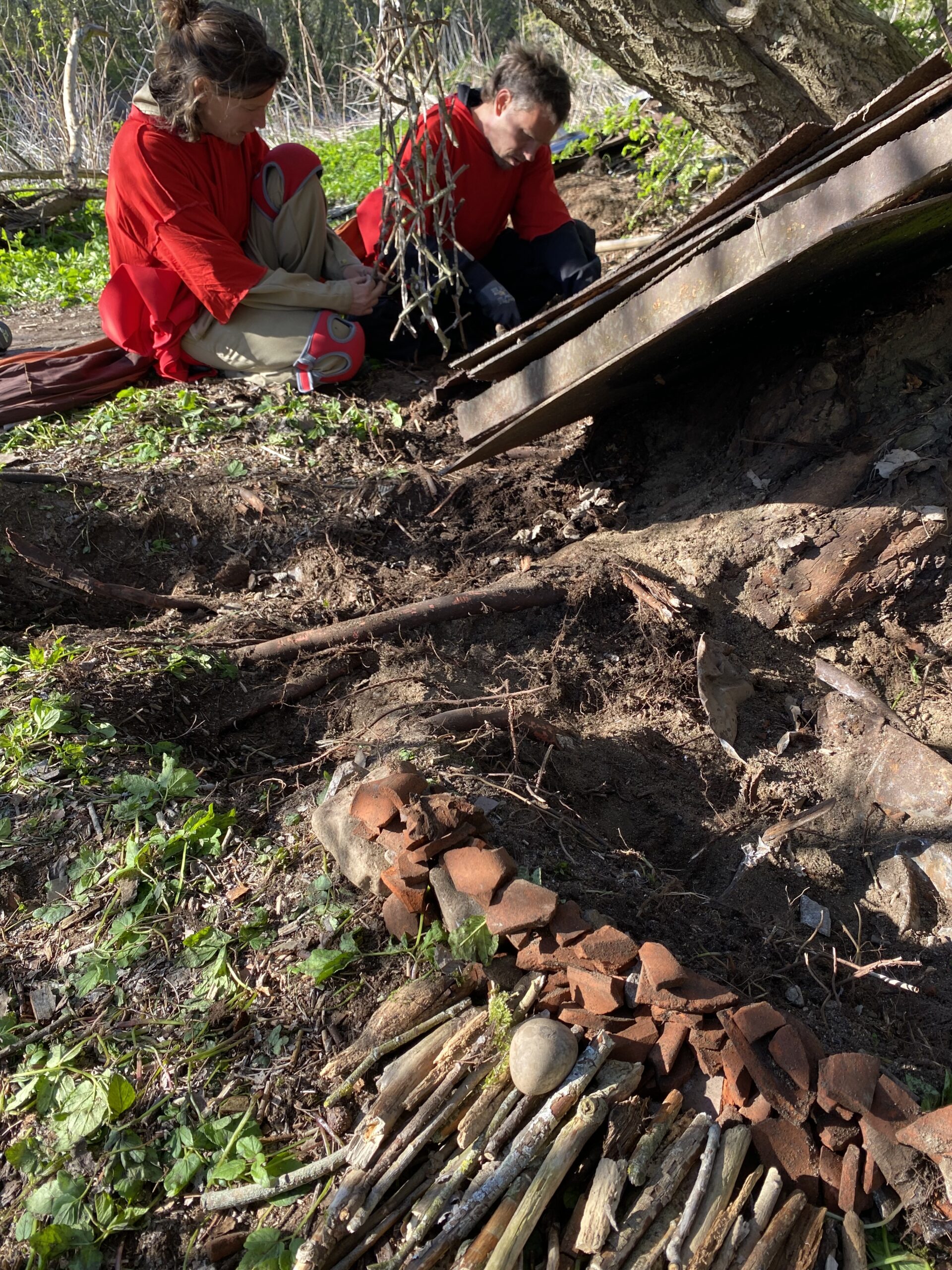
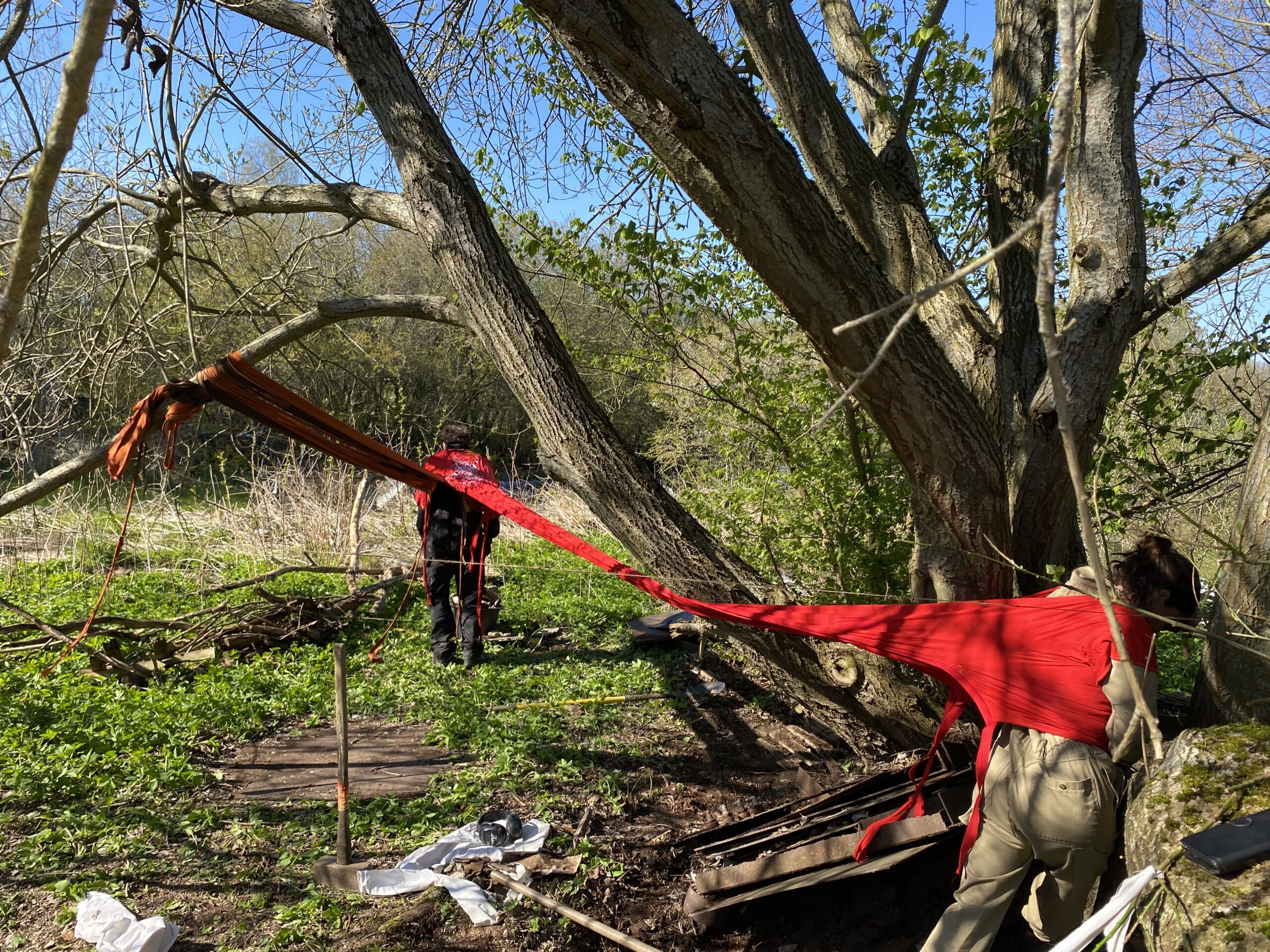
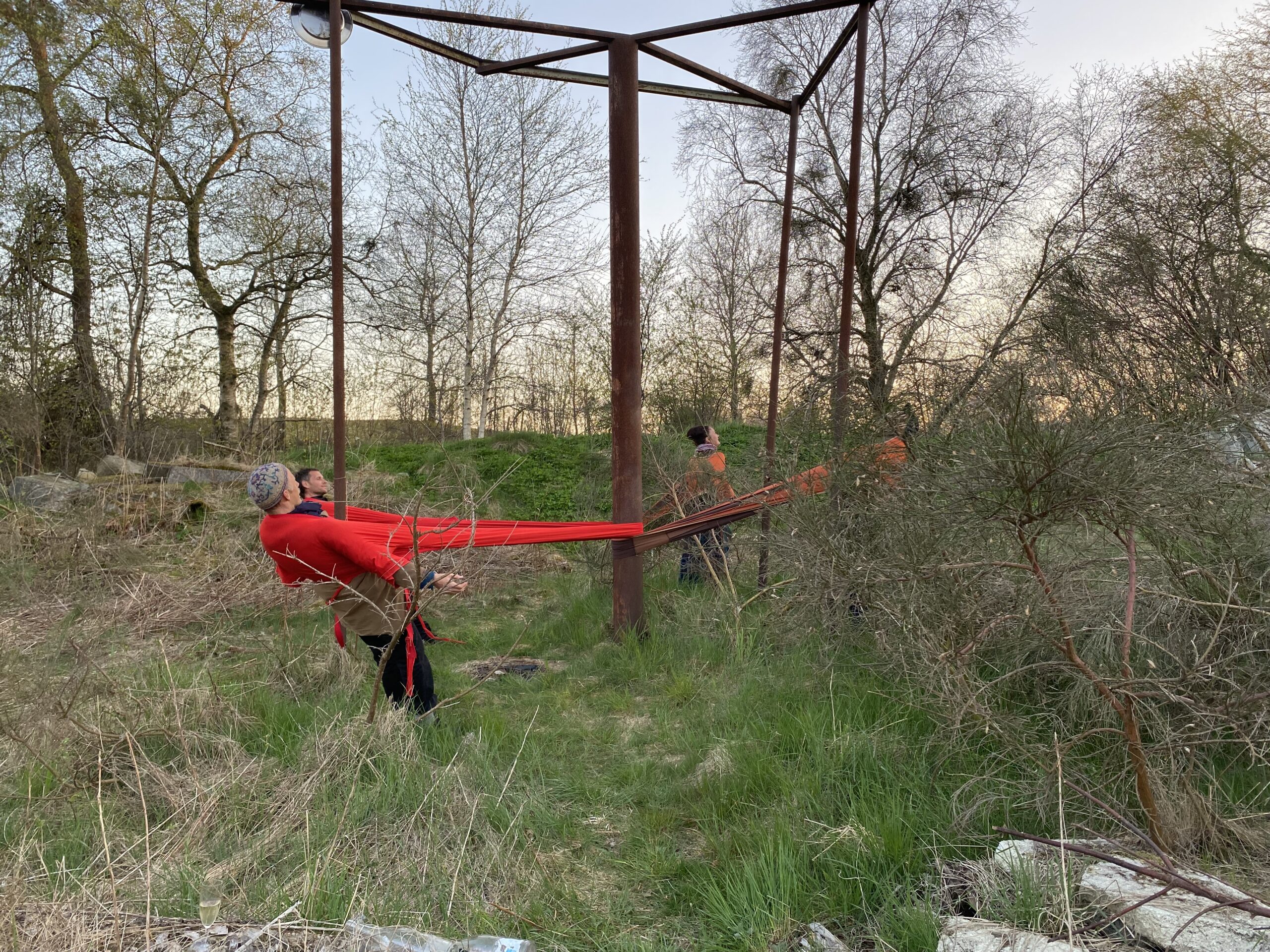
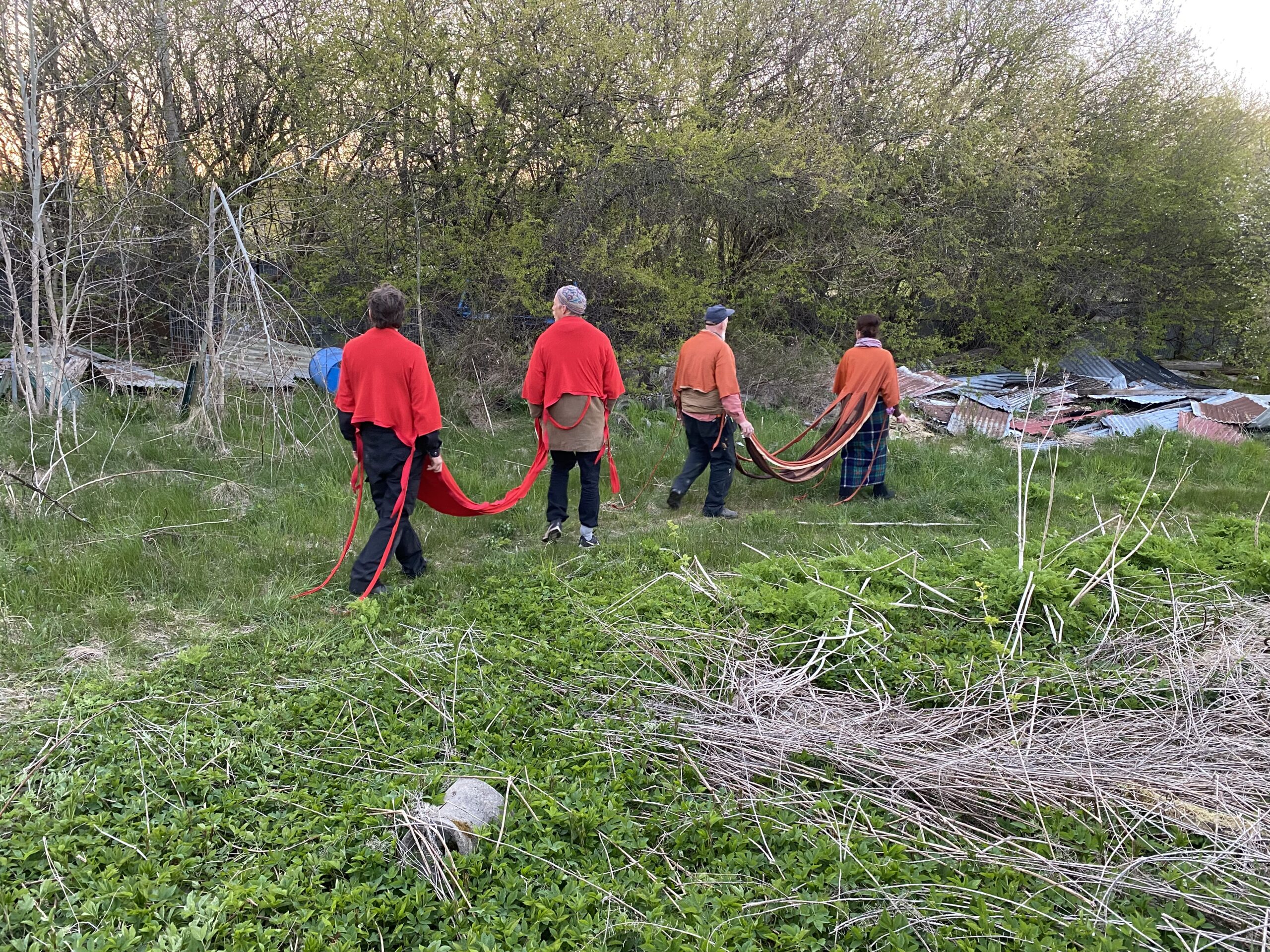
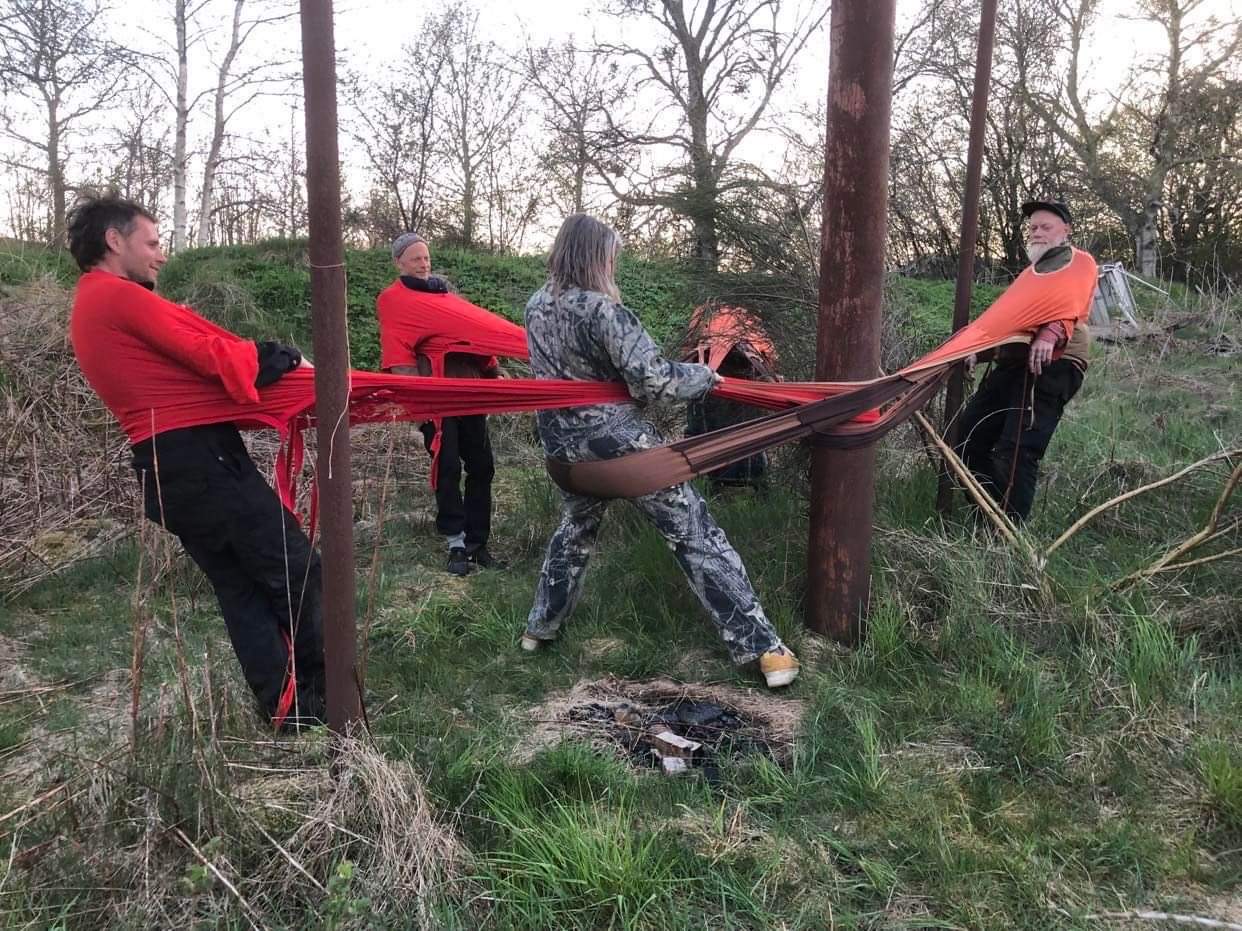
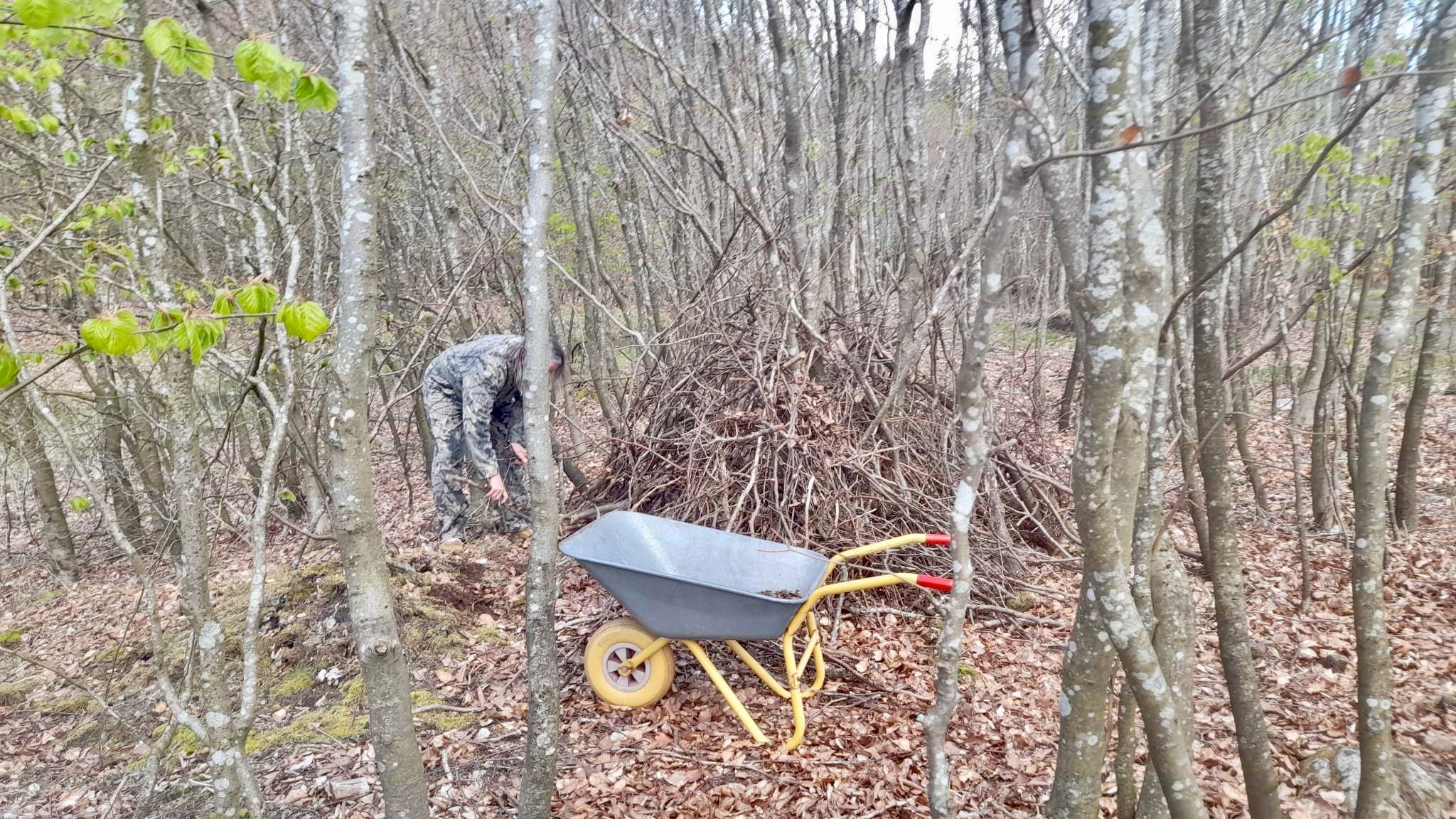
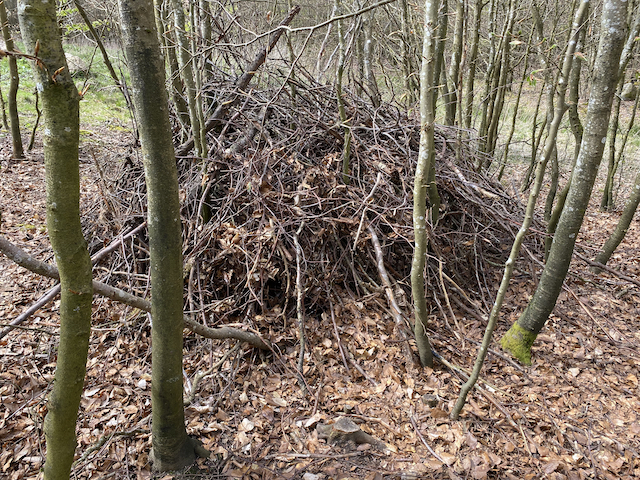
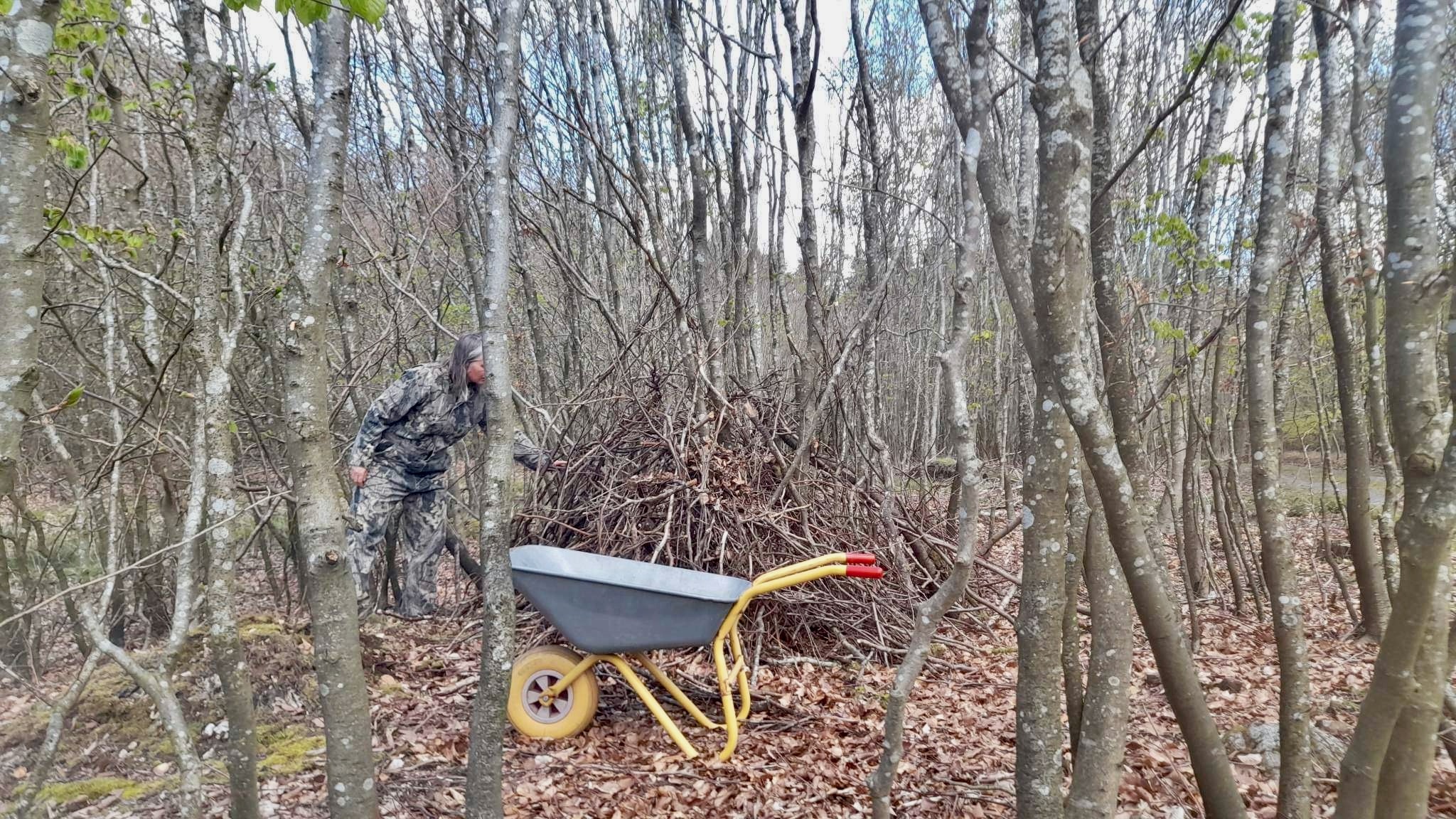
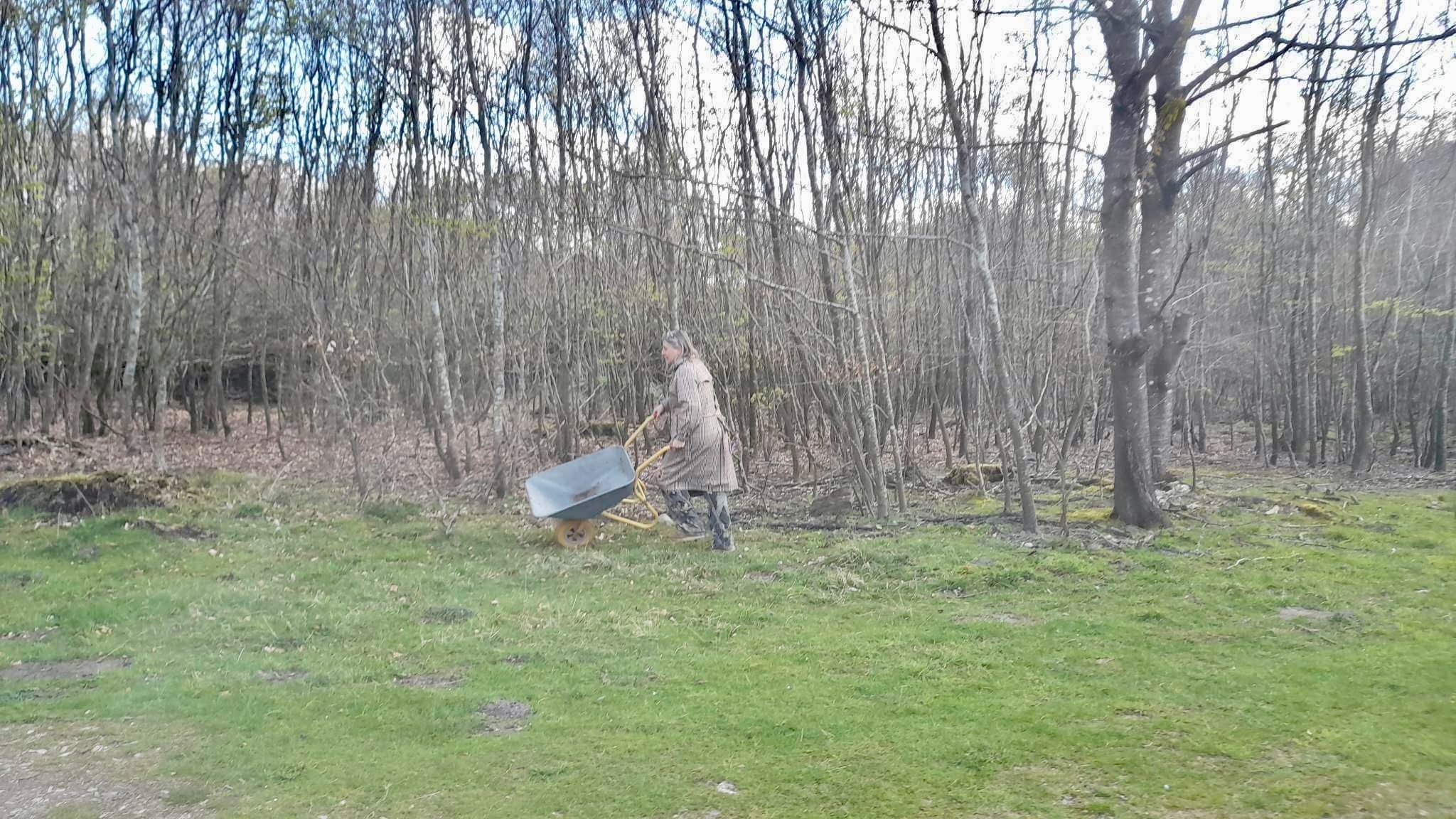
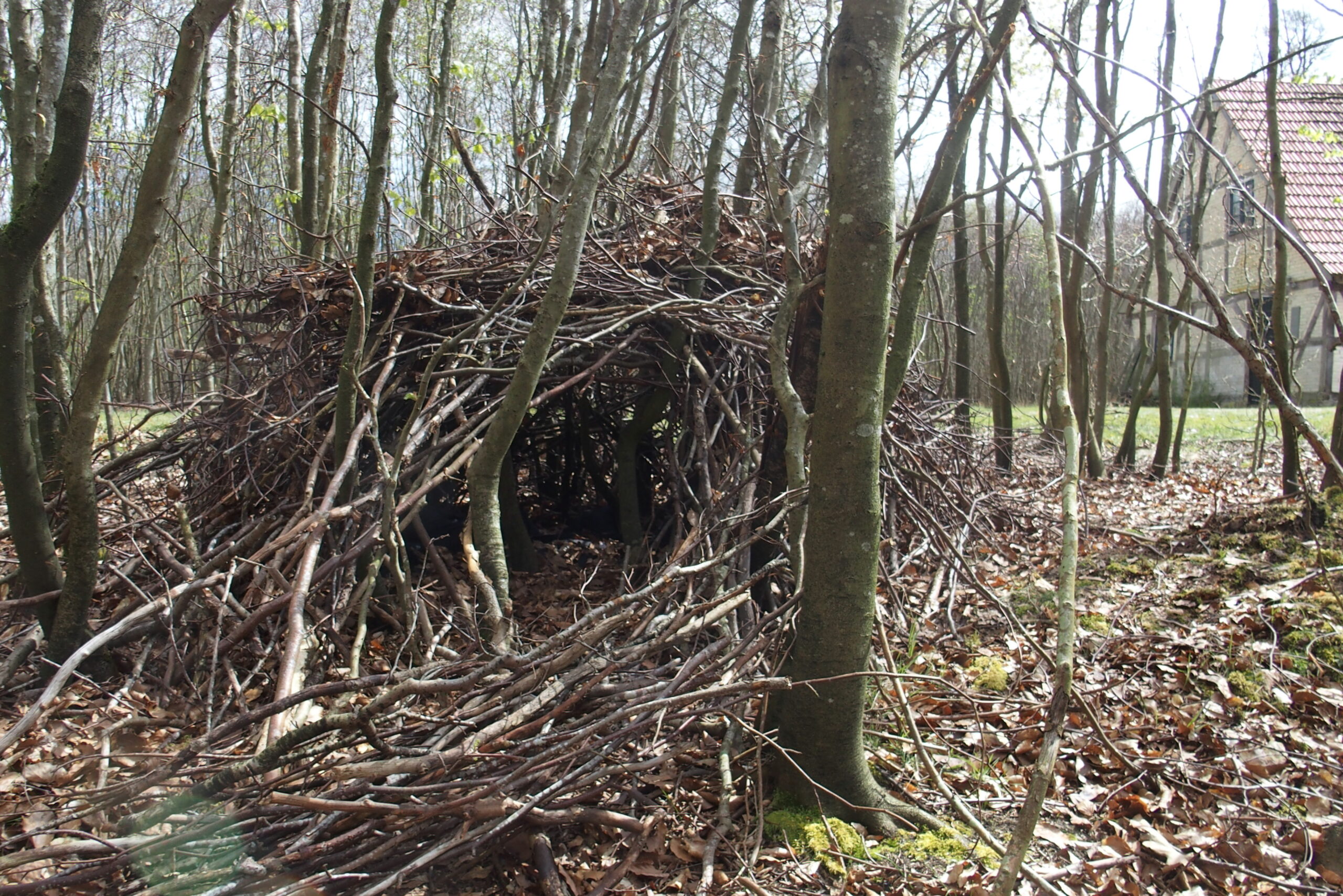
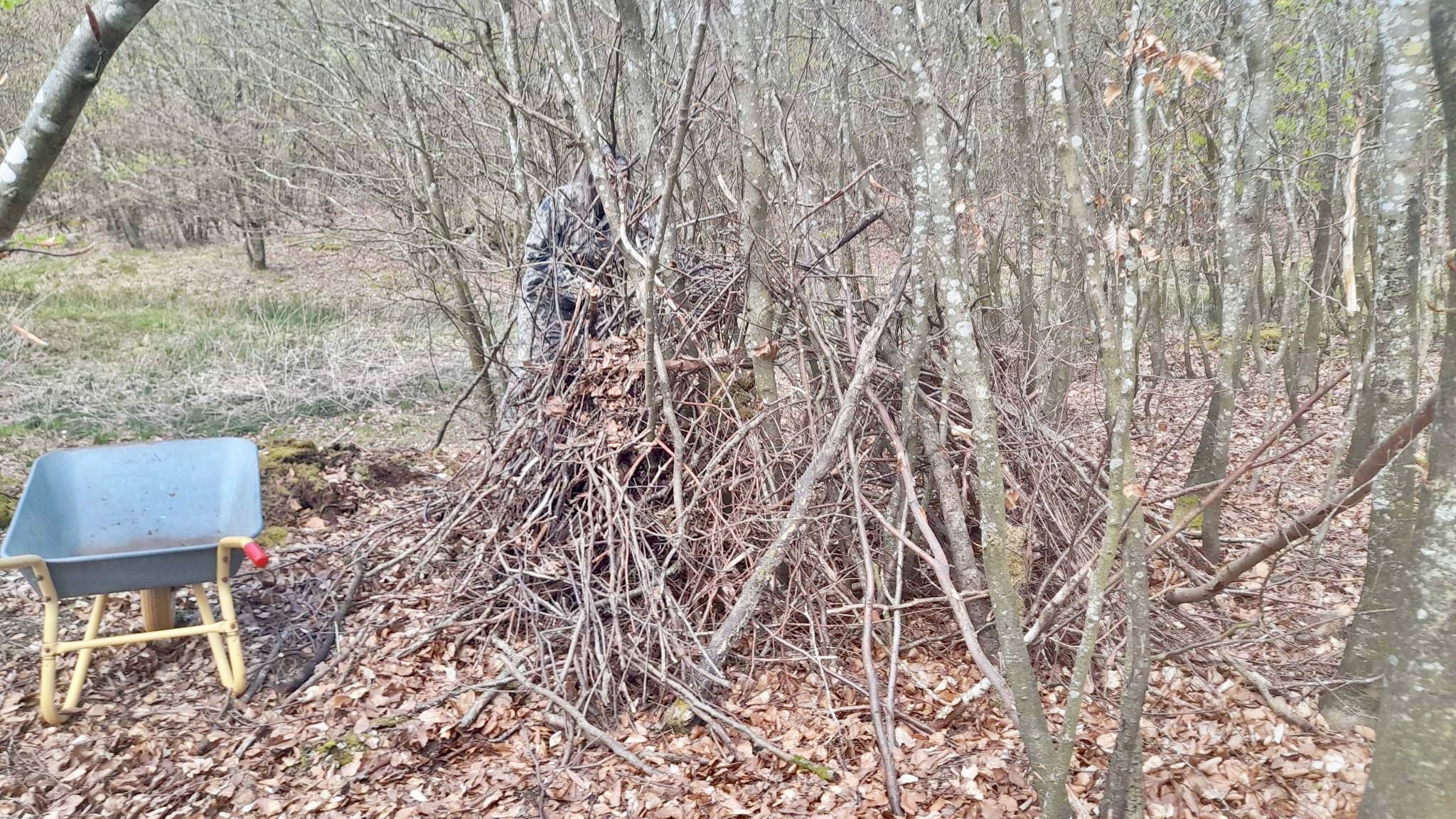
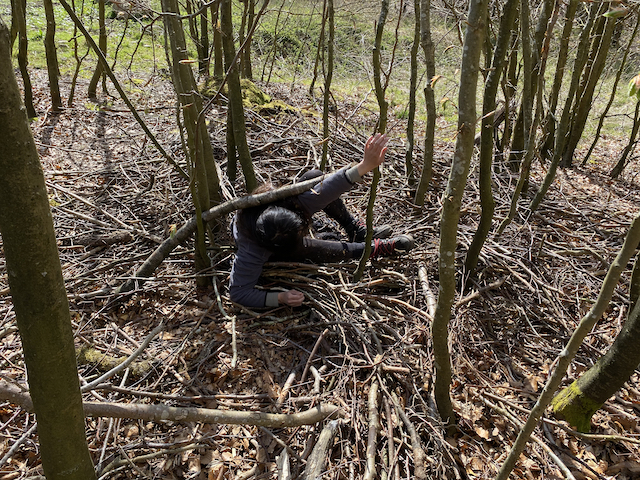
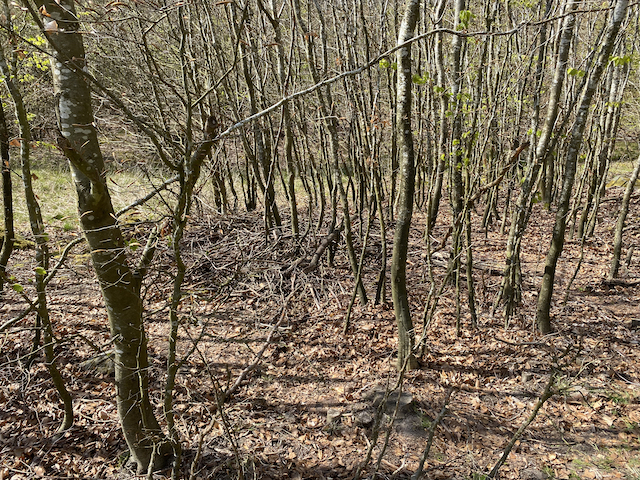
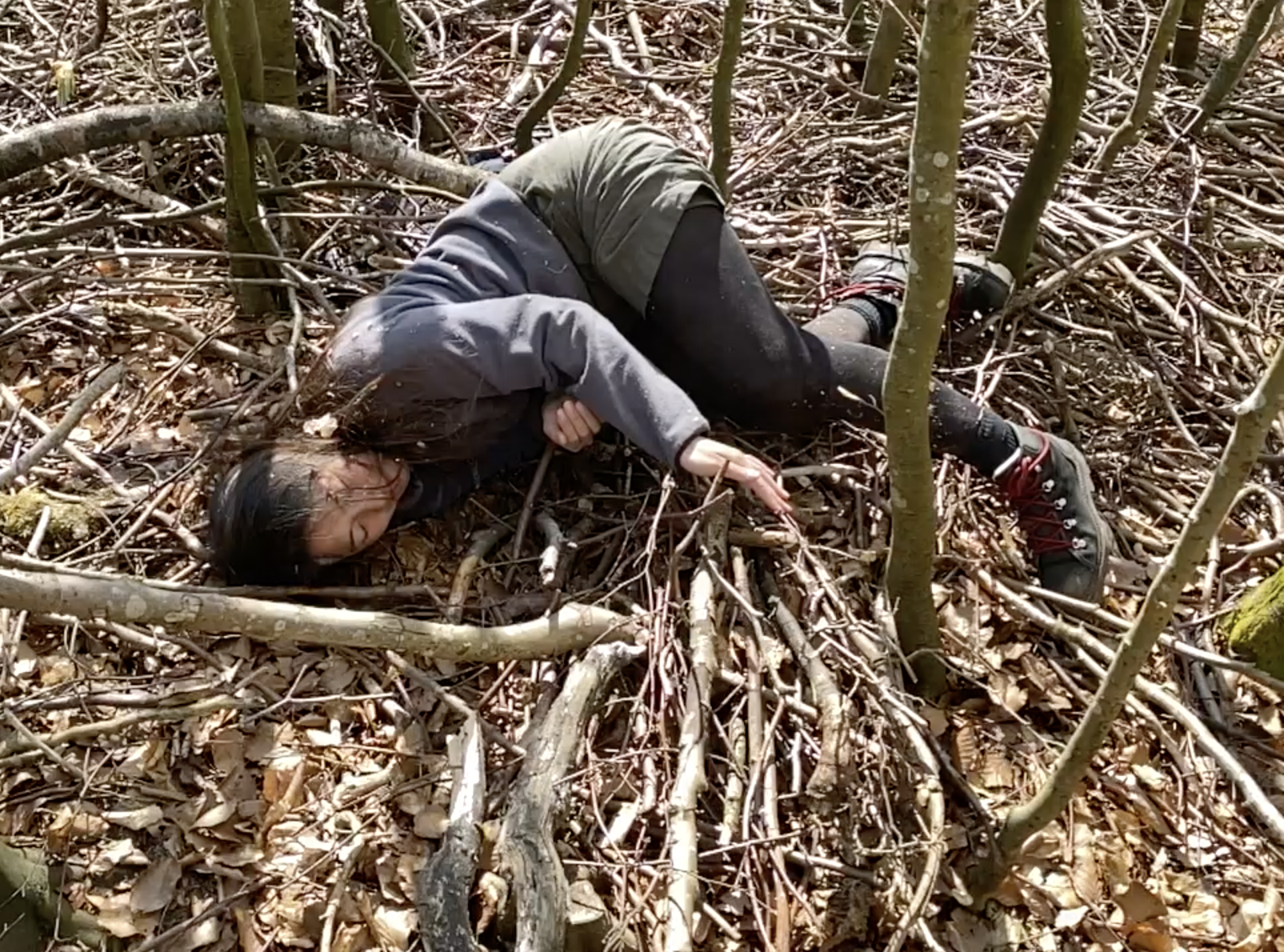
Legen og sam-skabelsen i og af kunsten, i og med naturen. Som i naturen, der altid er i organisk bevægelse, således er KVAS-projektet. KVAS er en processuel undersøgelse af de kvasmaterialer, som findes i naturen. KVAS er et aldrig færdiggjort og et evigt foranderligt værk. KVAS en legende sam-skabelsesproces med performance kunstner Linh Le.
Bunker flyttes og samles. Bunker skabes af kvaset i landskabet. Huler bygges af bunker. Bunker skabes af huler – i hulens kvasbunker kan vi gemme os for forbipasserende. I hulen leger vi underfundige kvasnings-lege, som får kvaset til at knitre højlydt. Under legen sanser vi, at vores kvasninger forandrer hulens bunkninger på organisk knase-sanse vis(ninger).
KVAS bunkinger og kvasninger: Linh Le og Charlotte Østergaard
KVAS var en del af udstillingen ”Hej Planter”, april 2023. Udstillingen var initieret og kurateret af Bess Kristoffersen.
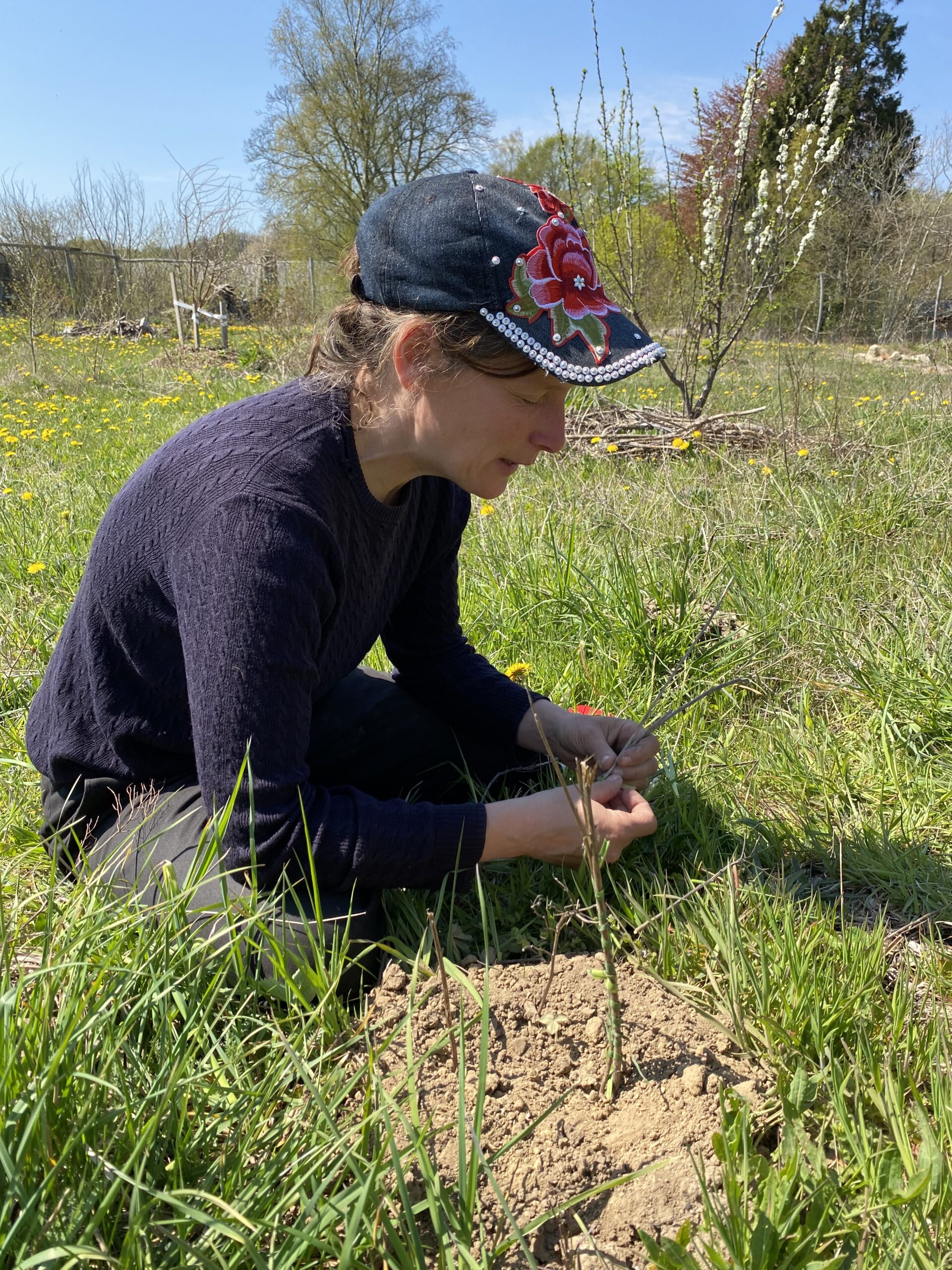
KVAS is a performative process that are inspired by Donna Haraway’s concept of “making-kin”. In the book “Staying with the trouble: making kin in the Chthulucene” Haraway suggest that making-kin is creating relationship with non-human entities such as plants and animals in order to build new forms of communities and kinships that goes beyond the traditional human-to-human relationships. Making-kin involves recognizing our (humans) interconnectedness with all living things and aims at working toward more sustainable relationships with the environment. Dedicated to Bess Kristoffersen’s invitation Løvspring (the season that is renewal of planetary life) KVAS is a performative attempt to awaken our senses towards and to acknowledge our interdependency and connections with nature.
Billeder, tekster, videoer og video-redigering: Linh Le og Charlotte Østergaard
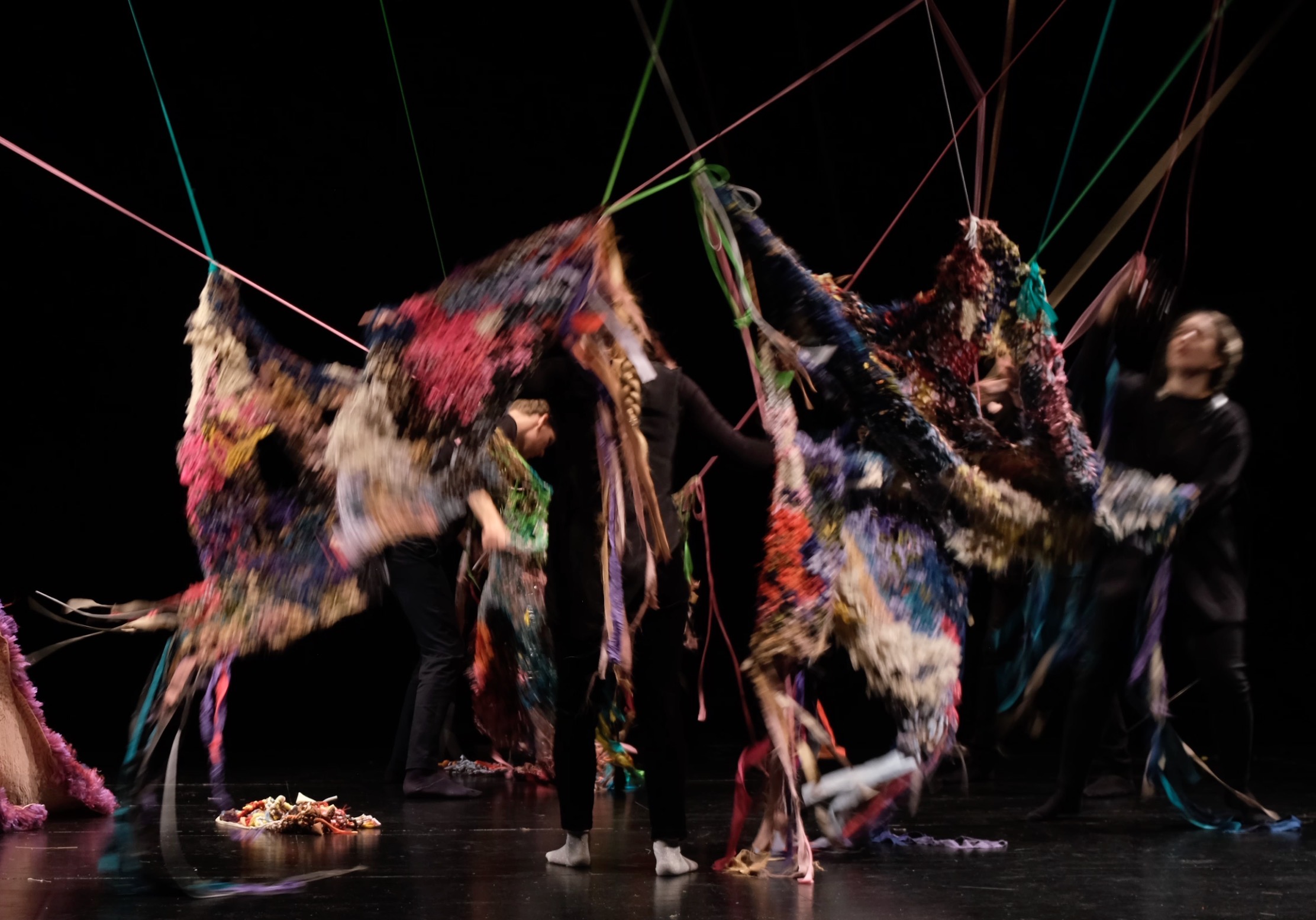
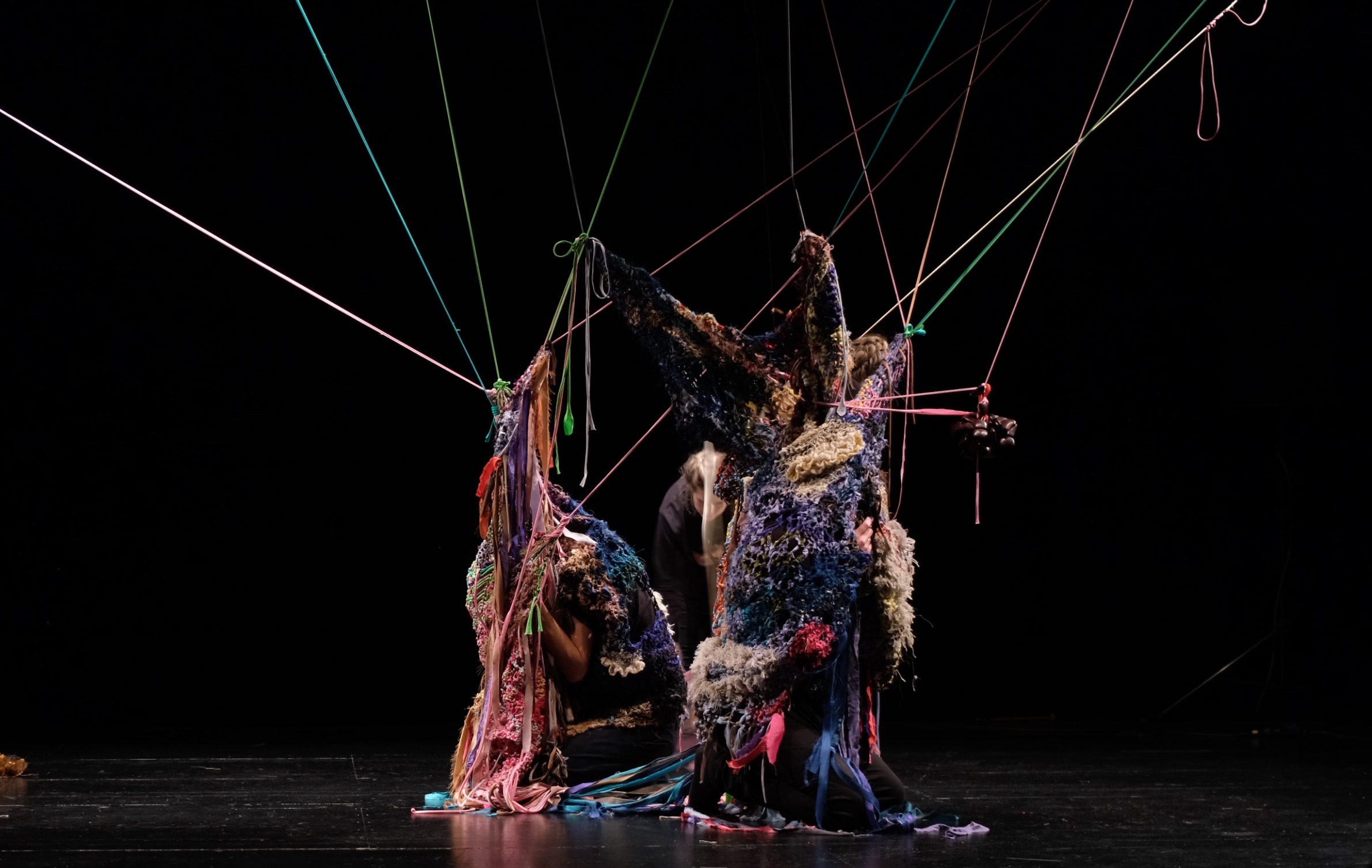
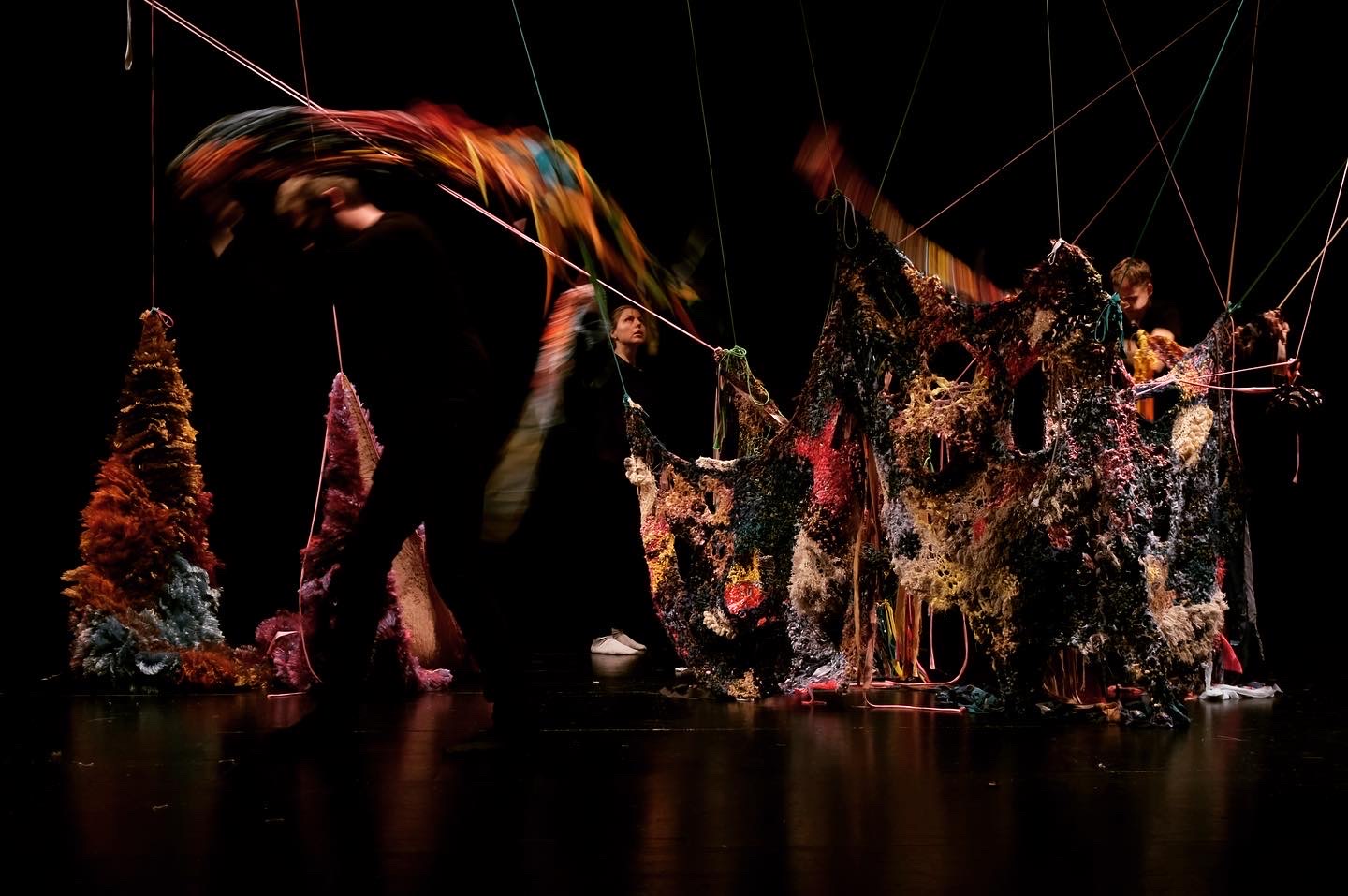
Musikalsk undersøgelse i grænsefeltet mellem kostume og scenografiske tekstile kompositioner
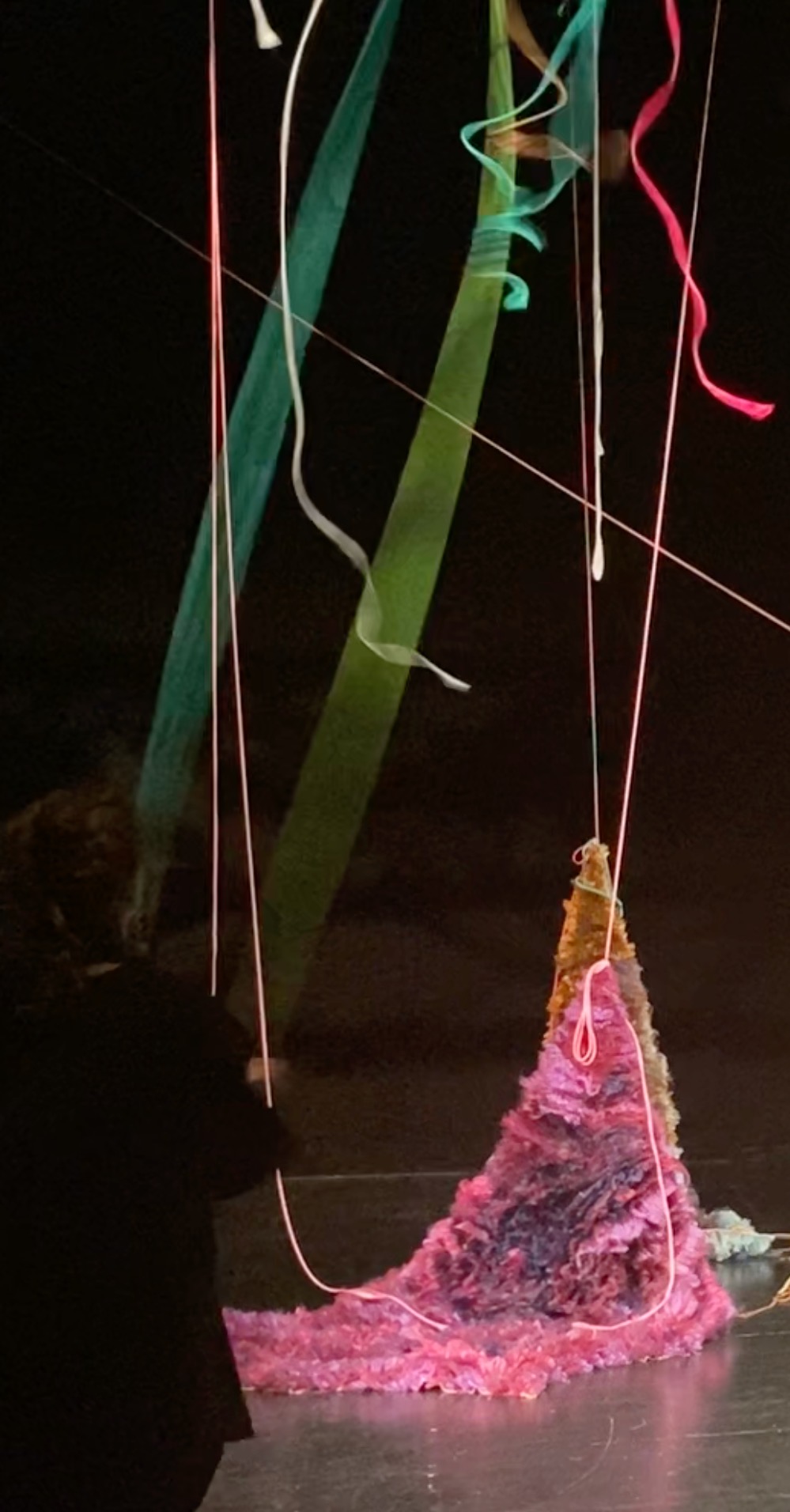
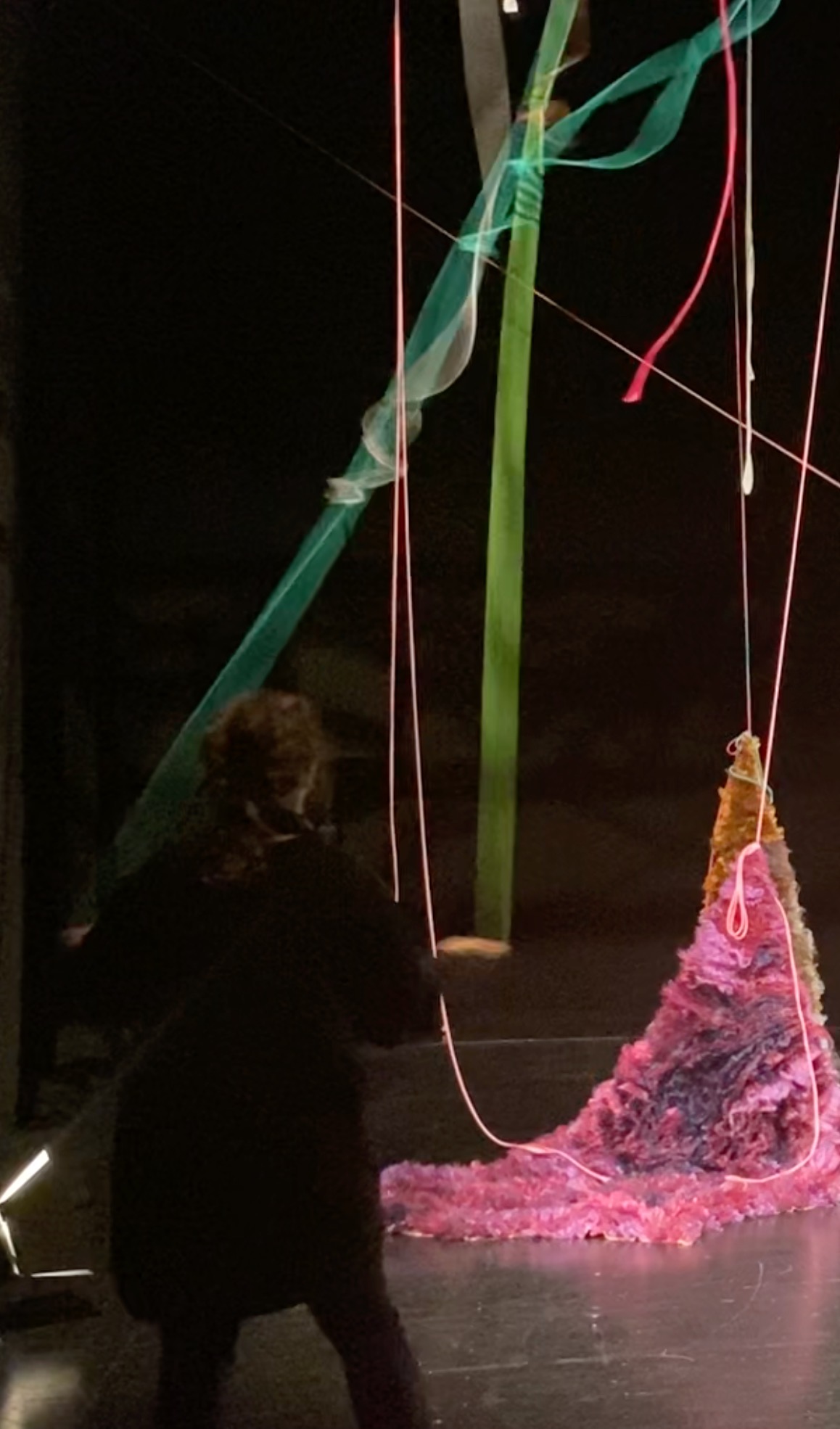
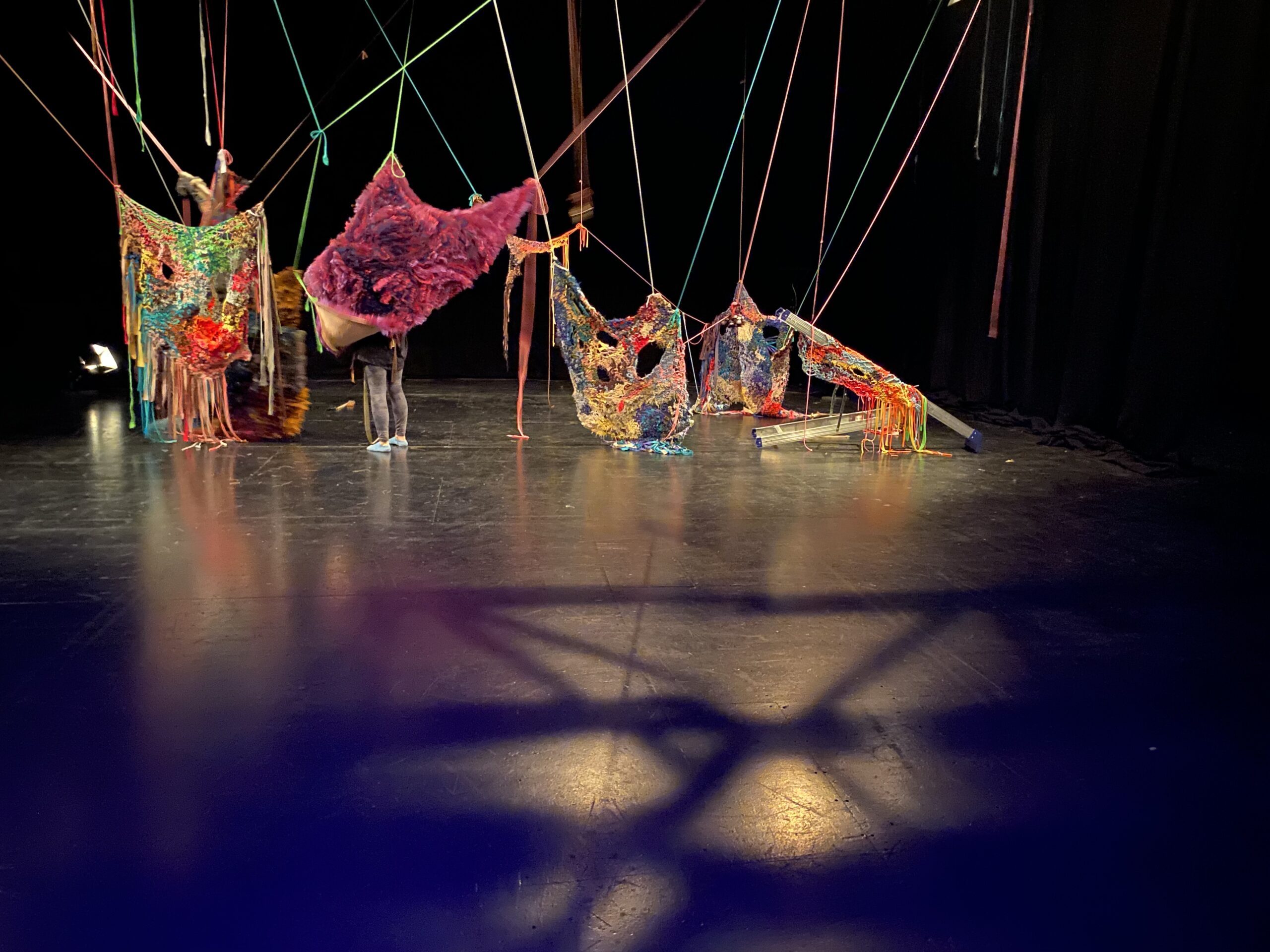
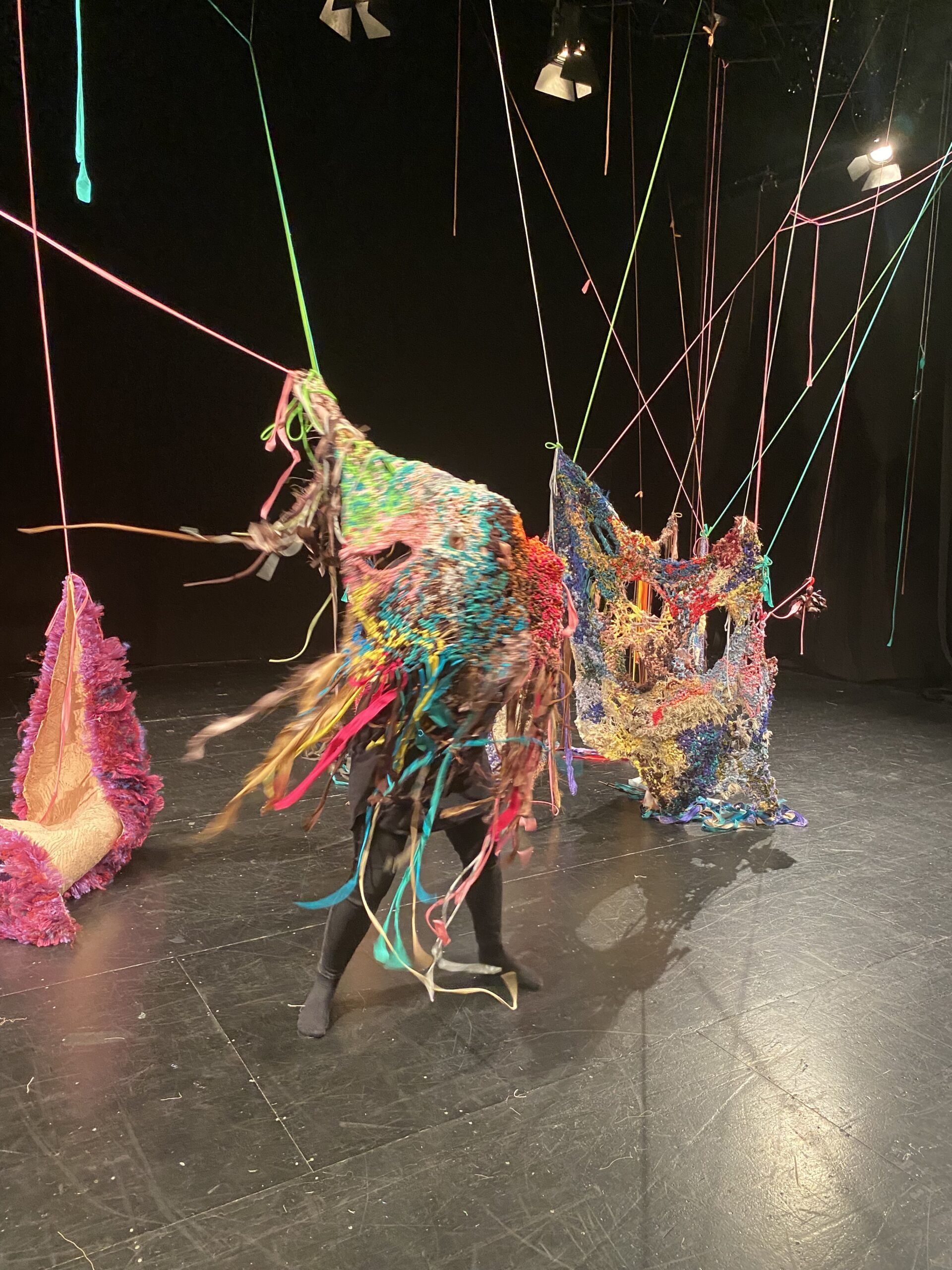
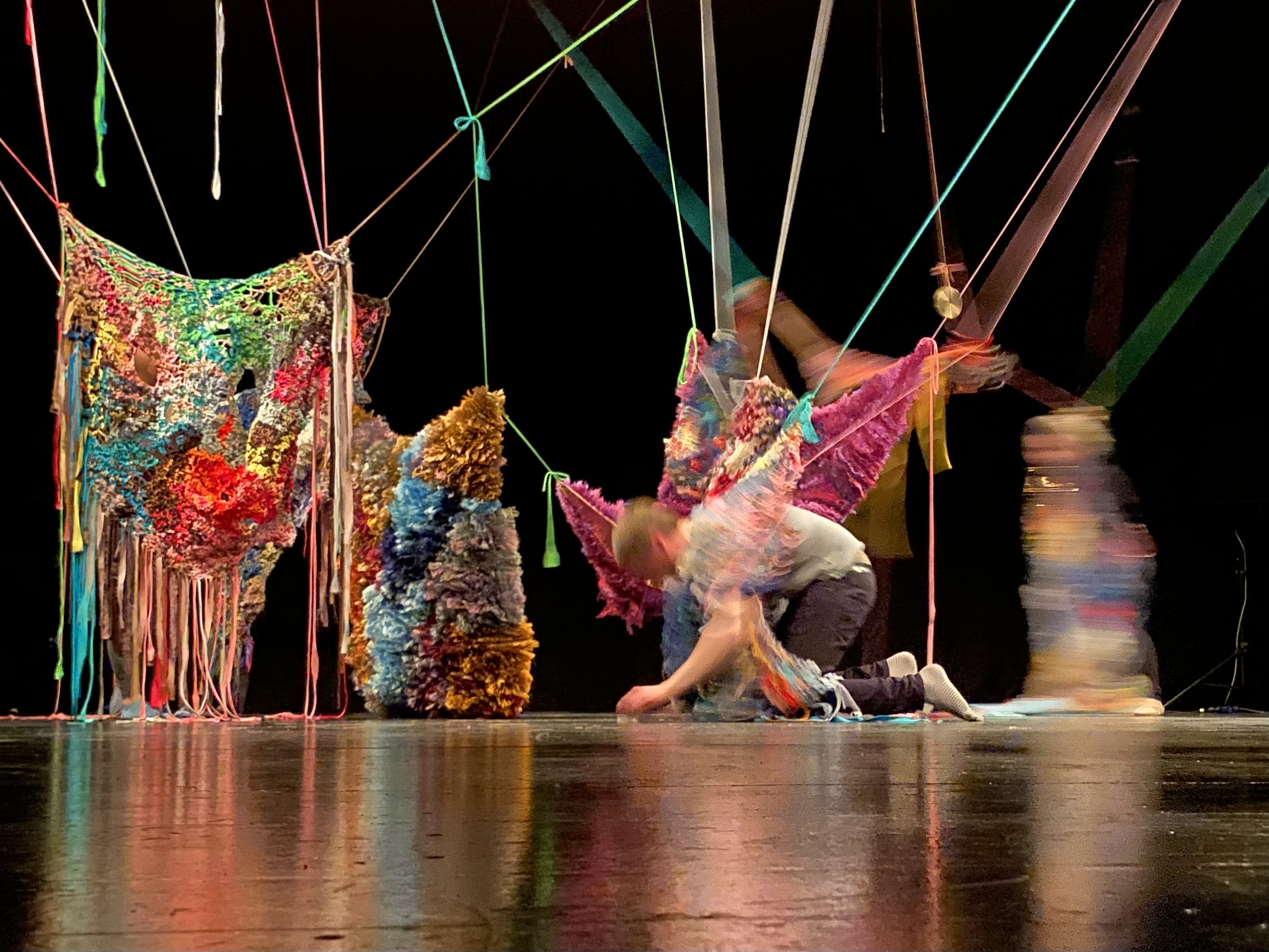
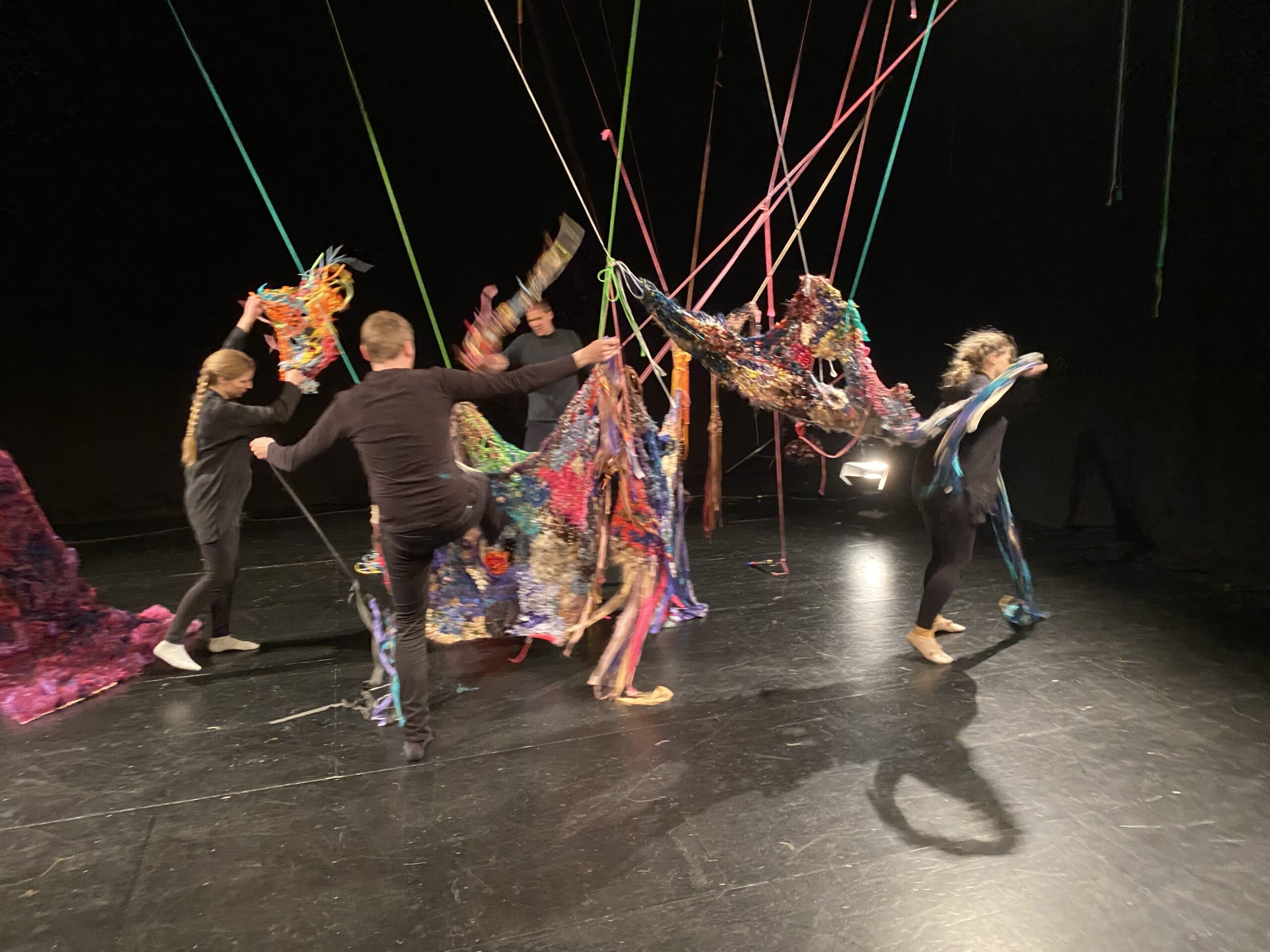
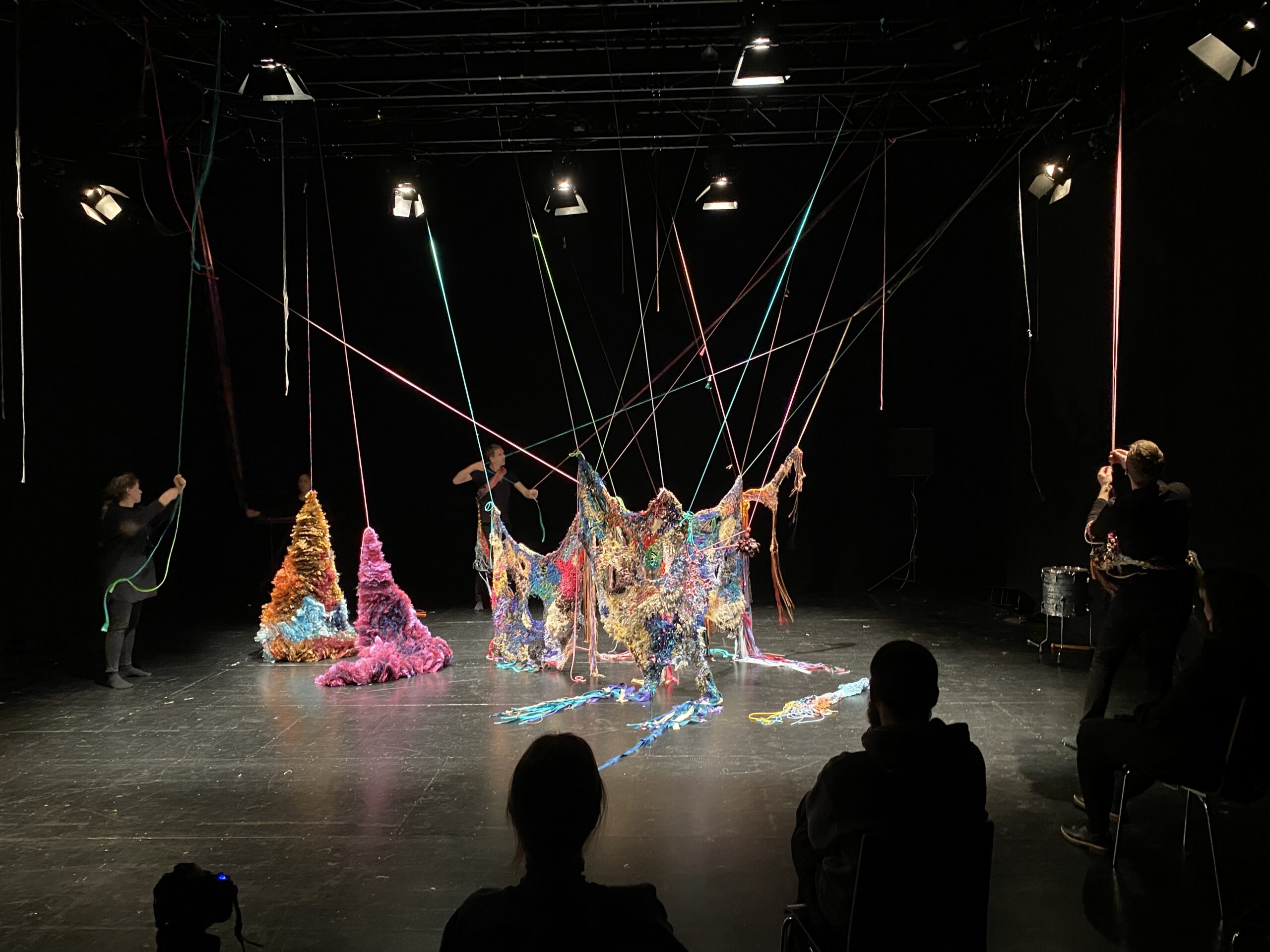
Sammen med kvartetten NJYD var jeg på et meget inspirerende fire dages residency (april 2023) på Godsbanens Åben Scene i Århus, hvor vi undersøgte krydsfeltet mellem musik og tekstiler. På residensen undersøgelse vi af bl.a. hvilken lyd og musik der findes i samspillet mellem musikerne (med og uden deres instrumenter) og de tekstile (evigt foranderlige) rumlige (scenografiske) kompositioner.
Musical investigations in the boundary between costume and scenographic textile compositions
Together with the quartet NJYD, I was on an inspiring four-day residency (April 2023) at Godsbanen’s Open Stage in Aarhus, where we investigated the intersection between music and textiles. At the residence, we explored for example, the sounds and music(ality) that exist or emerge in the interactions between the musicians (with and without their instruments) and the textile (ever-changing) spatial (scenographic) compositions.
Kvartetten NJYD skaber kunstneriske koncertformater i et krydsfelt mellem komponeret (klassisk) musik, performance, improvisation og multimedie. Den utraditionelle instrumentation med fløjte, saxofon, guitar og slagtøj danner grundlaget for eksperimenter, der fører til helt nye lydudtryk.